





Oleander Aphid
Aphis nerii
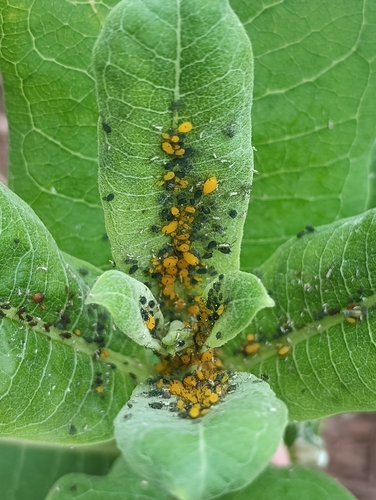
The Oleander Aphid is a tiny insect that loves to munch on oleander plants. They are bright yellow and can be found in groups, making them easy to spot on the leaves.
Habitat: Urban areas
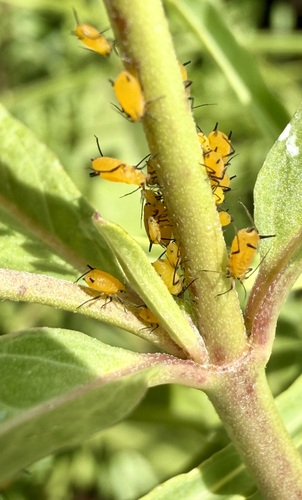
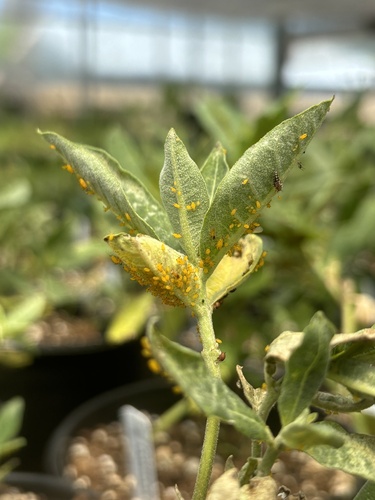
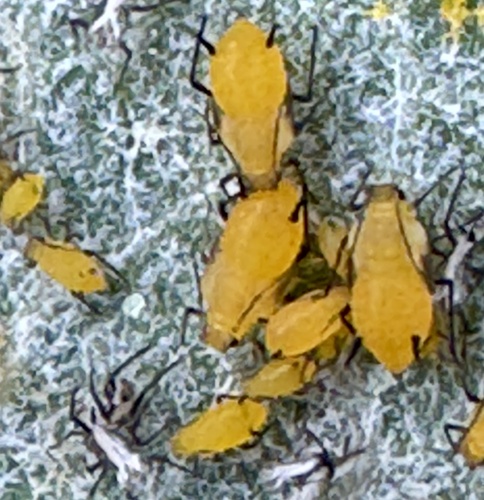
The Oleander Aphid is a strikingly bright yellow to orange insect, often with a slightly translucent body. It has distinctive black siphunculi (tailpipes) and black legs, antennae, and cornicles, which make it visually different from many green or brown aphids.
Category
InsectsRarity
Common
Danger
1/5 · Very low
Snaps
31
Ants often 'farm' them for their sweet honeydew, like tiny cows!
Some Oleander Aphids are born with wings to fly to new plants!
These tiny insects drink plant juice using a straw-like mouth!
They can clone themselves, creating identical babies without a partner!
Oleander Aphid can reproduce without a mate, which helps them create huge colonies very quickly.
Oleander Aphid can absorb plant toxins that helps them become poisonous to most predators.
Oleander Aphid can secrete sugary honeydew that helps them attract ants for protection.
Oleander Aphid has bright yellow skin that helps them warn predators they taste bad or are toxic.
These tiny insects drink the sugary sap from the stems and leaves of plants.
Harmonia axyridis
Adults and larvae prey on aphids.
Syrphus ribesii
Larvae voraciously consume aphids.
Formica rufa
Ants protect aphids in exchange for honeydew.
Aphidius colemani
Lays eggs inside aphid, turning it into a mummy.
Social animals live in organized groups, cooperating for survival benefits such as foraging, defense, and raising offspring.
Colorful describes organisms or objects displaying a wide range of bright and distinct colors.
This trait characterizes organisms whose diet consists entirely or primarily of plant material.
Diurnal animals are primarily active during daylight hours, typically resting or sleeping at night.

Pertaining to species that are significantly smaller than typical or average for their kind.

This habitat trait indicates species that can coexist with humans in urban and suburban environments, utilizing man-made structures and green spaces.

Describes organisms that transfer pollen, enabling the fertilization and reproduction of plants.
No aliases listed yet.
Danger
1/5 · Very low
Don't touch or eat any bugs you find, and always wash your hands after exploring!
The easiest way to identify Oleander Aphid is to use the Snappit nature identifier app.
1.5-2.5 mm
15-30 days
These tiny insects drink the sugary sap from the stems and leaves of plants.
Urban areas
6
500
Zoom in to split clusters and explore where this object has been snapped.
Jun 15, 2026
Little ItalyPhoto attribution
(c) Henrik Kibak, some rights reserved (CC BY)
License: CC BY 4.0 ↗
Image may be shown cropped inside the card frame.
Jun 1, 2026
BricktownPhoto attribution
(c) Greghig Jirheg, some rights reserved (CC BY)
License: CC BY 4.0 ↗
Image may be shown cropped inside the card frame.
May 24, 2026
Chihuahuan Desert Research InstitutePhoto attribution
no rights reserved
License: CC0 1.0 ↗
Image may be shown cropped inside the card frame.
May 1, 2026
Columbia CanalPhoto attribution
(c) Raven Dandridge, some rights reserved (CC BY)
License: CC BY 4.0 ↗
Image may be shown cropped inside the card frame.

South Carolina, US
You might spot Great Blue Heron, Spanish Moss, and Cahaba Lily.
View guide →

Virginia, US
You might spot Northern Cardinal and Eastern Gray Squirrel.
View guide →

California, US
You might spot Western Fence Lizard and Pacific Poison Oak.
View guide →
Virginia, US
You might spot Northern Cardinal and Eastern Gray Squirrel.
View guide →

California, US
You might spot Western Fence Lizard, Eastern Fox Squirrel, and Duck.
View guide →

Quebec, CA
You might spot Eastern Gray Squirrel, House Sparrow, and Rock Pigeon.
View guide →
Take the discovery with you
Snap it with Snappit to identify it, learn what makes it special, and add the discovery to your collection.







.jpg&width=800)



