.jpg&width=800)





Ovenbird
Seiurus aurocapilla
The Ovenbird is a small, brown bird that loves to sing in the forests. It makes a special nest on the ground that looks like an oven, which is how it got its name!
Habitat: Forests
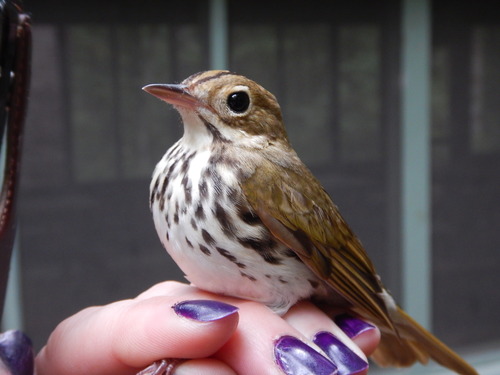
The Ovenbird has an olive-brown back and white underparts with bold, black streaking across its chest. A distinctive orange crown, bordered by black stripes, and a prominent white eye-ring make it visually unique.
Category
BirdsRarity
Common
Danger
1/5 · Very low
Snaps
21
Its loud 'teacher-teacher-teacher' song is one of the loudest sounds in the forest!
Its unique domed nest, made of leaves on the ground, gives the bird its name!
Ovenbirds can migrate thousands of miles from North America to Central America!
Unlike most warblers, it walks on the forest floor, bobbing its head like a chicken!
Ovenbirds can skillfully forage for food by walking on the forest floor, unlike most warblers that hop in trees.
Ovenbirds have streaky brown and olive feathers that help them blend perfectly into the leaf litter.
Ovenbirds possess powerful vocal cords that allow them to sing an incredibly loud, ringing 'teacher-teacher' song.
Ovenbirds can construct a unique domed nest on the ground using leaves and grass, resembling an old-fashioned oven.
Ovenbirds munch on tasty insects and tiny creatures they find on the forest floor.

Accipiter striatus
A quick hunter of small birds.
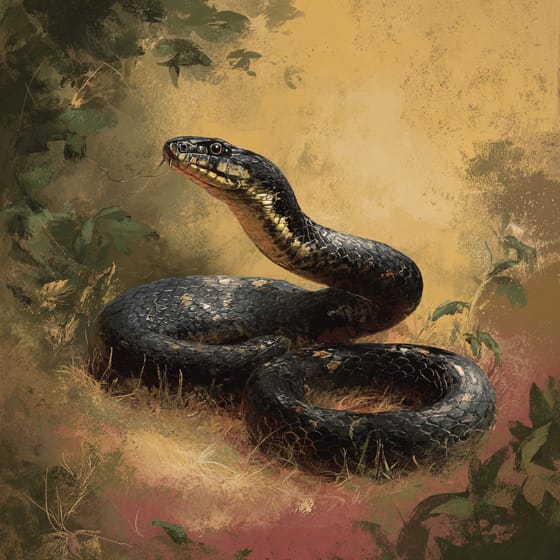
Pantherophis obsoletus
Preys on eggs and nestlings.

Procyon lotor
A common predator of ground nests.
Formica rufa
A common food source.
Malacosoma americanum
Feeds on these forest pests.
Feathered describes animals, primarily birds, possessing a covering of feathers.
Solitary animals live alone for most of their lives, only interacting with others for mating or parental care.
Singing animals produce complex vocalizations, often for purposes of attracting mates, defending territory, or communicating within their species.
This trait identifies organisms whose diet primarily consists of insects and other small invertebrates.

Forest habitats are terrestrial environments dominated by dense tree cover, supporting a high diversity of plant and animal life.

Diurnal animals are primarily active during daylight hours, typically resting or sleeping at night.
No aliases listed yet.
Danger
1/5 · Very low
Enjoy watching birds from a distance and be quiet so you don't scare them away.
The easiest way to identify Ovenbird is to use the Snappit nature identifier app.
11-16 cm
20-25 cm
0.018-0.028 kg
2-8 years
45 km/h
Ovenbirds munch on tasty insects and tiny creatures they find on the forest floor.
Forests
Zoom in to split clusters and explore where this object has been snapped.
May 13, 2026
Francis Beidler ForestPhoto attribution
(c) Ryan Watson, some rights reserved (CC BY)
License: CC BY 4.0 ↗
Image may be shown cropped inside the card frame.

Michigan, US
You might spot Eastern Gray Squirrel, Tree-Of-Heaven, and House Sparrow.
View guide →

Rhode Island, US
You might spot Common Mugwort, Duck, and Azure Bluet.
View guide →

Colorado, US
You might spot Eastern Fox Squirrel, Bee, and Duck.
View guide →

New York, US
You might spot Rock Pigeon, American Robin, and Spotted Lanternfly.
View guide →

Rhode Island, US
You might spot White-Tailed Deer, Great Egret, and Duck.
View guide →

Rhode Island, US
You might spot White-Tailed Deer and Common Eastern Bumble Bee.
View guide →
Take the discovery with you
Snap it with Snappit to identify it, learn what makes it special, and add the discovery to your collection.




.jpg&width=800)








