





Wilson's Snipe
Gallinago delicata
Wilson's Snipe is a special bird known for its long beak and beautiful stripes. It loves to hide in wet places and can be hard to spot because of its clever camouflage.
Habitat: Wetlands
The Wilson's Snipe has a chunky body with mottled brown, black, and buff plumage, giving it excellent camouflage. Its head features distinct dark and light stripes, and it possesses a remarkably long, straight, needle-like bill, distinguishing it from most similar-sized wetland birds.
Category
BirdsRarity
Common
Danger
1/5 · Very low
Snaps
1
A group of these birds is called a "wisp"—imagine a wispy cloud of birds!
The tip of their long bill is flexible and can open underground to snatch hidden snacks!
Their eyes are set far back on their head, giving them almost 360-degree vision!
They can "freeze" perfectly still in wetlands, blending in totally with reeds and grass!
Wilson's Snipe makes a unique 'winnowing' sound with vibrating tail feathers during diving display flights to attract mates.
Wilson's Snipe has a super sensitive, flexible bill tip that helps them find and grab hidden worms deep in the mud.
They slurp up worms and insects from the mud using their super long, sensitive beaks!
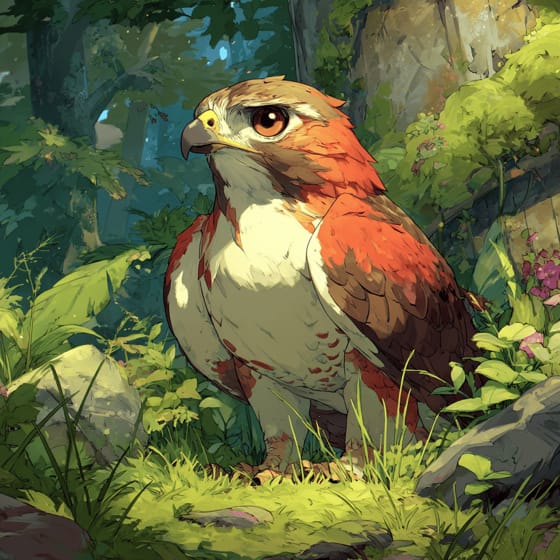
Buteo jamaicensis
A common raptor that preys on various ground-dwelling birds.
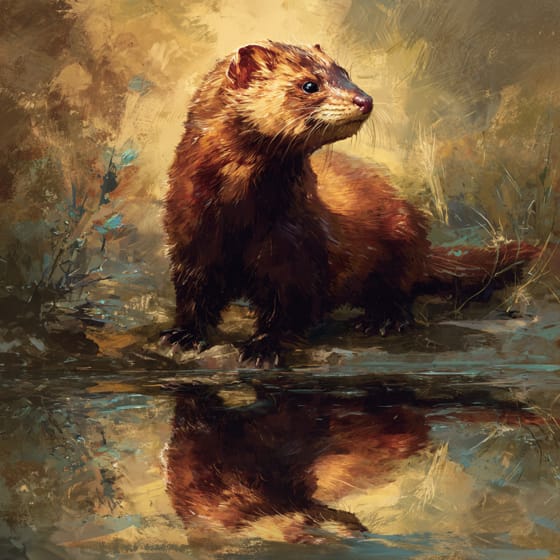
Neovison vison
A wetland predator that hunts birds and their eggs near water.
Lumbricus terrestris
A primary food source found by probing wetland soil.
Chironomus plumosus
Small insect larvae collected from the muddy bottom of shallow water.
Feathered describes animals, primarily birds, possessing a covering of feathers.
Marked with parallel bands or lines of color.
Solitary animals live alone for most of their lives, only interacting with others for mating or parental care.
Camouflaged describes organisms that possess coloring or patterns that allow them to blend into their environment.

This trait identifies organisms whose diet primarily consists of insects and other small invertebrates.

This habitat trait identifies species found in wetlands, which are areas of land saturated with water, either permanently or seasonally, including marshes, swamps, and bogs.

Aquatic habitats encompass environments where organisms live predominantly in water, including oceans, rivers, lakes, and wetlands.

Migratory animals undertake seasonal movements from one region to another, typically in response to changes in climate or food availability.

Threatened status denotes a species likely to become endangered in the foreseeable future without effective conservation interventions.
No aliases listed yet.
Danger
1/5 · Very low
Always watch birds from a distance so you don't scare them away.
The easiest way to identify Wilson's Snipe is to use the Snappit nature identifier app.
23-28 cm
39-45 cm
0.075-0.15 kg
2-8 years
65 km/h
They slurp up worms and insects from the mud using their super long, sensitive beaks!
Wetlands
Zoom in to split clusters and explore where this object has been snapped.

New York, US
You might spot Eastern Newt, Turkey-Tail, and Trembling Crust.
View guide →

Delaware, US
You might spot Bald Eagle, Little Blue Heron, and Green Treefrog.
View guide →
British Columbia, CA
You might spot Common Alpine, Common Juniper, and Field Chickweed.
View guide →
Take the discovery with you
Snap it with Snappit to identify it, learn what makes it special, and add the discovery to your collection.




.jpg&width=800)









