_-_Mikhailov_Nikita.jpg&width=800)





owl with ear tufts
owl with ear tufts
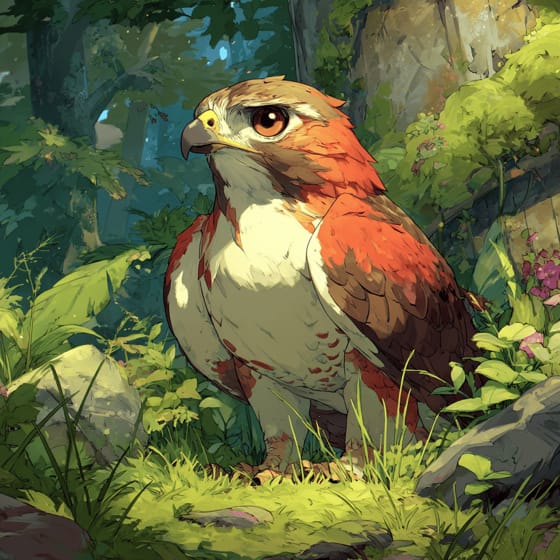
The Great Horned Owl is a big bird with fluffy ear tufts that look like horns! They are known for their beautiful feathers and big, bright eyes that help them see at night.
Habitat: Forests
The owl with ear tufts is a large, stocky bird with mottled gray, brown, and white plumage, providing excellent camouflage. It has prominent feather tufts on its head, resembling ears or horns, and striking yellow eyes within a distinct facial disk.
Category
BirdsRarity
Common
Danger
2/5 · Low
Snaps
Be the first to snap!
Its deep hooting call sounds like "Who's awake? Me too!", echoing through the night.
These owls often use abandoned nests from hawks or squirrels, not building their own!
This owl can swallow small prey whole, later spitting out furry, undigested pellets!
Those ear tufts aren't ears; they are just feathers for camouflage and expression!
The owl with ear tufts can fly almost silently because its soft, serrated wing feathers muffle sound, helping it surprise prey.
The owl with ear tufts has asymmetrical ear openings that help it precisely locate prey using sound alone, even hidden under snow.
The owl with ear tufts possesses large, fixed eyes packed with light-sensitive cells, allowing it to see incredibly well in very dim light.
The owl with ear tufts has extremely strong talons that can deliver a crushing grip, instantly subduing even large prey.
This skilled night hunter eats small mammals, birds, and even insects for dinner!
.JPG&width=800)
Sylvilagus floridanus
A key part of its varied diet across its range.
Mephitis mephitis
One of the few predators that regularly preys on skunks.
Buteo jamaicensis
Often uses the abandoned nests of this hawk to raise its young.
Feathered describes animals, primarily birds, possessing a covering of feathers.
Marked with spots or patches of a different color.
Solitary animals live alone for most of their lives, only interacting with others for mating or parental care.
Aerial creatures spend a significant portion of their lives airborne, utilizing flight for various activities such as hunting, migration, or nesting.

Characterized by having one or more hard, permanent, pointed projections on the head.

An ambush predator hunts by patiently waiting and concealing itself, then launching a sudden attack when unsuspecting prey comes within range.

Forest habitats are terrestrial environments dominated by dense tree cover, supporting a high diversity of plant and animal life.

This trait identifies organisms whose diet consists entirely or primarily of animal tissue.

Nocturnal animals are primarily active during the nighttime hours, typically resting or sleeping during the day.
No aliases listed yet.
Danger
2/5 · Low
Don't get too close to wild owls; they are best enjoyed from a distance.
The easiest way to identify owl with ear tufts is to use the Snappit nature identifier app.
45-63 cm
100-150 cm
0.9-2.5 kg
10-15 years
65 km/h
This skilled night hunter eats small mammals, birds, and even insects for dinner!
Forests
Zoom in to split clusters and explore where this object has been snapped.
Recent snaps will appear here as new observations are added.
Take the discovery with you
Snap it with Snappit to identify it, learn what makes it special, and add the discovery to your collection.




.jpg&width=800)






