





Pacific Bleeding Heart
Dicentra formosa
The Pacific Bleeding Heart is a beautiful flower with heart-shaped petals. It blooms in lovely pink and white colors and loves to grow in shady places like forests.
Habitat: Forests
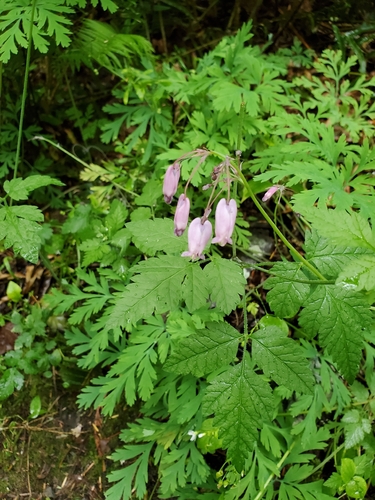
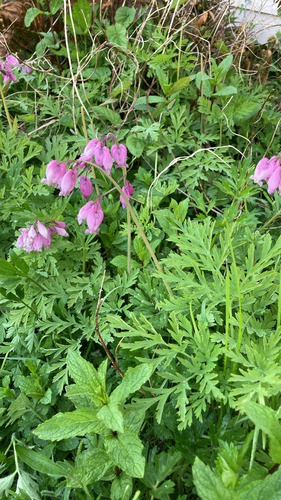
The Pacific Bleeding Heart has delicate, heart-shaped flowers that dangle in clusters, typically vibrant pink to purplish-red with a distinctive white 'drip' at the bottom. Its fern-like, deeply lobed leaves are a soft blue-green, creating a beautiful contrast.
Category
PlantsRarity
Common
Danger
2/5 · Low
Snaps
26
Indigenous peoples sometimes made poultices from its roots, but never eat this plant!
Its roots can spread far underground, helping it pop up in new places like magic!
Look closely! Each 'heart' flower has a tiny 'drop' at the bottom, making it truly unique!
Only strong bumblebees can push open its special flowers to reach the sweet nectar inside!
Pacific Bleeding Heart can thrive in cool, shady forest floors, where many other sun-loving plants struggle to grow.
It produces seeds with a fatty attachment that ants collect and carry, helping to spread the plant to new places.
Pacific Bleeding Heart has mild toxins in its leaves, which can help deter hungry animals from eating too much of it.
Bombus melanopygus
One of its primary pollinators, collecting nectar and pollen.
Formica pallidefulva
Carries its seeds away to underground nests, aiding dispersal.
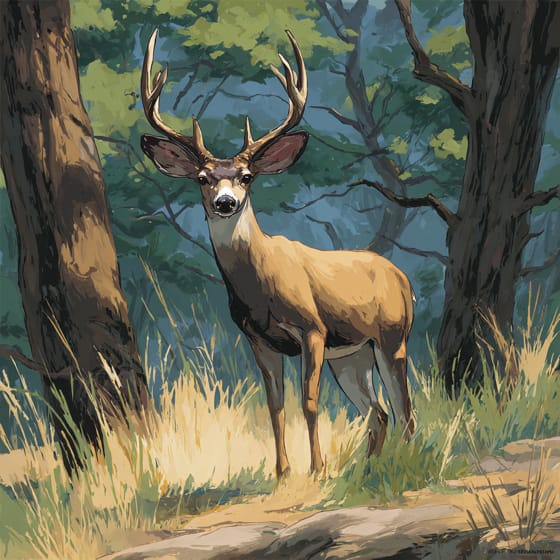
Odocoileus hemionus
Deer may browse its foliage, especially when young or available.
Deciduous plants periodically shed all their leaves, typically during autumn or dry seasons.
Flowering plants are any plants that produce flowers as part of their reproductive cycle.
Shade tolerant plants are adapted to grow and thrive in areas with low light levels, requiring less direct sunlight.
Spring blooming plants produce their flowers during the spring season, often signifying the end of winter and the start of new growth.

Colorful describes organisms or objects displaying a wide range of bright and distinct colors.

Describes plants that are particularly attractive and beneficial to a wide range of pollinating organisms.

Forest habitats are terrestrial environments dominated by dense tree cover, supporting a high diversity of plant and animal life.
No aliases listed yet.
Danger
2/5 · Low
Do not eat any part of the flower, as it can be harmful.
The easiest way to identify Pacific Bleeding Heart is to use the Snappit nature identifier app.
30-45 cm
30-60 cm
1-2 cm
Spring to early summer
No
Mild
Perennial
Zoom in to split clusters and explore where this object has been snapped.
Jun 6, 2026
Capitol State ForestPhoto attribution
no rights reserved
License: CC0 1.0 ↗
Image may be shown cropped inside the card frame.
Apr 25, 2025
FairhavenPhoto attribution
(c) larndesolen, some rights reserved (CC BY)
License: CC BY 4.0 ↗
Image may be shown cropped inside the card frame.

California, US
You might spot Redwood, Pacific Trillium, and Evergreen Huckleberry.
View guide →

Oregon, US
You might spot Duck, Pacific Trillium, and Wood Duck.
View guide →

Oregon, US
You might spot Oregon Oak, Pacific Poison Oak, and American Bullfrog.
View guide →

Washington, US
You might spot Bigleaf Maple, Mule Deer, and Oregon Grape.
View guide →

Oregon, US
You might spot White Pasqueflower and Clark's Nutcracker.
View guide →

Oregon, US
You might spot Rough-Skinned Newt and Isabella Tiger Moth.
View guide →
Take the discovery with you
Snap it with Snappit to identify it, learn what makes it special, and add the discovery to your collection.






.jpg&width=800)



_001.jpg&width=800)



