





Pacific coralroot
Corallorhiza mertensiana
Pacific coralroot is a special plant that grows in shady, moist places. It doesn't have green leaves because it gets its food from fungi in the ground, making it very unique!
Habitat: Forests
The Pacific coralroot has striking reddish-purple stems that emerge directly from the forest floor, lacking any green leaves. Its small, intricate flowers are usually reddish, often streaked with white or yellow, appearing in a loose cluster along the upper stem.
Category
PlantsRarity
Common
Danger
1/5 · Very low
Snaps
6
Even though it's an orchid, it's one of the few that never makes its own food from the sun.
It got its name because its roots look like coral at the bottom of the sea!
Its tiny seeds are so small, over a million could fit in a thimble!
This plant can live for many years entirely underground before ever blooming into a flower!
This orchid has no green leaves, which helps it camouflage in dark forest undergrowth and saves energy by not needing to photosynthesize.
Pacific coralroot has super tiny, dust-like seeds that are carried far and wide by the wind, helping it spread to new forest spots.
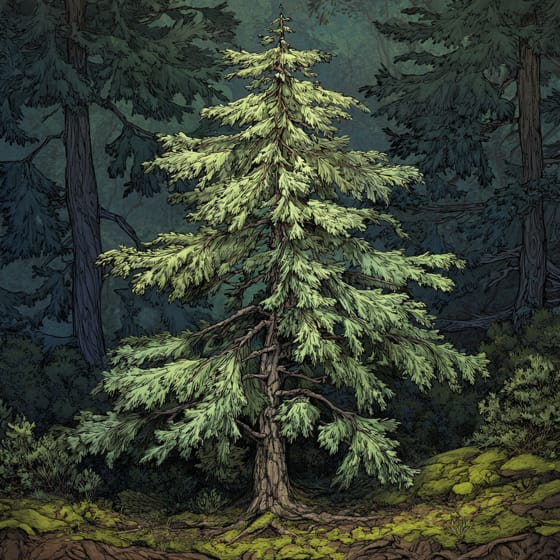
Tsuga heterophylla
Pacific coralroot depends on this tree for nutrients, transferred via fungi.
Pseudotsuga menziesii
Pacific coralroot also depends on this tree for nutrients, using shared fungal networks.
Bombus vosnesenskii
This bumblebee pollinates Pacific coralroot by visiting its small, reddish flowers.
Drosophila busckii
This fly pollinates Pacific coralroot, attracted to the plant's unique floral scent.
This trait describes a symbiotic relationship between a fungus and the roots of a plant, benefiting both organisms.
This trait characterizes plants lacking specialized vascular tissues (xylem and phloem) for transporting water and nutrients.
Shade tolerant plants are adapted to grow and thrive in areas with low light levels, requiring less direct sunlight.
Describes a relationship between two different species where they live in close association, often benefiting one or both.

This trait signifies organisms belonging to a very old evolutionary group with ancestors dating back millions of years.

Forest habitats are terrestrial environments dominated by dense tree cover, supporting a high diversity of plant and animal life.
This trait describes organisms that live on or in a host organism, obtaining nutrients at the host's expense.

Endangered status indicates a species is at a very high risk of extinction in the wild in the near future.
No aliases listed yet.
Danger
1/5 · Very low
Always look but don't touch plants in the wild, as some can be harmful.
The easiest way to identify Pacific coralroot is to use the Snappit nature identifier app.
20-60 cm
0.5-1.5 cm
Late spring to late summer
No
None
Perennial
Insect
Zoom in to split clusters and explore where this object has been snapped.

Montana, US
You might spot Bighorn Sheep and Mountain Goat.
View guide →

Oregon, US
You might spot White Pasqueflower and Clark's Nutcracker.
View guide →

British Columbia, CA
You might spot Western Rattlesnake Plantain and Shinyleaf Meadowsweet.
View guide →

Hawaii, US
You might spot Hawaiian Monk Seal, Seahorse, and Box Jellyfish.
View guide →

Washington, US
You might spot Broad-Leaved Stonecrop and Western Sword Fern.
View guide →

California, US
You might spot Douglas's Ground Squirrel and Button's Banana Slug.
View guide →
Take the discovery with you
Snap it with Snappit to identify it, learn what makes it special, and add the discovery to your collection.








.jpg&width=800)



_001.jpg&width=800)



