





Sawtooth oak
Quercus acutissima
The Sawtooth Oak is a strong tree with sharp, pointed leaves. It grows tall and provides shade for animals and people. Its acorns are a tasty treat for squirrels and birds!
Habitat: Forests
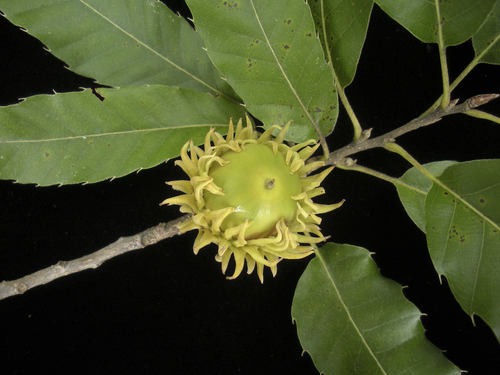
The Sawtooth oak is a medium to large deciduous tree with a broad, rounded crown. Its most striking feature is its glossy, dark green leaves, each edged with numerous sharp, bristle-tipped 'teeth.' The bark is deeply furrowed, revealing a dark, rough texture.
Category
PlantsRarity
Common
Danger
1/5 · Very low
Snaps
Be the first to snap!
Even in winter, its tough leaves sometimes cling to the branches until spring!
Its name 'acutissima' means 'most pointed,' just like its spiky leaf tips!
This tree was brought to America from faraway Asia in the 1800s!
Unlike some oaks, Sawtooth acorns grow and ripen completely in just one year!
Sawtooth oak can produce acorns at a young age and in large numbers, which helps it spread its seeds quickly across the land.
Sawtooth oak has deep roots that help it survive through dry spells, making it tough when water is scarce.
Sawtooth oak's acorns contain tannins, which can deter some animals from eating too many, protecting its precious seeds.
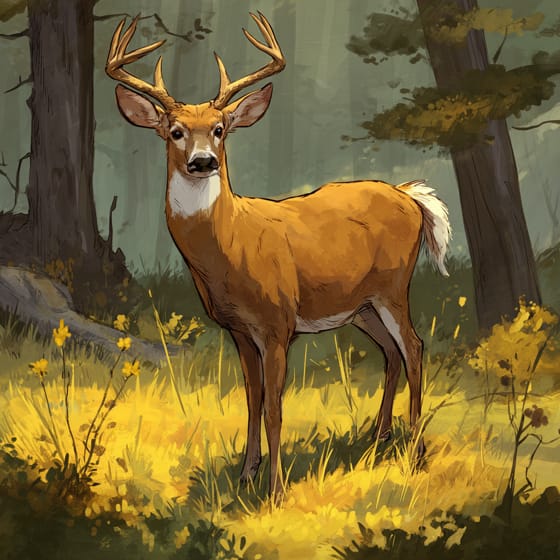
Odocoileus virginianus
eats its protein-rich acorns

Sciurus carolinensis
hoards and eats its nutritious acorns
Meleagris gallopavo
forages for its acorns

Turdus migratorius
builds nests in its branches
Deciduous plants periodically shed all their leaves, typically during autumn or dry seasons.
Shade tolerant plants are adapted to grow and thrive in areas with low light levels, requiring less direct sunlight.
Broadleaf trees are angiosperms characterized by flat, wide leaves that are typically shed annually in temperate climates.
Nut bearing plants produce hard-shelled fruits, commonly known as nuts, which contain a single seed and are a valuable food source.

Edible plants are those parts of a plant that are considered safe for human consumption.

Timber refers to wood that has been prepared for use in building and carpentry.

Forest habitats are terrestrial environments dominated by dense tree cover, supporting a high diversity of plant and animal life.

Describes a species whose presence and role have a disproportionately large effect on its environment.
No aliases listed yet.
Danger
1/5 · Very low
Be careful not to climb too high in trees and watch out for falling branches.
The easiest way to identify Sawtooth oak is to use the Snappit nature identifier app.
1200-2100 cm
1200-1800 cm
2-5 cm
Spring
No
Mild
Perennial
Zoom in to split clusters and explore where this object has been snapped.
Recent snaps will appear here as new observations are added.
Take the discovery with you
Snap it with Snappit to identify it, learn what makes it special, and add the discovery to your collection.







.jpg&width=800)


_001.jpg&width=800)


