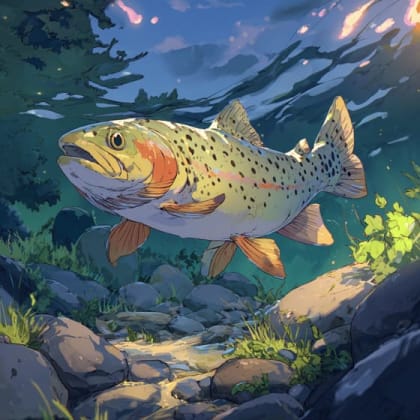




Parachromis managuensis
Parachromis managuensis
The Parachromis managuensis, also known as the Jaguar Cichlid, is a colorful fish that lives in warm waters. It has beautiful patterns and loves to swim around rocks and plants in its home.
Habitat: Freshwater rivers and lakes
The Parachromis managuensis is a robust, elongated fish adorned with striking dark blotches and spots over a yellowish-gold or silvery body. These 'jaguar-like' markings make it visually distinct from most other freshwater fish. Its fins often have a reddish hue, adding to its vibrant appearance.
Category
FishRarity
Common
Danger
2/5 · Low
Snaps
Be the first to snap!
A female can lay thousands of eggs, often on flat rocks, which both parents guard!
Its name comes from Lake Managua, Nicaragua, where this stunning fish was first found!
These fish are sometimes called 'Jaguar Cichlids' because their spots look like a jaguar's fur!
These fish can make grunting sounds underwater using their swim bladder to communicate!
Parachromis managuensis can quickly change its skin patterns to blend seamlessly with its environment for hunting or hiding.
Parachromis managuensis has powerful jaws and sharp teeth that help them ambush and capture their prey with a strong bite.
Parachromis managuensis can vigorously defend their eggs and young, ensuring their offspring have a better chance of survival.
This carnivorous fish primarily eats smaller fish, insects, and crustaceans found in its freshwater home.
Age differences: Younger fish eat more insects and larvae; as they grow, their diet shifts to mainly smaller fish.
Poecilia sphenops
as food in their shared freshwater habitats.
Astyanax aeneus
a common food source for adult fish.
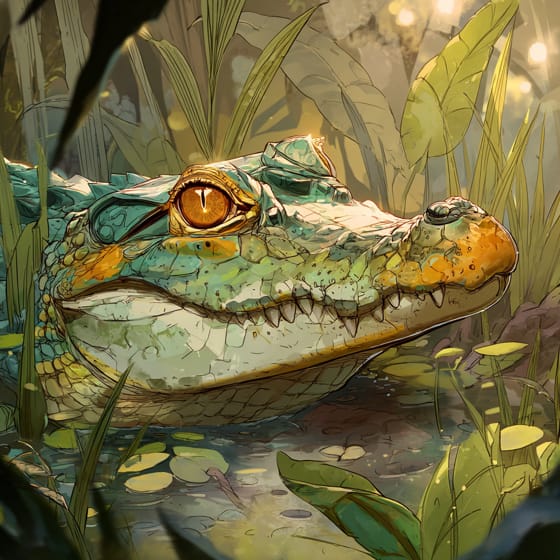
Caiman crocodilus
when larger predators hunt in the shallows.
Marked with spots or patches of a different color.
Social animals live in organized groups, cooperating for survival benefits such as foraging, defense, and raising offspring.
Colorful describes organisms or objects displaying a wide range of bright and distinct colors.
This trait identifies organisms whose diet consists entirely or primarily of animal tissue.

Diurnal animals are primarily active during daylight hours, typically resting or sleeping at night.

Freshwater habitats include non-saline aquatic environments such as rivers, lakes, ponds, and wetlands, vital for numerous species.

Aquatic habitats encompass environments where organisms live predominantly in water, including oceans, rivers, lakes, and wetlands.
Danger
2/5 · Low
Always watch your fingers around fish tanks to keep them safe and happy.
The easiest way to identify Parachromis managuensis is to use the Snappit nature identifier app.
20-40 cm
0.3-1.5 kg
10-15 years
This carnivorous fish primarily eats smaller fish, insects, and crustaceans found in its freshwater home.
8 km/h
Freshwater rivers and lakes
Ambush
Zoom in to split clusters and explore where this object has been snapped.
Recent snaps will appear here as new observations are added.
Take the discovery with you
Snap it with Snappit to identify it, learn what makes it special, and add the discovery to your collection.