





peafowl
peafowl
Peafowls are colorful birds known for their beautiful tail feathers. The males show off their feathers in a big fan to attract females. They are often seen in parks and gardens.
Habitat: Urban areas, forests
The peafowl has an iridescent blue body and a large, fan-like tail with intricate "eyespots," especially prominent in males. Females are duller, often with green necks and brownish bodies, lacking the elaborate tail plumage.
Category
BirdsRarity
Common
Danger
1/5 · Very low
Snaps
Be the first to snap!
A group of peafowl is called an “ostentation” or a “muster”!
Peacocks can vibrate their tail feathers to create a low-frequency rumble!
Peafowl can live for over 20 years in the wild, longer than most birds!
They use their long tail feathers to help them balance during short flights!
Peafowl can fan out their enormous tail feathers because it helps them attract mates with a spectacular visual show.
Peafowl has a loud, piercing call that helps them communicate across distances and warn others of danger.
Peafowl can spot tiny insects and potential predators from afar because they have excellent vision.
Peafowl are omnivores, enjoying a mix of seeds, fruits, insects, and even small animals!
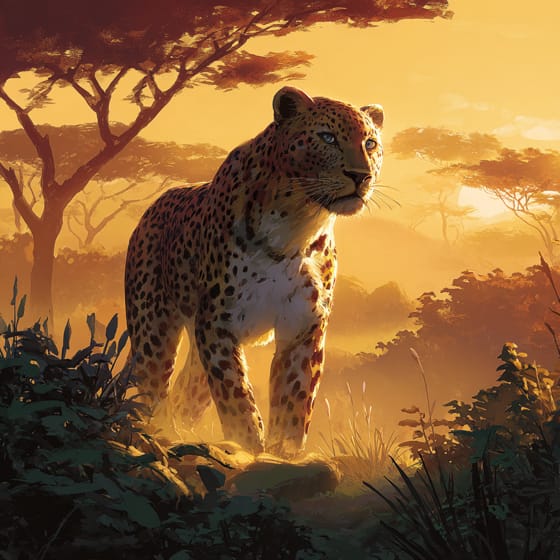
Panthera pardus
Large predators hunt peafowl, especially eggs and young.
Canis aureus
Jackals are opportunistic predators of peafowl eggs and chicks.
Ficus benghalensis
Peafowl forage on fallen fruits and seeds from these trees.
Oryctes rhinoceros
Peafowl consume various insects, including beetles.
Feathered describes animals, primarily birds, possessing a covering of feathers.
Social animals live in organized groups, cooperating for survival benefits such as foraging, defense, and raising offspring.
This trait identifies organisms whose diet includes both plant and animal matter.
Colorful describes organisms or objects displaying a wide range of bright and distinct colors.

Forest habitats are terrestrial environments dominated by dense tree cover, supporting a high diversity of plant and animal life.

Diurnal animals are primarily active during daylight hours, typically resting or sleeping at night.

This trait identifies organisms that exhibit exceptional swiftness in movement for hunting, escape, or travel.

This habitat trait indicates species that can coexist with humans in urban and suburban environments, utilizing man-made structures and green spaces.

Describes organisms that transfer pollen, enabling the fertilization and reproduction of plants.
Danger
1/5 · Very low
Always watch peafowls from a distance and do not try to touch them.
The easiest way to identify peafowl is to use the Snappit nature identifier app.
86-230 cm
130-160 cm
2.8-6 kg
10-25 years
16 km/h
Peafowl are omnivores, enjoying a mix of seeds, fruits, insects, and even small animals!
Urban areas, forests
Zoom in to split clusters and explore where this object has been snapped.
Recent snaps will appear here as new observations are added.

Massachusetts, US
You might spot American Bison, Domestic Bactrian Camel, and Black Bear.
View guide →

Nevada, US
You might spot Barbary Macaque, Chimpanzee, and African Lion.
View guide →

Liberec Region, CZ
You might spot Red Deer, Fallow Deer, and Wild Boar.
View guide →

Illinois, US
You might spot Elk, North American River Otter, and Bald Eagle.
View guide →

Gibraltar, GI
You might spot Parakeet, Tortoises, and Guinea Pig.
View guide →
Take the discovery with you
Snap it with Snappit to identify it, learn what makes it special, and add the discovery to your collection.




.jpg&width=800)







