





Persius Duskywing
Erynnis persius
The Persius Duskywing is a small butterfly with dark wings and a special love for sunny spots. They flutter around flowers and are often seen in meadows and open woods.
Habitat: Meadows and open woods
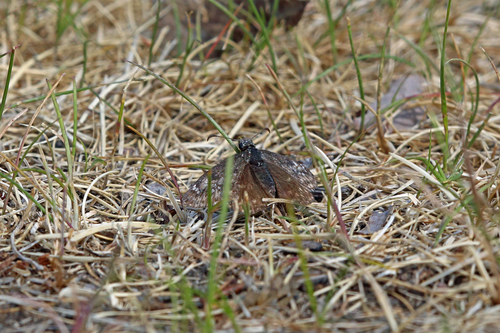
The Persius Duskywing is a small, robust butterfly with mottled dark gray to brownish-black wings. Its forewings often feature several small, faint, translucent white spots near the tip. Its overall appearance provides excellent camouflage against tree bark and dry leaves.
Category
InsectsRarity
Common
Danger
1/5 · Very low
Snaps
3
Its caterpillar babies are skilled builders, rolling up leaves to make cozy hideaways to live in.
Sometimes, adult duskywings sip moisture from damp soil or mud puddles to get important minerals!
Unlike 'true' butterflies, skippers like the Persius Duskywing have hooked antennae tips!
When resting, this butterfly often holds its forewings and hindwings at different angles, ready for a quick escape!
Persius Duskywing has dusky, mottled wings that help them blend perfectly with tree bark and dried leaves.
Persius Duskywing can fly with quick, darting movements because of their strong wing muscles, making them hard to catch.
Persius Duskywing has a long, straw-like proboscis that helps them drink sweet nectar from deep inside flowers.
Caterpillars munch on leaves, while adult butterflies enjoy sipping sweet nectar from colorful flowers!
Age differences: Caterpillars feed on the leaves of specific plants, while adults use their long proboscis to drink flower nectar.
Baptisia australis
Its caterpillars rely solely on these plants for food.
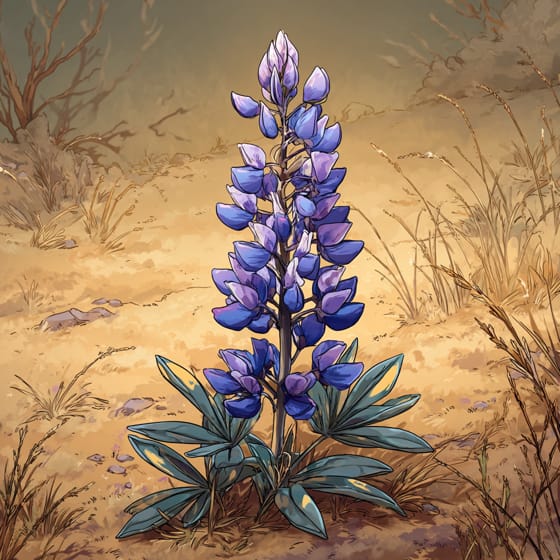
Lupinus perennis
Another essential host plant for Persius Duskywing caterpillars.

Asclepias syriaca
Adults drink nectar from these flowers for energy.
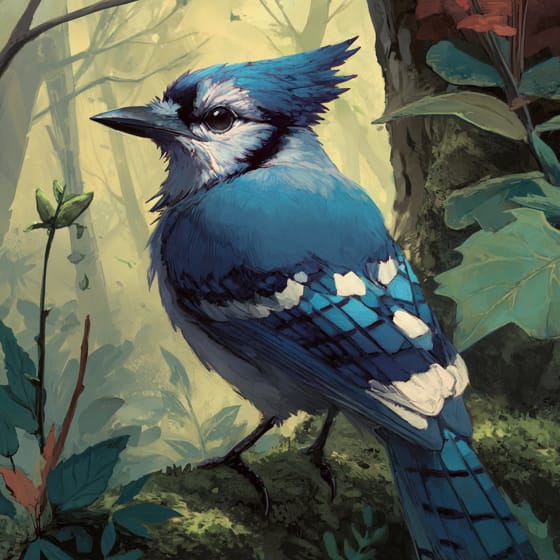
Cyanocitta cristata
Birds like blue jays often prey on adult duskywings.
Solitary animals live alone for most of their lives, only interacting with others for mating or parental care.
Camouflaged describes organisms that possess coloring or patterns that allow them to blend into their environment.
Colorful describes organisms or objects displaying a wide range of bright and distinct colors.
This trait characterizes organisms whose diet consists entirely or primarily of plant material.

Describes plants that are particularly attractive and beneficial to a wide range of pollinating organisms.

Forest habitats are terrestrial environments dominated by dense tree cover, supporting a high diversity of plant and animal life.

Diurnal animals are primarily active during daylight hours, typically resting or sleeping at night.

Describes organisms that transfer pollen, enabling the fertilization and reproduction of plants.
No aliases listed yet.
Danger
1/5 · Very low
It's best to watch butterflies from a distance so they feel safe and can keep flying.
The easiest way to identify Persius Duskywing is to use the Snappit nature identifier app.
30-40 mm
19-22 mm
7-14 days
20 km/h
Caterpillars munch on leaves, while adult butterflies enjoy sipping sweet nectar from colorful flowers!
Meadows and open woods
Foraging
Zoom in to split clusters and explore where this object has been snapped.
Jun 10, 2015
Gakona Historic DistrictPhoto attribution
(c) Nigel Voaden, some rights reserved (CC BY)
License: CC BY 4.0 ↗
Image may be shown cropped inside the card frame.

Oregon, US
You might spot Mule Deer, Song Sparrow, and Northern Yellow Warbler.
View guide →

Colorado, US
You might spot Elk, Mule Deer, and Black-Billed Magpie.
View guide →

Alaska, US
You might spot Canadian Bunchberry, Saskatoon, and Canadian Buffalo-Berry.
View guide →

Colorado, US
You might spot Elk, Mule Deer, and Black-Billed Magpie.
View guide →
Take the discovery with you
Snap it with Snappit to identify it, learn what makes it special, and add the discovery to your collection.







.jpg&width=800)


