





Portuguese Heath
Erica lusitanica
The Portuguese Heath is a lovely shrub with tiny, bell-shaped flowers. It blooms in beautiful colors and can be found in sunny places, making it a cheerful addition to gardens.
Habitat: Coastal areas
The Portuguese Heath is an upright shrub with numerous slender stems densely covered in tiny, needle-like leaves. It produces abundant clusters of small, bell-shaped flowers, typically brilliant white, sometimes faintly pink, giving it a frothy appearance that stands out in winter landscapes.
Category
PlantsRarity
Common
Danger
1/5 · Very low
Snaps
Be the first to snap!
In some places, Portuguese Heath grows so tall it can look like a small tree!
It's sometimes called 'Spanish Heath' or 'Mediterranean Heath' too, as it grows widely there!
Its scientific name, Erica, comes from an ancient Greek word for "heather" or "broom"!
The tiny seeds of this plant are carried far and wide by the wind to new places!
Portuguese Heath can bloom in winter, providing vital nectar when few other plants are flowering for insects.
Portuguese Heath has a tough nature, allowing it to colonize disturbed or poor soils, helping new plants grow.
Portuguese Heath has a dense, bushy form that creates shelter, helping small animals find refuge and hide.
Apis mellifera
Honey bees gather its nectar and pollen during winter.
Capra hircus
Goats browse on its foliage in naturalized areas.
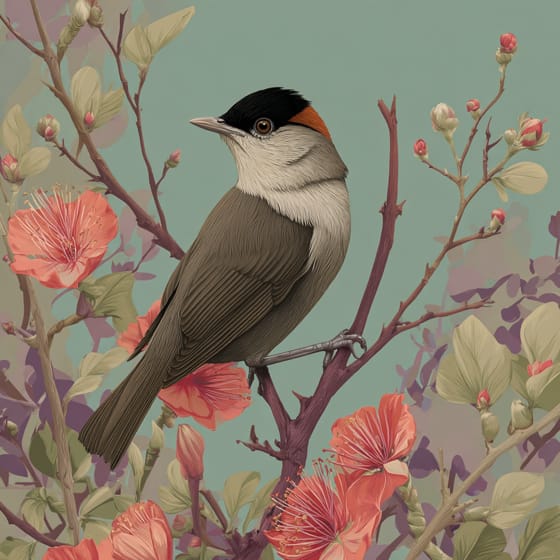
Sylvia atricapilla
Small birds like blackcaps find refuge and nesting sites within its dense branches.
Bell-shaped flowers possess petals fused or arranged to form a cup-like or campanulate structure resembling a bell.
Flowering plants are any plants that produce flowers as part of their reproductive cycle.
A shrub is a woody plant smaller than a tree, typically with multiple stems branching from or near the ground.
Evergreen plants retain their foliage throughout the year, never shedding all their leaves at once.

Fragrant flowers emit a pleasant aroma, often to attract pollinators or for defense.

Colorful describes organisms or objects displaying a wide range of bright and distinct colors.

Describes plants that are particularly attractive and beneficial to a wide range of pollinating organisms.

Coastal habitats are dynamic environments located along the interface between land and sea, influenced by tides, waves, and saltwater.
No aliases listed yet.
Danger
1/5 · Very low
Always look but don't touch plants without asking an adult first.
The easiest way to identify Portuguese Heath is to use the Snappit nature identifier app.
150-350 cm
100-250 cm
0.2-0.4 cm
Winter to early spring
No
None
Perennial
Zoom in to split clusters and explore where this object has been snapped.
Recent snaps will appear here as new observations are added.
Take the discovery with you
Snap it with Snappit to identify it, learn what makes it special, and add the discovery to your collection.








.jpg&width=800)


_001.jpg&width=800)



