





prairie milkweed
Asclepias sullivantii
Prairie milkweed is a tall plant with beautiful pink flowers. It grows in fields and is very important for butterflies, especially monarchs, who love to lay their eggs on it.
Habitat: Grasslands
The prairie milkweed has smooth, shiny, lance-shaped leaves and dense, rounded clusters of rosy-pink to purple flowers. Its foliage appears clean and sleek, standing out amongst other prairie plants.
Category
PlantsRarity
Common
Danger
1/5 · Very low
Snaps
Be the first to snap!
Break a stem, and watch out for milky white sap!
It can grow taller than many kids, reaching your chest!
Its name honors Joseph Sullivant, a plant-loving scientist!
The bumpy seed pods look just like tiny canoes!
Prairie milkweed has special leaves that monarch caterpillars eat to grow big and strong.
This plant can reach deep underground with a long taproot to find water during dry spells.
It produces seeds with silky parachutes that carry them far away on the wind.
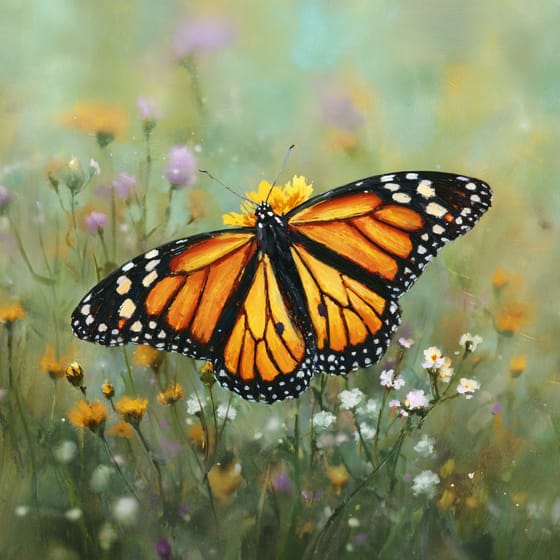
Danaus plexippus
Caterpillars feast on its leaves to grow.
Danaus plexippus
Adult butterflies drink sweet nectar from its flowers.

Bombus impatiens
Bumble bees help the plant make seeds.
.jpg&width=800)
Tetraopes tetraophthalmus
Adults and larvae feed on its leaves and roots.
Flowering plants are any plants that produce flowers as part of their reproductive cycle.
Summer blooming plants produce their flowers during the summer season, often providing vibrant color when many other plants have finished.
Fragrant flowers emit a pleasant aroma, often to attract pollinators or for defense.
Medicinal plants possess chemical compounds that can be used for therapeutic purposes to treat illnesses or maintain health.

Edible plants are those parts of a plant that are considered safe for human consumption.

Grassland habitats are terrestrial biomes dominated by grasses and herbaceous plants, supporting a variety of grazing animals.

Describes plants that are particularly attractive and beneficial to a wide range of pollinating organisms.

Describes a species whose presence and role have a disproportionately large effect on its environment.
No aliases listed yet.
Danger
1/5 · Very low
Don't eat any plants without asking an adult first.
The easiest way to identify prairie milkweed is to use the Snappit nature identifier app.
60-120 cm
30-60 cm
1-2 cm
Summer
No
Moderate
Perennial
Zoom in to split clusters and explore where this object has been snapped.
Recent snaps will appear here as new observations are added.
Take the discovery with you
Snap it with Snappit to identify it, learn what makes it special, and add the discovery to your collection.








.jpg&width=800)


_001.jpg&width=800)



