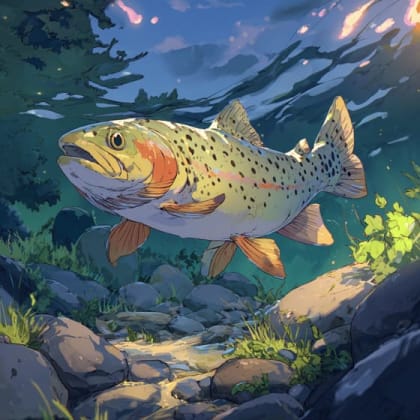
Pristipomoides filamentosus
Pristipomoides filamentosus
The Pristipomoides filamentosus, also known as the longtail snapper, is a colorful fish found in warm waters. It has a long, slender body and loves to swim around coral reefs.
Habitat: Coastal areas
The Pristipomoides filamentosus is a beautiful fish with a rosy to pinkish-red body, often appearing silvery on its belly. It has large eyes and a pointed snout, with long, thread-like extensions on its dorsal fin, giving it a distinctive silhouette.
Category
FishRarity
Common
Danger
2/5 · Low
Snaps
Be the first to snap!
Their name 'filamentosus' refers to the thread-like extensions on their fins.
These fish can live for nearly two decades in the deep ocean.
They are a popular food fish, especially enjoyed in Hawaii!
They often hang out near sunken ships and rocky underwater peaks!
Pristipomoides filamentosus has extra-large eyes that help them see in the dimly lit waters where sunlight barely reaches.
This fish has a long, flowing filament on its fin, which may help it feel currents or signal to other fish.
The Pristipomoides filamentosus has a keen sense of hearing through its lateral line, helping it detect prey and predators.
A skilled hunter, eating smaller fish and squids found in the deep ocean.
Age differences: As they grow, Pristipomoides filamentosus tends to eat larger prey.
Myctophum affine
A common prey fish in deep waters.
Uroteuthis edulis
Frequently hunted in their deep-sea habitat.

Carcharhinus longimanus
Larger sharks prey on these snapper.
Social animals live in organized groups, cooperating for survival benefits such as foraging, defense, and raising offspring.
Colorful describes organisms or objects displaying a wide range of bright and distinct colors.
Piscivorous organisms are animals that primarily subsist on a diet of fish.
Coastal habitats are dynamic environments located along the interface between land and sea, influenced by tides, waves, and saltwater.

This trait identifies organisms whose diet consists entirely or primarily of animal tissue.

Diurnal animals are primarily active during daylight hours, typically resting or sleeping at night.

This trait identifies organisms that exhibit exceptional swiftness in movement for hunting, escape, or travel.

Marine habitats encompass all saltwater environments of the Earth's oceans, supporting an immense diversity of aquatic life.
Danger
2/5 · Low
Always be careful around water and never swim alone.
The easiest way to identify Pristipomoides filamentosus is to use the Snappit nature identifier app.
40-100 cm
1-8.2 kg
10-18 years
A skilled hunter, eating smaller fish and squids found in the deep ocean.
25 km/h
Coastal areas
Pursuit
Zoom in to split clusters and explore where this object has been snapped.
Recent snaps will appear here as new observations are added.
Take the discovery with you
Snap it with Snappit to identify it, learn what makes it special, and add the discovery to your collection.