





purple-flowered raspberry
Rubus odoratus
The purple-flowered raspberry is a beautiful plant with lovely purple flowers. It grows in sunny spots and can produce tasty berries that many animals enjoy.
Habitat: Forests
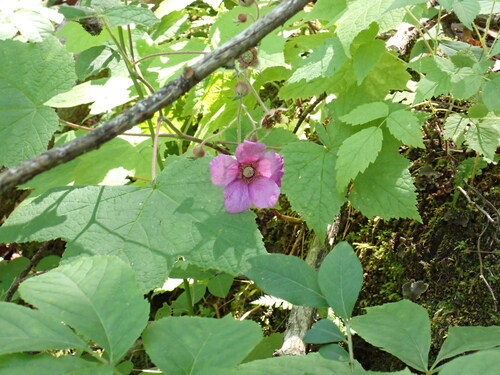
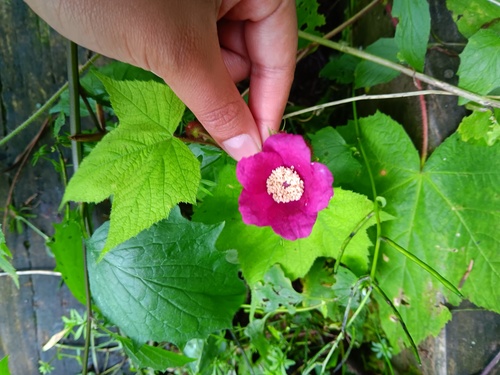
The purple-flowered raspberry has large, showy rose-purple to magenta flowers, each with five petals. Its stems are covered in soft, glandular bristles, not sharp thorns. The leaves are broad and maple-like, with 3-5 lobes, and the flat, red berries resemble small raspberries.
Category
PlantsRarity
Common
Danger
1/5 · Very low
Snaps
28
Its scientific name 'odoratus' refers to the plant's lovely, sweet-smelling flowers!
The fruit is flatter and has a milder, less sweet taste than common garden raspberries.
This plant can grow happily in shady spots, making it unique among many berry plants.
Unlike most raspberries, its stems are bristly instead of having sharp thorns.
Purple-flowered raspberry stems have soft bristles that deter many hungry animals from munching on its leaves!
This plant spreads underground using special roots called rhizomes, helping it form dense, protective thickets.
Its beautiful, fragrant flowers act like a bright, scented signal, attracting many different pollinators to visit.
Apis mellifera
Visits flowers for nectar and pollen.
Bombus impatiens
Key native pollinator for its blooms.
Ursus americanus
Feasts on the abundant, ripe berries.
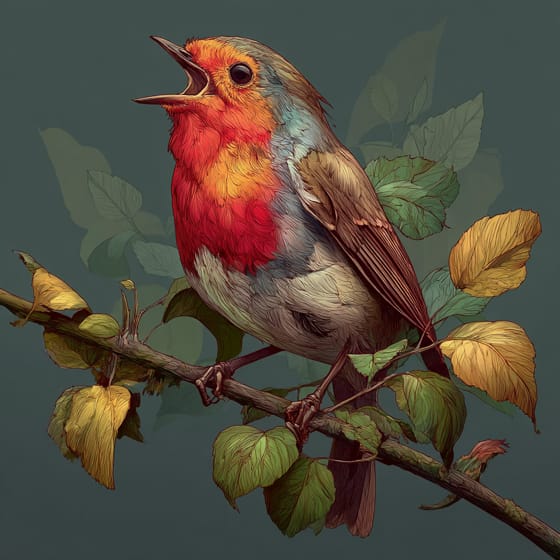
Turdus migratorius
Consumes berries, aiding seed dispersal.
Flowering plants are any plants that produce flowers as part of their reproductive cycle.
A shrub is a woody plant smaller than a tree, typically with multiple stems branching from or near the ground.
Summer blooming plants produce their flowers during the summer season, often providing vibrant color when many other plants have finished.
Fragrant flowers emit a pleasant aroma, often to attract pollinators or for defense.

Fruit-bearing plants produce fruits, which are the mature ovaries of flowering plants containing seeds.

Edible plants are those parts of a plant that are considered safe for human consumption.

Describes plants that are particularly attractive and beneficial to a wide range of pollinating organisms.

Forest habitats are terrestrial environments dominated by dense tree cover, supporting a high diversity of plant and animal life.
No aliases listed yet.
Danger
1/5 · Very low
Always ask an adult before picking any flowers or berries.
The easiest way to identify purple-flowered raspberry is to use the Snappit nature identifier app.
100-250 cm
3-5 cm
Late spring to late summer
Yes
None
Perennial
Insect
Zoom in to split clusters and explore where this object has been snapped.
Jul 4, 2025
Chesterfield GorgePhoto attribution
no rights reserved
License: CC0 1.0 ↗
Image may be shown cropped inside the card frame.
Jun 24, 2024
Chenango County Courthouse DistrictPhoto attribution
(c) Dominic McLean, some rights reserved (CC BY)
License: CC BY 4.0 ↗
Image may be shown cropped inside the card frame.

Massachusetts, US
You might spot Common Eastern Bumble Bee and Eastern Skunk Cabbage.
View guide →

Wisconsin, US
You might spot Turkey, White-Tailed Deer, and Dame's Rocket.
View guide →

Vermont, US
You might spot Asian Bittersweet, Alder Buckthorn, and Eastern Newt.
View guide →

New York, US
You might spot American Robin, Pond Slider, and Northern Cardinal.
View guide →

Maryland, US
You might spot American Cancer-Root and Rue Anemone.
View guide →

Massachusetts, US
You might spot Mountain Laurel, Azure Bluet, and Partridgeberry.
View guide →
Take the discovery with you
Snap it with Snappit to identify it, learn what makes it special, and add the discovery to your collection.







.jpg&width=800)


_001.jpg&width=800)



