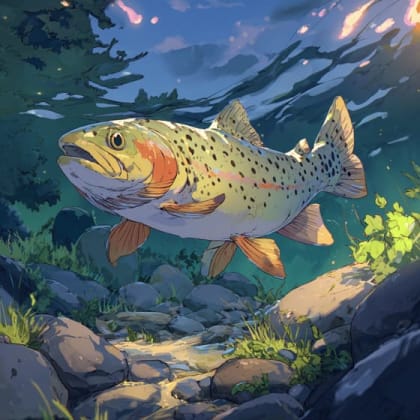
Pygocentrus
Pygocentrus
The Pygocentrus, also known as the piranha, is a small fish famous for its sharp teeth and strong jaws. They live in rivers and lakes and are known for swimming in groups called schools.
Habitat: Freshwater rivers and lakes
The Pygocentrus is a deep-bodied, silver-scaled fish, often sporting a striking reddish-orange belly, especially in the Red-bellied Piranha. It has a distinctive blunt head and a prominent lower jaw. Its compact, muscular build makes it visually different from slender, elongated river fish.
Category
FishRarity
Common
Danger
3/5 · Moderate
Snaps
Be the first to snap!
Despite their fearsome reputation, most piranha attacks on humans only happen if they feel threatened.
Pygocentrus fish are sometimes called 'piranhas', a name meaning 'tooth fish' in the Tupi language.
Some Amazonian tribes use dried piranha jaws as tools for cutting hair or sharpening darts!
Their powerful jaws can snap shut with incredible force, strong enough to crush bones!
Pygocentrus can swim in large schools because this behavior helps them overwhelm predators and hunt more effectively.
Pygocentrus has a highly sensitive lateral line system that helps them detect tiny water vibrations from struggling prey.
These powerful fish mostly eat other fish, but they will also snack on insects and plants.
Age differences: Younger Pygocentrus eat more insects and smaller prey, while adults focus on larger fish.
Cichla ocellaris
Juvenile Pygocentrus are prey for larger fish.
Hydrolycus scomberoides
Faster, larger fish hunt Pygocentrus in their habitats.
Colossoma macropomum
Pygocentrus targets smaller or injured Tambaqui.
Chironomus plumosus
Eats various insect larvae in its aquatic environment.
Social animals live in organized groups, cooperating for survival benefits such as foraging, defense, and raising offspring.
Colorful describes organisms or objects displaying a wide range of bright and distinct colors.
Piscivorous organisms are animals that primarily subsist on a diet of fish.
This trait identifies organisms whose diet consists entirely or primarily of animal tissue.

Diurnal animals are primarily active during daylight hours, typically resting or sleeping at night.

Freshwater habitats include non-saline aquatic environments such as rivers, lakes, ponds, and wetlands, vital for numerous species.
Danger
3/5 · Moderate
Always be careful around water where Pygocentrus live, as they can bite if they feel threatened.
The easiest way to identify Pygocentrus is to use the Snappit nature identifier app.
15-39 cm
0.5-4 kg
10-15 years
These powerful fish mostly eat other fish, but they will also snack on insects and plants.
25 km/h
Freshwater rivers and lakes
Ambush
Zoom in to split clusters and explore where this object has been snapped.
Recent snaps will appear here as new observations are added.

US
You might spot Carpenter Ants, Typical Sugar Ants and Allies and Axolotl.
View guide →

New York, US
You might spot Coral, Sea Lion, and African Penguin.
View guide →

Illinois, US
You might spot Beluga Whale, Pacific White-Sided Dolphin, and Sea Otter.
View guide →

Kentucky, US
You might spot American Alligator, Penguin, and Great White Shark.
View guide →

Minnesota, US
You might spot Sand Tiger Shark, Loggerhead Sea Turtle, and Spiders.
View guide →
%2C_Playa_de_Boulders%2C_Simon%27s_Town%2C_Sud%C3%A1frica%2C_2018-07-23%2C_DD_11.jpg&width=800)
Louisiana, US
You might spot African Penguin, Sea Otter, and Sea Turtle.
View guide →
Take the discovery with you
Snap it with Snappit to identify it, learn what makes it special, and add the discovery to your collection.