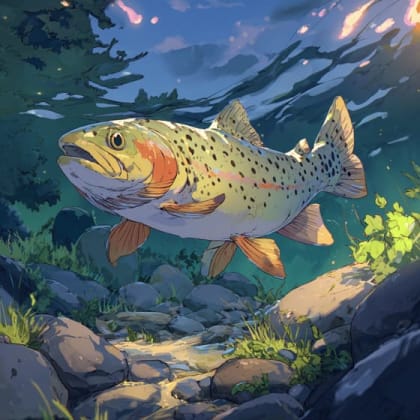
Rainbowfish
Running River rainbowfish
Rainbowfish are tiny and colorful, like little rainbows swimming in the water! They love to group together and are very friendly.
The Rainbowfish has an elongated body adorned with iridescent scales that shimmer in vibrant hues of blue, green, yellow, and red. It often displays distinct horizontal stripes along its sides, making it visually striking and different from plain-coloured stream fish.
Category
FishRarity
Common
Danger
2/5 · Low
Snaps
Be the first to snap!
Did you know male Rainbowfish 'flash' their brightest colours to win over females?
Some Rainbowfish can instantly change their colour intensity like a mood ring!
The oldest known Rainbowfish lived for over 8 years in an aquarium!
They use their fins to 'dance' in the water, showing off their beauty!
Rainbowfish can brighten or dim their dazzling colors because it helps them attract mates and communicate with other fish.
Rainbowfish have excellent eyesight that helps them easily spot tiny insects and algae to eat in clear water.
Rainbowfish can swim together in large groups, which helps them confuse predators and stay safe in open waters.
These tiny fish munch on small insects, algae, and plankton found floating in the water.
Age differences: Younger fish primarily consume microscopic plankton.
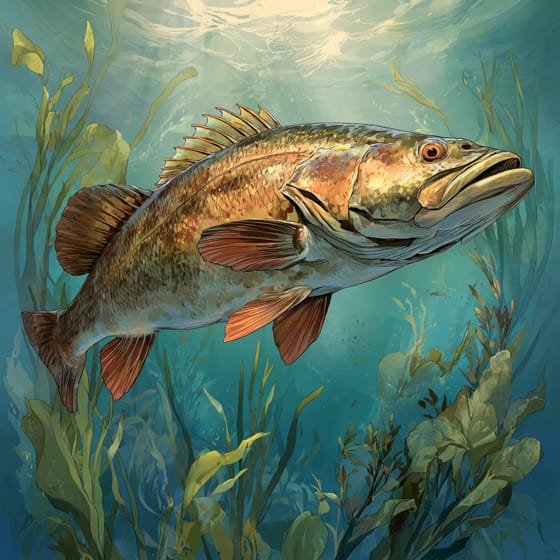
Lates calcarifer
Larger predatory fish hunt juvenile and adult rainbowfish.
Platalea regia
Wading birds often prey on rainbowfish in shallow waters.
Chironomus plumosus
Rainbowfish consume the larvae of various aquatic insects.
Spirogyra fluviatilis
They graze on filamentous algae growing on submerged surfaces.
Wildlife encompasses all undomesticated animal and plant life existing in their natural habitats.
Social animals live in organized groups, cooperating for survival benefits such as foraging, defense, and raising offspring.
This trait identifies organisms whose diet includes both plant and animal matter.
Colorful describes organisms or objects displaying a wide range of bright and distinct colors.

Freshwater habitats include non-saline aquatic environments such as rivers, lakes, ponds, and wetlands, vital for numerous species.

Aquatic habitats encompass environments where organisms live predominantly in water, including oceans, rivers, lakes, and wetlands.
Danger
2/5 · Low
Watch quietly from a distance and never try to feed or chase wild animals.
The easiest way to identify Rainbowfish is to use the Snappit nature identifier app.
8-15 cm
0.005-0.02 kg
3-6 years
These tiny fish munch on small insects, algae, and plankton found floating in the water.
7 km/h
Foraging
2 m
Zoom in to split clusters and explore where this object has been snapped.
Recent snaps will appear here as new observations are added.
Take the discovery with you
Snap it with Snappit to identify it, learn what makes it special, and add the discovery to your collection.