.jpg&width=800)





red-berried elder
Sambucus racemosa
The red-berried elder is a bushy plant with bright red berries. It grows in many places and is loved by birds who eat its tasty fruits!
Habitat: Forests
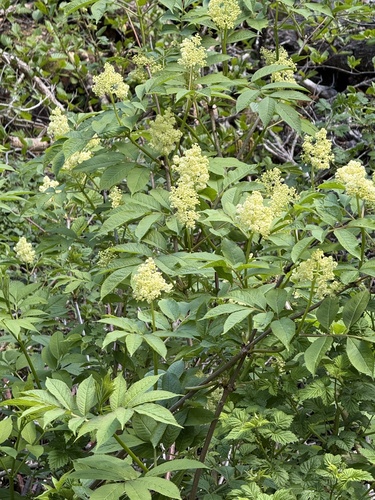
The red-berried elder has prominent upright clusters of small, bright red berries that ripen in summer. Its small, creamy-white flowers grow in dense, conical or pyramid-shaped clusters. The large, green leaves are made of several pointed leaflets.
Category
PlantsRarity
Common
Danger
3/5 · Moderate
Snaps
43
Elderberry wood is hollow, making it perfect for crafting traditional flutes!
Native American tribes traditionally used elderberry bark to make a dark black dye!
Some birds love these berries so much they can turn their droppings bright red!
This plant's quick growth helps it pop up rapidly after forest fires!
Red-berried elder has bright red, upright berry clusters that help it attract birds for efficient seed dispersal.
Red-berried elder can withstand cold winters because it is deciduous, dropping leaves to conserve energy.
Red-berried elder can grow very quickly, helping it fill in open spaces after forest disturbances.
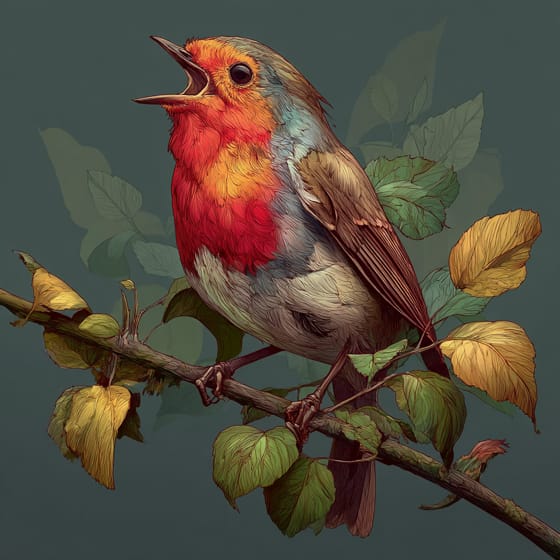
Turdus migratorius
eats ripe berries
Ursus americanus
consumes the fruit
Apis mellifera
visits flowers for nectar
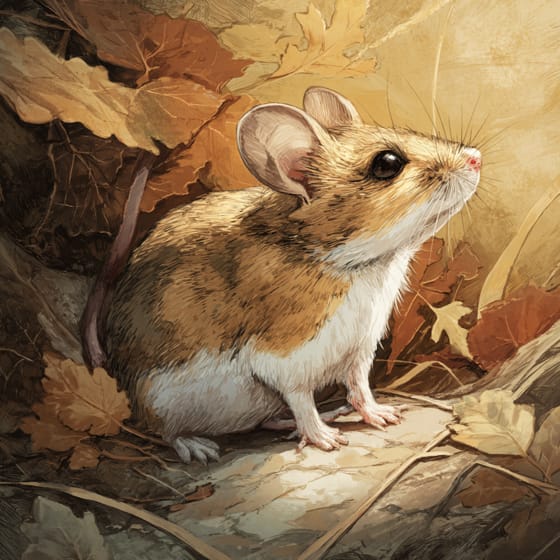
Peromyscus maniculatus
uses dense shrubs for cover
Deciduous plants periodically shed all their leaves, typically during autumn or dry seasons.
A shrub is a woody plant smaller than a tree, typically with multiple stems branching from or near the ground.
Fruit-bearing plants produce fruits, which are the mature ovaries of flowering plants containing seeds.
Medicinal plants possess chemical compounds that can be used for therapeutic purposes to treat illnesses or maintain health.

Edible plants are those parts of a plant that are considered safe for human consumption.

Describes plants that are particularly attractive and beneficial to a wide range of pollinating organisms.

Forest habitats are terrestrial environments dominated by dense tree cover, supporting a high diversity of plant and animal life.
Danger
3/5 · Moderate
Do not eat the berries without asking an adult, as some parts of the plant can be harmful.
The easiest way to identify red-berried elder is to use the Snappit nature identifier app.
200-600 cm
150-400 cm
0.3-0.5 cm
Late spring to early summer
No
Moderate
Perennial
Zoom in to split clusters and explore where this object has been snapped.
May 31, 2026
Sunrise Historic DistrictPhoto attribution
(c) Hill Craddock, some rights reserved (CC BY)
License: CC BY 4.0 ↗
Image may be shown cropped inside the card frame.

New York, US
You might spot Dame's Rocket, American Pokeweed, and American Toad.
View guide →

Washington, US
You might spot Pacific Banana Slug and Oregon Forestsnail.
View guide →

Michigan, US
You might spot Yellow Lady's Slipper and Ring-Billed Gull.
View guide →

New Hampshire, US
You might spot Eastern White Pine and White-Tailed Deer.
View guide →

Wisconsin, US
You might spot Eastern Redcedar, Rock Polypody, and Vulture.
View guide →

Pennsylvania, US
You might spot Downy Rattlesnake Plantain and Striped Wintergreen.
View guide →
Take the discovery with you
Snap it with Snappit to identify it, learn what makes it special, and add the discovery to your collection.







.jpg&width=800)



_001.jpg&width=800)



