





Red-flanked Bluetail
Tarsiger cyanurus
The Red-flanked Bluetail is a small, colorful bird with bright blue wings and a lovely orange belly. It loves to hop around in the bushes and sing sweet songs in the forest.
Habitat: Forests
The Red-flanked Bluetail male has a striking bright blue tail, rump, and upperparts, with a black mask and vibrant orange flanks. Its belly is white, contrasting sharply with the rich colors, while females are duller olive-brown with blue tails.
Category
BirdsRarity
Common
Danger
1/5 · Very low
Snaps
1
During winter, these birds travel from chilly forests to warmer, subtropical lands.
Its bright blue feathers are so vivid, they seem to glow in the shady forest!
Red-flanked Bluetails often nest in tree hollows or old stumps, keeping their eggs safe.
This small bird loves to hop around on the ground, flicking its tail as it searches for food.
Red-flanked Bluetail can migrate thousands of kilometers because of its incredible endurance and innate navigational skills.
Red-flanked Bluetail has keen eyesight and quick reflexes that help them snatch tiny insects from the air or ground.
Red-flanked Bluetail can produce a beautiful, complex song because of its specialized vocal cords, used for attracting mates.
This little bird mostly eats insects and spiders, but enjoys some berries too!
Formica rufa
A primary food source.
Sambucus racemosa
Provides crucial winter berries.

Accipiter nisus
A common aerial predator.
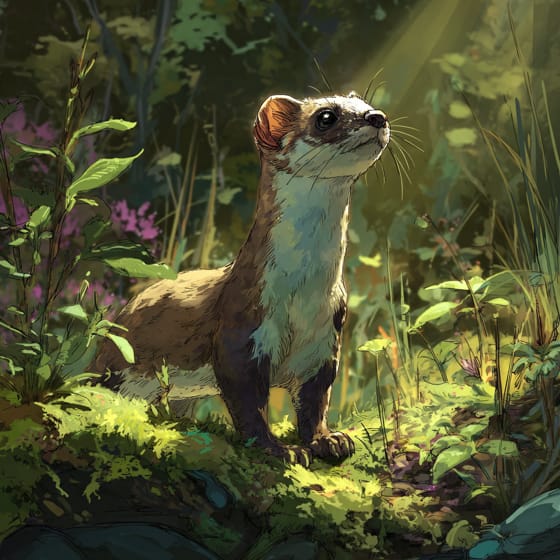
Mustela erminea
Hunts eggs and young in nests.
Feathered describes animals, primarily birds, possessing a covering of feathers.
Singing animals produce complex vocalizations, often for purposes of attracting mates, defending territory, or communicating within their species.
Arboreal animals live primarily in trees, utilizing them for shelter, food, and protection from predators.
Colorful describes organisms or objects displaying a wide range of bright and distinct colors.

This trait identifies organisms whose diet primarily consists of insects and other small invertebrates.

This habitat trait identifies species found in mountainous regions, characterized by high elevation, steep slopes, and varying climate zones.

Forest habitats are terrestrial environments dominated by dense tree cover, supporting a high diversity of plant and animal life.

Diurnal animals are primarily active during daylight hours, typically resting or sleeping at night.

Migratory animals undertake seasonal movements from one region to another, typically in response to changes in climate or food availability.
No aliases listed yet.
Danger
1/5 · Very low
Always watch birds from a distance and be quiet so you don’t scare them away.
The easiest way to identify Red-flanked Bluetail is to use the Snappit nature identifier app.
13-15 cm
20-24 cm
0.011-0.018 kg
2-5 years
40 km/h
This little bird mostly eats insects and spiders, but enjoys some berries too!
Forests
Zoom in to split clusters and explore where this object has been snapped.
Take the discovery with you
Snap it with Snappit to identify it, learn what makes it special, and add the discovery to your collection.





.jpg&width=800)






