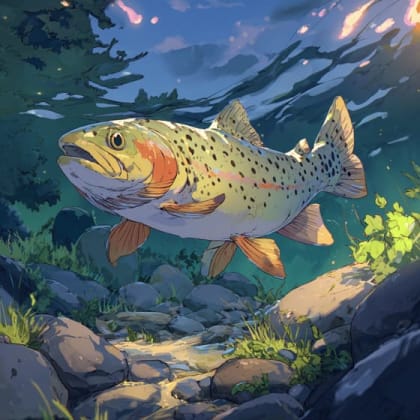




redtail catfish
Phractocephalus hemioliopterus
The redtail catfish is a big fish with a bright red tail! It swims in rivers and loves to eat other fish and yummy plants. These fish can grow very large and are fun to watch in the water.
Habitat: Freshwater rivers
The redtail catfish has a striking dark body, often brownish-black to grey, with a bright white belly. Its most distinctive feature is a vibrant red or orange tail fin. It also possesses a broad, flat head with long, sensitive barbels.
Category
FishRarity
Common
Danger
2/5 · Low
Snaps
Be the first to snap!
A redtail catfish is a top predator in its Amazonian river home, fearing few others!
Their unique orange and red tails are different on every fish, like a fingerprint!
These big fish can make loud grunting sounds, especially when they feel stressed!
Young redtail catfish can grow incredibly fast, gaining size almost every day!
Redtail catfish can use their long barbels to smell and taste food in murky waters, helping them find prey in the dark.
Redtail catfish can stay perfectly still to surprise prey, because of their camouflaged back, helping them launch quick attacks.
Redtail catfish has a massive mouth that helps them swallow surprisingly large fish and other creatures whole.
This hungry fish eats other fish, crustaceans, and anything else it can fit in its giant mouth!

Pygocentrus nattereri
eats piranhas and other fish.
Hoplosternum littorale
preys on various smaller catfish species.
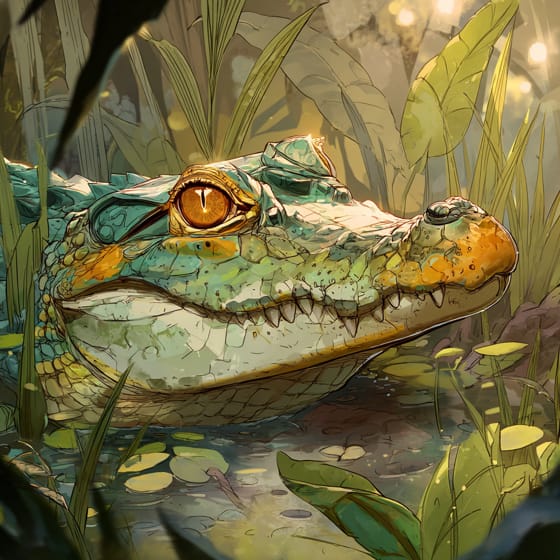
Caiman crocodilus
young redtail catfish can be prey for caimans.
Possessing prominent sensory hairs or vibrissae, often around the snout.
Social animals live in organized groups, cooperating for survival benefits such as foraging, defense, and raising offspring.
Piscivorous organisms are animals that primarily subsist on a diet of fish.
This trait identifies organisms whose diet consists entirely or primarily of animal tissue.

Freshwater habitats include non-saline aquatic environments such as rivers, lakes, ponds, and wetlands, vital for numerous species.

This trait identifies organisms that exhibit exceptional swiftness in movement for hunting, escape, or travel.

Aquatic habitats encompass environments where organisms live predominantly in water, including oceans, rivers, lakes, and wetlands.

Giant describes organisms or objects of significantly larger size than average for their species or type.
No aliases listed yet.
Danger
2/5 · Low
Always watch fish from a safe distance and never try to touch them in the water.
The easiest way to identify redtail catfish is to use the Snappit nature identifier app.
60-135 cm
10-45 kg
15-20 years
This hungry fish eats other fish, crustaceans, and anything else it can fit in its giant mouth!
10 km/h
Freshwater rivers
Ambush
Zoom in to split clusters and explore where this object has been snapped.
Recent snaps will appear here as new observations are added.
Take the discovery with you
Snap it with Snappit to identify it, learn what makes it special, and add the discovery to your collection.