





Rhesus Macaque
Macaca mulatta
Rhesus Macaques are playful monkeys that love to swing in trees and explore their surroundings. They are very social and often live in groups, making them fun to watch!
Habitat: Forests
The Rhesus Macaque is a medium-sized monkey with brownish-grey fur that can look a little greenish in certain light. It has a distinctive pink or reddish face and rump, and a relatively short tail compared to its body. Its robust build and agile limbs help it move easily.
Category
MammalsRarity
Common
Danger
3/5 · Moderate
Snaps
4
A group of these clever monkeys is called a "troop"!
Rhesus Macaques often share their found food with others in their troop.
Their bright red faces can get even redder when they're excited!
They are famous for helping scientists understand human health!
Rhesus Macaque can climb trees and rocks with ease because of their strong hands and feet that help them cling to almost any surface.
Rhesus Macaque has a complex vocal repertoire that helps them communicate warnings, food locations, and social status within their group.
Rhesus Macaque can quickly learn new tasks and solve puzzles because of their high intelligence, which helps them adapt to changing environments.
These clever monkeys eat a wide variety of plants and small animals, making them super adaptable!
Age differences: Young macaques primarily drink mother's milk, gradually adding solids as they mature.
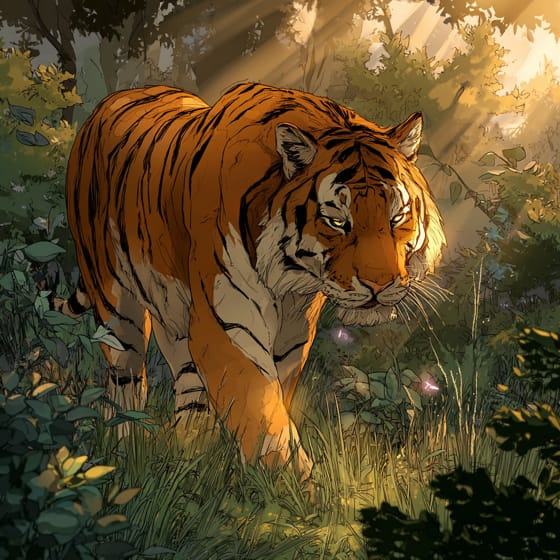
Panthera tigris
Apex predator in their natural forest habitats.
Python molurus
Large snakes can ambush young or smaller macaques.
Canis aureus
Can prey on young or isolated macaques.
Ficus religiosa
Feeds on its fruits and uses its branches for shelter.
Furry describes animals possessing a dense covering of soft hair or fur.
Social animals live in organized groups, cooperating for survival benefits such as foraging, defense, and raising offspring.
This trait identifies organisms whose diet includes both plant and animal matter.
This trait describes organisms that manipulate external objects to achieve a specific goal.

Forest habitats are terrestrial environments dominated by dense tree cover, supporting a high diversity of plant and animal life.

Diurnal animals are primarily active during daylight hours, typically resting or sleeping at night.

This habitat trait indicates species that can coexist with humans in urban and suburban environments, utilizing man-made structures and green spaces.
Danger
3/5 · Moderate
Always watch Rhesus Macaques from a distance; they are wild animals and can be unpredictable.
The easiest way to identify Rhesus Macaque is to use the Snappit nature identifier app.
47-79 cm
3.9-10.9 kg
15-20 years
25 km/h
These clever monkeys eat a wide variety of plants and small animals, making them super adaptable!
Forests
Foraging
Zoom in to split clusters and explore where this object has been snapped.
Take the discovery with you
Snap it with Snappit to identify it, learn what makes it special, and add the discovery to your collection.





.jpg&width=800)

.JPG&width=800)



.jpg&width=800)
