.jpg&width=800)





Wood Thrush
Hylocichla mustelina
The Wood Thrush is a beautiful bird known for its lovely song. It has a brown back and spotted belly, making it look special in the forest. These birds love to hop around on the ground looking for tasty bugs and berries.
Habitat: Forests
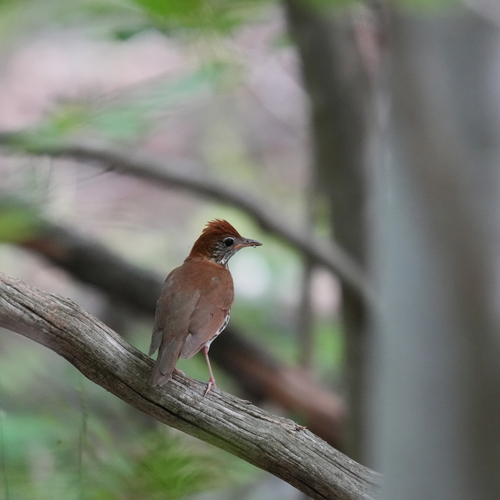
The Wood Thrush has a warm reddish-brown back and head, contrasting with a pure white belly heavily marked with large, distinct dark spots. Its chest also features a spotted pattern, setting it apart from other thrushes with plainer undersides.
Category
BirdsRarity
Common
Danger
1/5 · Very low
Snaps
18
Some Wood Thrushes migrate over 2,000 miles to their winter homes in Central America!
Their beautiful song often follows a special pattern called a three-part phrase.
They build neat nests using mud and leaves, camouflaged high in forest trees.
Wood Thrushes love to eat juicy berries, helping to spread plant seeds far and wide!
Wood Thrush can sing two different notes at the same time using both sides of its syrinx, creating a rich, complex melody.
Wood Thrush has keen eyesight and hearing that helps them locate hidden insects among the forest floor's leaf litter, finding food efficiently.
Wood Thrush has earthy brown and spotted plumage that helps them blend perfectly into the dappled light of the forest floor.
These omnivores forage for insects and spiders, complementing their diet with a variety of forest berries.
.jpg&width=800)
Molothrus ater
Lays eggs in Wood Thrush nests, burdening parents.
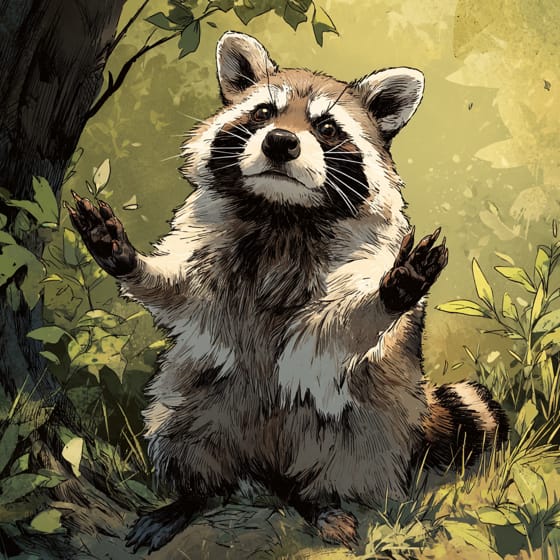
Procyon lotor
Raids nests for eggs and helpless young birds.
Megascops asio
Preys on adult Wood Thrushes, especially at night.
Prunus pensylvanica
Consumes its fruit, helping to spread seeds.
Feathered describes animals, primarily birds, possessing a covering of feathers.
Marked with spots or patches of a different color.
Social animals live in organized groups, cooperating for survival benefits such as foraging, defense, and raising offspring.
Singing animals produce complex vocalizations, often for purposes of attracting mates, defending territory, or communicating within their species.

This trait identifies organisms whose diet primarily consists of insects and other small invertebrates.

Forest habitats are terrestrial environments dominated by dense tree cover, supporting a high diversity of plant and animal life.

Diurnal animals are primarily active during daylight hours, typically resting or sleeping at night.

Describes a species whose presence and role have a disproportionately large effect on its environment.

Migratory animals undertake seasonal movements from one region to another, typically in response to changes in climate or food availability.
No aliases listed yet.
Danger
1/5 · Very low
Enjoy watching birds from a distance so you don't scare them away.
The easiest way to identify Wood Thrush is to use the Snappit nature identifier app.
18-21 cm
30-38 cm
0.045-0.057 kg
2-8 years
45 km/h
These omnivores forage for insects and spiders, complementing their diet with a variety of forest berries.
Forests
Zoom in to split clusters and explore where this object has been snapped.
Jun 6, 2026
Reeves-Reed ArboretumPhoto attribution
(c) foxsu, some rights reserved (CC BY)
License: CC BY 4.0 ↗
Image may be shown cropped inside the card frame.

New York, US
You might spot American Robin, Pond Slider, and Northern Cardinal.
View guide →

District of Columbia, US
You might spot Spotted Lanternfly and Eastern Gray Squirrel.
View guide →

Rhode Island, US
You might spot White-Tailed Deer, Great Egret, and Duck.
View guide →

Rhode Island, US
You might spot White-Tailed Deer and Common Eastern Bumble Bee.
View guide →

New Jersey, US
You might spot American Beech, Garlic Mustard, and Spotted Lanternfly.
View guide →

Virginia, US
You might spot Kiwi Bubbles and Eastern Skunk Cabbage.
View guide →
Take the discovery with you
Snap it with Snappit to identify it, learn what makes it special, and add the discovery to your collection.




.jpg&width=800)







