





interior live oak
Quercus wislizeni
The interior live oak is a strong tree with thick, shiny leaves. It provides shade and homes for many animals. This tree can live for a very long time and is great for the environment!
Habitat: Forests
The interior live oak is an evergreen tree with dark, furrowed bark and a dense, rounded crown. Its stiff, leathery leaves are dark green and often have spiny, toothed edges, setting it apart from many other oaks with lobed leaves.
Category
PlantsRarity
Common
Danger
1/5 · Very low
Snaps
9
It can live for hundreds of years, an ancient witness to California's history!
It keeps its green leaves all year long, never losing them in winter!
Its wood is so dense and strong, people once compared it to iron!
Native Americans historically ground interior live oak acorns into flour after special preparation!
The interior live oak can resprout from its base after wildfires, helping it survive and regrow quickly.
It has deep roots and tough, leathery leaves to help it conserve water in dry California climates.
This oak produces acorns that provide a crucial food source for many animals through fall and winter.

Sciurus griseus
Feeds on acorns, aiding seed dispersal.
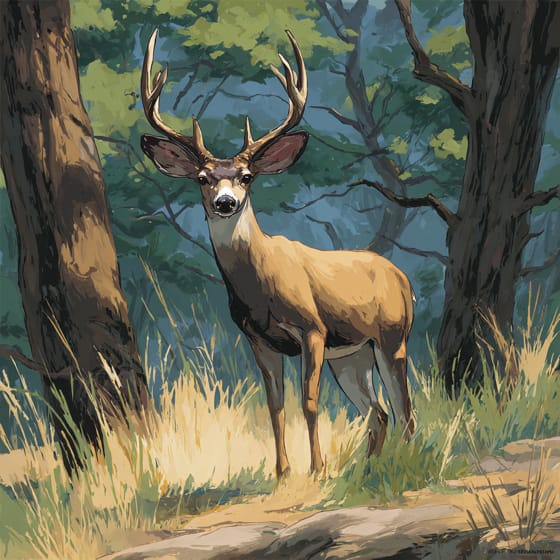
Odocoileus hemionus
Browses on foliage and fallen acorns.
Cydia latiferreana
Larvae develop inside ripening acorns.
.jpg&width=800)
Polioptila caerulea
Builds tiny nests within its branches.
Broadleaf trees are angiosperms characterized by flat, wide leaves that are typically shed annually in temperate climates.
Evergreen plants retain their foliage throughout the year, never shedding all their leaves at once.
Nut bearing plants produce hard-shelled fruits, commonly known as nuts, which contain a single seed and are a valuable food source.
Timber refers to wood that has been prepared for use in building and carpentry.

Forest habitats are terrestrial environments dominated by dense tree cover, supporting a high diversity of plant and animal life.

This trait characterizes organisms with an exceptionally long lifespan compared to others of their kind.

Describes a species whose presence and role have a disproportionately large effect on its environment.
No aliases listed yet.
Danger
1/5 · Very low
Be careful not to climb too high in trees, and watch out for falling branches!
The easiest way to identify interior live oak is to use the Snappit nature identifier app.
600-2000 cm
300-1500 cm
Spring
Yes
None
Perennial
Wind
Zoom in to split clusters and explore where this object has been snapped.

California, US
You might spot Sequoia, California Newt, and Pacific Dogwood.
View guide →

California, US
You might spot Warrior's Plume and Purple Owl's-Clover.
View guide →

California, US
You might spot Toyon, Mule Deer, and White Globe Lily.
View guide →

California, US
You might spot Gray Pine, Gambel Oak, and Caterpillar Scorpionweed.
View guide →

California, US
You might spot California Scrub-Jay and Acorn Woodpecker.
View guide →

California, US
You might spot Vulture, Acorn Woodpecker, and Stanislaus Monkeyflower.
View guide →
Take the discovery with you
Snap it with Snappit to identify it, learn what makes it special, and add the discovery to your collection.








.jpg&width=800)


_001.jpg&width=800)


