Rough Keyhole Limpet
diodora aspera
The Rough Keyhole Limpet is a small sea creature with a unique keyhole-shaped shell. It clings tightly to rocks in tidal pools, making it a fun find for little explorers!
Habitat: They live in rocky coastal areas and tidal pools.
The Rough Keyhole Limpet has a sturdy, cone-shaped shell, often grey or brownish, with prominent radial ribs. It is distinguished by a noticeable keyhole-shaped opening at its apex, which sets it apart from other limpet species.
Category
InvertebrateRarity
Common
Danger
1/5 · Very low
Snaps
1
Its shell has a unique 'keyhole' opening, like a tiny skylight!
Their tiny teeth are among the strongest natural materials on Earth!
They glide along rocks on a slippery trail of mucus, like a super-slow surfer!
This limpet's foot is so strong it can lift 50 times its own weight!
Rough Keyhole Limpet has a powerful muscular foot that helps them cling tightly to rocks, even in strong waves, preventing them from being washed away.
Rough Keyhole Limpet can graze algae from rocks using its specialized radula, a ribbon of tiny, super-hard teeth, to get its food.
Rough Keyhole Limpet has a unique keyhole opening at its shell's top that lets out waste water and helps them breathe underwater!
This limpet is a vegetarian, grazing on tiny plants found on ocean rocks and other hard surfaces.
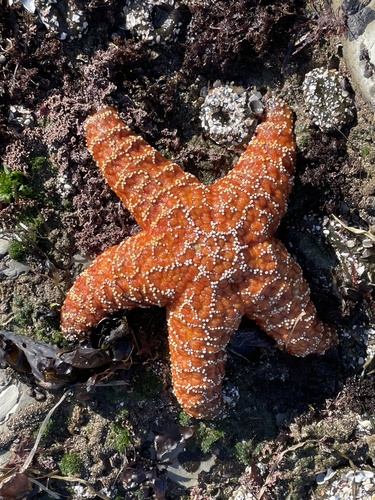
Pisaster ochraceus
A common predator in the intertidal zone.

Haematopus bachmani
Birds pry them off rocks with their strong beaks.
Cancer productus
Crabs use their strong claws to crack limpet shells.
Solitary animals live alone for most of their lives, only interacting with others for mating or parental care.
Colorful describes organisms or objects displaying a wide range of bright and distinct colors.
This trait characterizes organisms whose diet consists entirely or primarily of plant material.
Coastal habitats are dynamic environments located along the interface between land and sea, influenced by tides, waves, and saltwater.

This trait identifies organisms whose diet consists entirely or primarily of animal tissue.

Marine habitats encompass all saltwater environments of the Earth's oceans, supporting an immense diversity of aquatic life.
Danger
1/5 · Very low
No special safety notes yet.
The easiest way to identify Rough Keyhole Limpet is to use the Snappit nature identifier app.
2-7 cm
5-15 years
This limpet is a vegetarian, grazing on tiny plants found on ocean rocks and other hard surfaces.
They live in rocky coastal areas and tidal pools.
Grazing
Zoom in to split clusters and explore where this object has been snapped.
Take the discovery with you
Snap it with Snappit to identify it, learn what makes it special, and add the discovery to your collection.