





Black Oystercatcher
Haematopus bachmani
The Black Oystercatcher is a striking bird with a black body and bright orange beak. They love to hang out on rocky shores and eat tasty shellfish like clams and mussels.
Habitat: Coastal areas
The Black Oystercatcher is an entirely black shorebird with striking features. It has a long, bright orange-red bill, vivid red eyes, and thick pinkish legs, making it visually distinct against its coastal habitat.
Category
BirdsRarity
Common
Danger
1/5 · Very low
Snaps
14
Black Oystercatchers sometimes nest right on bare rocks, hiding their eggs perfectly!
Their bright red beak is sensitive, helping them find food hidden in sand!
They defend their nesting territory fiercely, even against much bigger birds!
Young oystercatchers stay with parents for months to learn how to open shells!
Black Oystercatcher can expertly open shellfish because of its powerful, chisel-shaped beak that helps pry apart or hammer open tough shells.
Black Oystercatcher has dark plumage that helps it blend perfectly with rocky shorelines and dark sand, avoiding detection by predators.
Black Oystercatcher can issue loud, piping calls because of its specialized vocal cords that help warn others of danger or defend its territory.
Black Oystercatcher has excellent timing that helps it forage efficiently during low tide, exposing abundant intertidal shellfish for food.
These birds love to eat tasty shellfish like mussels and clams, cracking them open with their strong beaks!
Mytilus californianus
Pries open its shell for food.
Lottia gigantea
Flips the limpet over to consume it.
%2C_Point_Lobos%2C_CA%2C_US_-_May_2013.jpg&width=800)
Larus occidentalis
Preys on eggs and young chicks.

Procyon lotor
Raids nests for eggs and chicks.
Feathered describes animals, primarily birds, possessing a covering of feathers.
Social animals live in organized groups, cooperating for survival benefits such as foraging, defense, and raising offspring.
Camouflaged describes organisms that possess coloring or patterns that allow them to blend into their environment.
This trait describes organisms that manipulate external objects to achieve a specific goal.

Coastal habitats are dynamic environments located along the interface between land and sea, influenced by tides, waves, and saltwater.

This trait identifies organisms whose diet consists entirely or primarily of animal tissue.

Diurnal animals are primarily active during daylight hours, typically resting or sleeping at night.

Describes a species whose presence and role have a disproportionately large effect on its environment.

Threatened status denotes a species likely to become endangered in the foreseeable future without effective conservation interventions.
No aliases listed yet.
Danger
1/5 · Very low
Always watch birds from a distance and do not disturb their nests.
The easiest way to identify Black Oystercatcher is to use the Snappit nature identifier app.
42-49 cm
76-89 cm
0.5-0.7 kg
10-20 years
60 km/h
These birds love to eat tasty shellfish like mussels and clams, cracking them open with their strong beaks!
Coastal areas
Zoom in to split clusters and explore where this object has been snapped.

California, US
You might spot Monarch, Bee, and Anise Swallowtail.
View guide →

California, US
You might spot Peridot Sweat Bee and Western Fence Lizard.
View guide →

California, US
You might spot Western Gull, Sea Lion, and Great Blue Heron.
View guide →
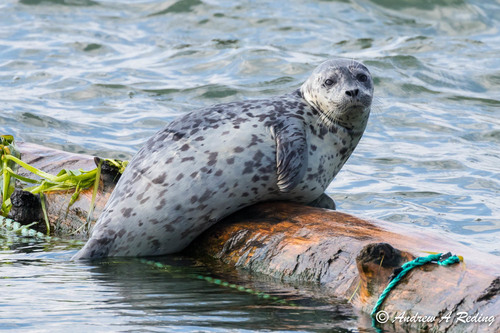
British Columbia, CA
You might spot Harbor Seal, Evergreen Huckleberry, and Alumroots.
View guide →

California, US
You might spot Sea Otter, Octopus, and Northern Sea Nettle.
View guide →
California, US
You might spot Sea Otter, Bull Kelp, and Box Jellyfish.
View guide →
Take the discovery with you
Snap it with Snappit to identify it, learn what makes it special, and add the discovery to your collection.




.jpg&width=800)








