





rusty staggerbush
Lyonia ferruginea
The rusty staggerbush is a small shrub with beautiful, bell-shaped flowers. It grows in sandy areas and is known for its rusty-colored stems, which give it a unique look!
Habitat: Coastal areas
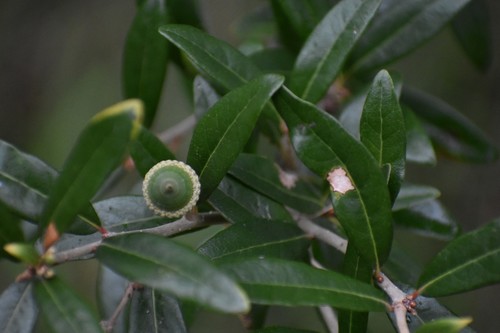
The rusty staggerbush has distinctive leathery, evergreen leaves with dense, reddish-brown hairs on their undersides and young stems, giving it a rusty appearance. Its small, white to pinkish, bell-shaped flowers hang in clusters, resembling tiny lanterns.
Category
PlantsRarity
Common
Danger
1/5 · Very low
Snaps
Be the first to snap!
Its bell-shaped flowers are perfectly designed for "buzz pollination" by visiting bumblebees.
Its nectar can make "mad honey" if bees gather enough, which can cause people to feel dizzy!
Some butterflies, like the Frosted Elfin, lay their eggs only on this plant's leaves!
The plant's scientific name, *ferruginea*, means "rusty" because of its hairy, reddish parts.
Rusty staggerbush produces special toxins called grayanotoxins that make its leaves and nectar poisonous, protecting it from many hungry animals.
Rusty staggerbush can grow in very dry, sandy soils thanks to its tough, leathery leaves that help it hold onto precious water.
Rusty staggerbush thrives in highly acidic and nutrient-poor soils where most other plants would struggle to find enough food.
Apis mellifera
Gathers nectar, which can result in toxic "mad honey."
Bombus impatiens
Performs "buzz pollination" to release pollen from its flowers.
Callophrys irus
Its caterpillars feed exclusively on the leaves of the rusty staggerbush.
Bell-shaped flowers possess petals fused or arranged to form a cup-like or campanulate structure resembling a bell.
Flowering plants are any plants that produce flowers as part of their reproductive cycle.
A shrub is a woody plant smaller than a tree, typically with multiple stems branching from or near the ground.
Drought-tolerant plants can survive and flourish in conditions with limited water availability.

Fall color refers to the seasonal change in foliage pigmentation, primarily in deciduous plants, displaying vibrant hues.

Describes plants that are particularly attractive and beneficial to a wide range of pollinating organisms.

Coastal habitats are dynamic environments located along the interface between land and sea, influenced by tides, waves, and saltwater.
No aliases listed yet.
Danger
1/5 · Very low
Always look but don't touch plants unless an adult says it's okay.
The easiest way to identify rusty staggerbush is to use the Snappit nature identifier app.
150-500 cm
100-400 cm
0.5-1 cm
Spring-summer
No
High
Perennial
Zoom in to split clusters and explore where this object has been snapped.
Recent snaps will appear here as new observations are added.
Take the discovery with you
Snap it with Snappit to identify it, learn what makes it special, and add the discovery to your collection.









.jpg&width=800)



_001.jpg&width=800)




