.jpg&width=800)





sand live oak
Quercus geminata
The sand live oak is a strong tree that grows in sandy areas. It has thick, shiny leaves and can provide shade for people and animals. This tree is great for making homes for birds and other wildlife!
Habitat: Coastal areas
The sand live oak is a small-to-medium evergreen tree with distinctive small, dark green leaves that are often curled under at the edges. Its leathery leaves have grayish, finely hairy undersides, and it typically forms a rounded crown or shrubby shape.
Category
PlantsRarity
Common
Danger
1/5 · Very low
Snaps
Be the first to snap!
Its acorns were once ground into flour by Native American tribes!
Its evergreen leaves can stay on the tree for up to three years before falling off!
The sand live oak's incredibly strong wood was once valued for building ships!
This adaptable oak can also grow as a low-lying shrub, creating dense, protective hedges!
The sand live oak has a very deep taproot that helps it find water deep underground, surviving dry sandy soils.
Its tough, leathery leaves and compact growth help the sand live oak tolerate salty ocean winds and sea spray.
This oak often grows in dense thickets, sharing roots and providing mutual protection from strong coastal winds.
Sciurus carolinensis
for its nutritious acorns
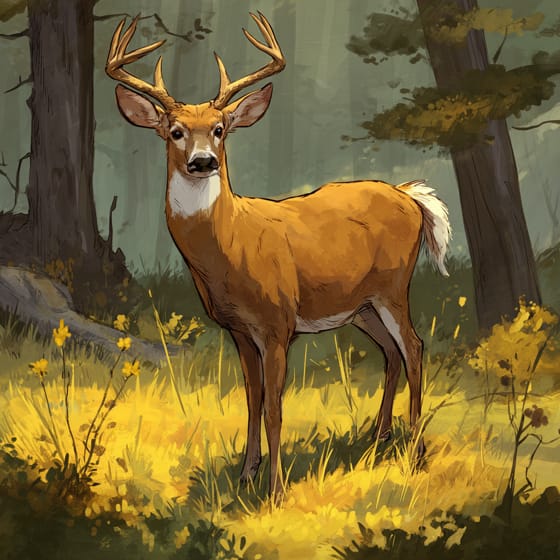
Odocoileus virginianus
browses leaves and eats acorns
Didelphis virginiana
for fallen acorns
Myiarchus crinitus
builds nests in its branches
Shade tolerant plants are adapted to grow and thrive in areas with low light levels, requiring less direct sunlight.
Broadleaf trees are angiosperms characterized by flat, wide leaves that are typically shed annually in temperate climates.
Evergreen plants retain their foliage throughout the year, never shedding all their leaves at once.
Timber refers to wood that has been prepared for use in building and carpentry.

This trait characterizes organisms with an exceptionally long lifespan compared to others of their kind.

Coastal habitats are dynamic environments located along the interface between land and sea, influenced by tides, waves, and saltwater.

Describes a species whose presence and role have a disproportionately large effect on its environment.
No aliases listed yet.
Danger
1/5 · Very low
Be careful around trees and don't climb too high without an adult.
The easiest way to identify sand live oak is to use the Snappit nature identifier app.
500-1500 cm
1000-2000 cm
Spring
No
Mild
Perennial
Wind
Zoom in to split clusters and explore where this object has been snapped.
Recent snaps will appear here as new observations are added.
Take the discovery with you
Snap it with Snappit to identify it, learn what makes it special, and add the discovery to your collection.










.jpg&width=800)


_001.jpg&width=800)

