Sand Star
luidia foliolata
The Sand Star is a fascinating sea creature that looks like a star! It has many arms that help it move across the ocean floor.
Habitat: Shallow coastal waters and sandy ocean floors.
The Sand Star is a very flat sea star, typically with five long, leaf-like arms. Its body is light tan to grey-green, often speckled, allowing it to blend perfectly with sandy seabeds.
Category
InvertebrateRarity
Common
Danger
1/5 · Very low
Snaps
Be the first to snap!
Sand Stars belong to a group called "echinoderms," meaning "spiny skin."
Some Sand Star species can move surprisingly fast for a sea star!
Their mouth is located on their underside, facing directly into the sand.
They move across the seabed using thousands of tiny, suction-cup-like tube feet!
Sand Stars can regrow lost arms because of their special regenerative cells, which helps them survive predator attacks.
Sand Stars can rapidly bury themselves just beneath the sand because of their pointed tube feet, which helps them hide from predators.
Sand Stars can push their stomach outside their body to digest prey externally, which helps them eat larger food items.
Tiny crustaceans and worms are a favorite meal for this sandy hunter.
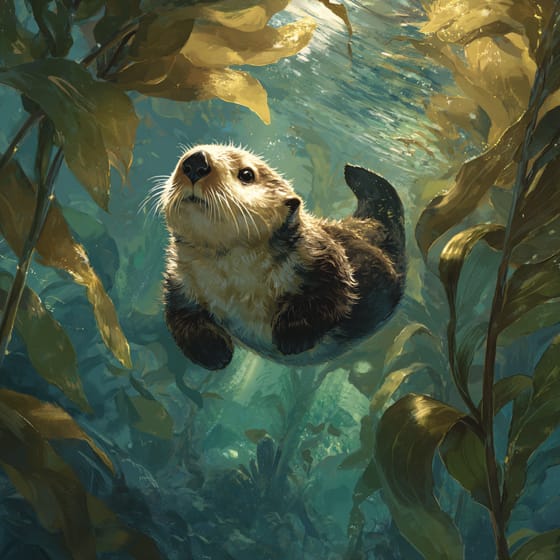
Enhydra lutris
Otters can crush and eat sea stars.

Metacarcinus magister
Crabs prey on smaller or injured sea stars.
Nereis vexillosa
Actively consumes marine worms living in the sand.
Solitary animals live alone for most of their lives, only interacting with others for mating or parental care.
Camouflaged describes organisms that possess coloring or patterns that allow them to blend into their environment.
Colorful describes organisms or objects displaying a wide range of bright and distinct colors.
This trait identifies organisms whose diet consists entirely or primarily of animal tissue.

Marine habitats encompass all saltwater environments of the Earth's oceans, supporting an immense diversity of aquatic life.
Danger
1/5 · Very low
No special safety notes yet.
The easiest way to identify Sand Star is to use the Snappit nature identifier app.
35 cm
0.2 kg
12 years
Tiny crustaceans and worms are a favorite meal for this sandy hunter.
Shallow coastal waters and sandy ocean floors.
Foraging
Zoom in to split clusters and explore where this object has been snapped.
Recent snaps will appear here as new observations are added.
Take the discovery with you
Snap it with Snappit to identify it, learn what makes it special, and add the discovery to your collection.