





Scarlet Hedgehog Cactus
echinocereus coccineus
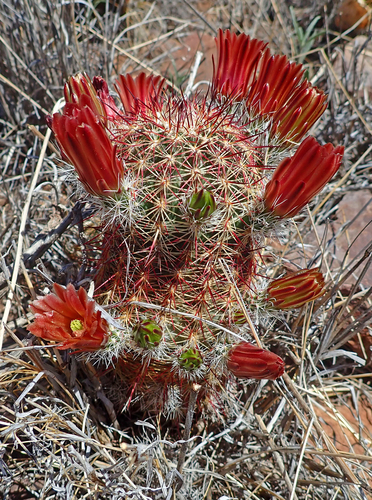
The Scarlet Hedgehog Cactus is a bright red cactus that looks like it has little hedgehogs on it! It loves to soak up the sunshine and can survive in very dry places.
Habitat: It lives in dry, desert areas of the southwestern United States and Mexico.
The Scarlet Hedgehog Cactus has vibrant scarlet to orange-red flowers that form a striking crown atop its spiny, clumping green stems. Its densely packed spines give it a fuzzy, hedgehog-like appearance, making it distinct from smooth-stemmed cacti.
Category
PlantsRarity
Common
Danger
1/5 · Very low
Snaps
1
It's sometimes called "strawberry hedgehog" because of its delicious red fruit!
Its sweet fruit tastes like strawberries, even though it's a spiky desert plant!
Native peoples used parts of this cactus for both food and traditional medicine.
This tough cactus can live for over 50 years in the wild, enduring harsh deserts!
This cactus has sharp, dense spines that act as a formidable defense, deterring most animals from trying to eat its juicy stems.
The Scarlet Hedgehog Cactus produces sweet nectar in its bright flowers, attracting important pollinators like bees and hummingbirds.
Scarlet Hedgehog Cactus grows in clumps, where multiple stems share resources and provide mutual protection from harsh sun and herbivores.
Apis mellifera
Drinks nectar and collects pollen from flowers.

Archilochus alexandri
Feeds on nectar from the scarlet flowers.

Neotoma albigula
Consumes its fruit and uses cactus for shelter.
Gopherus morafkai
Graze on its stems and fruit in the desert.
Solitary animals live alone for most of their lives, only interacting with others for mating or parental care.
Colorful describes organisms or objects displaying a wide range of bright and distinct colors.
This trait characterizes organisms whose diet consists entirely or primarily of plant material.
Diurnal animals are primarily active during daylight hours, typically resting or sleeping at night.

Endangered status indicates a species is at a very high risk of extinction in the wild in the near future.
Danger
1/5 · Very low
Be careful around cacti; their spines can be sharp!
The easiest way to identify Scarlet Hedgehog Cactus is to use the Snappit nature identifier app.
10-30 cm
15-60 cm
5-8 cm
Spring to early summer
Yes
None
Perennial
Zoom in to split clusters and explore where this object has been snapped.

New Mexico, US
You might spot Tree Cholla, Mule Deer, and Sacred Datura.
View guide →
Texas, US
You might spot Texas Hedgehog Cactus, Cactus Wren, and Ornate Tree Lizard.
View guide →
New Mexico, US
You might spot Pyrrhuloxia, Curve-Billed Thrasher, and Great Blue Heron.
View guide →

Colorado, US
You might spot Rocky Mountain Beeplant and Plains Pricklypear.
View guide →

New Mexico, US
You might spot White-Winged Dove and Creosote Bush.
View guide →

New Mexico, US
You might spot Ocotillo, Texas Mountain Laurel, and Agarita.
View guide →
Take the discovery with you
Snap it with Snappit to identify it, learn what makes it special, and add the discovery to your collection.









.jpg&width=800)



_001.jpg&width=800)




