Shag-Rug Nudibranch
aeolidia papillosa
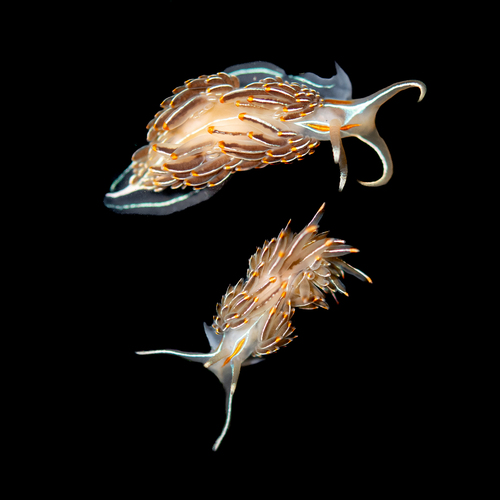
The Shag-Rug Nudibranch looks like a colorful, squishy carpet under the sea! Its vibrant colors and unique shape make it a fascinating creature to spot while exploring tide pools.
Habitat: Shag-Rug Nudibranchs live in coastal waters, often hiding among rocks and seaweed.
The Shag-Rug Nudibranch has a soft, oval body covered in numerous fluffy, finger-like projections called cerata, resembling a shaggy rug. It typically displays a cream to pale brown body with white-tipped cerata, making it blend well with its environment.
Category
InvertebrateRarity
Common
Danger
1/5 · Very low
Snaps
Be the first to snap!
A Shag-Rug Nudibranch is a hermaphrodite, meaning each individual has both male and female reproductive parts.
Nudibranchs don't have a shell to protect them like snails; they rely on other cool defenses!
These sea slugs breathe through feathery gills on their back, not through lungs like us!
They lay their eggs in beautiful, spiral ribbons that attach to rocks or seaweed underwater.
Shag-Rug Nudibranch can steal stinging cells from its prey because of specialized sacs that help them defend against predators.
Shag-Rug Nudibranch can regrow lost or damaged parts of its body, including its cerata, helping them recover from attacks.
Shag-Rug Nudibranch can safely graze on stinging sea anemones because its skin is immune to their venom.
This sea slug is a carnivore that dines exclusively on stinging sea anemones!
Actinia equina
Its primary food source, providing defense cells.
Metridium senile
Common prey, found grazing on these in cooler waters.

Pycnopodia helianthoides
A large predator of various nudibranchs and invertebrates.
Anarhichas lupus
A bottom-feeding fish known to prey on sea slugs.
Solitary animals live alone for most of their lives, only interacting with others for mating or parental care.
Colorful describes organisms or objects displaying a wide range of bright and distinct colors.
This trait identifies organisms whose diet consists entirely or primarily of animal tissue.
Aquatic habitats encompass environments where organisms live predominantly in water, including oceans, rivers, lakes, and wetlands.

Marine habitats encompass all saltwater environments of the Earth's oceans, supporting an immense diversity of aquatic life.
Danger
1/5 · Very low
No special safety notes yet.
The easiest way to identify Shag-Rug Nudibranch is to use the Snappit nature identifier app.
6 cm
5 g
0.5 years
This sea slug is a carnivore that dines exclusively on stinging sea anemones!
Shag-Rug Nudibranchs live in coastal waters, often hiding among rocks and seaweed.
Grazing
25 m
Zoom in to split clusters and explore where this object has been snapped.
Recent snaps will appear here as new observations are added.
Washington, US
You might spot Horned Nudibranch and Madrone Skin Miner.
View guide →

California, US
You might spot Sea Otter, Octopus, and Northern Sea Nettle.
View guide →
California, US
You might spot Sea Otter, Bull Kelp, and Box Jellyfish.
View guide →
Take the discovery with you
Snap it with Snappit to identify it, learn what makes it special, and add the discovery to your collection.