





Sharp-toothed Sanicle
Sanicula arguta
The Sharp-toothed Sanicle is a unique plant with sharp-edged leaves that look like little teeth! It grows in shady places and has pretty green flowers that attract butterflies.
Habitat: Forests
The Sharp-toothed Sanicle has striking, deeply divided leaves with pointed, saw-like edges, giving it its name. Its small, greenish-yellow flowers form dense, rounded clusters at the top of slender stems, making it subtly visible in shady undergrowth.
Category
PlantsRarity
Common
Danger
2/5 · Low
Snaps
Be the first to snap!
Its bright green leaves often stay fresh even when other plants wilt in summer!
Look closely at its flowers, they are tiny stars packed together in a green ball!
Some people once used parts of this plant for traditional medicine!
You might find its seeds clinging to your socks after a forest walk!
Sharp-toothed Sanicle has leaves with sharp, saw-like teeth that make them less appealing to hungry plant-eaters for defense.
This plant can grow well in dim forest light, using special chlorophyll to capture faint sunbeams for survival.
Sharp-toothed Sanicle's tiny seeds are covered in hooks, ready to snag onto fur or clothes for a ride to new places to reproduce.
Bombus vosnesenskii
Feeds on nectar, aiding plant reproduction.
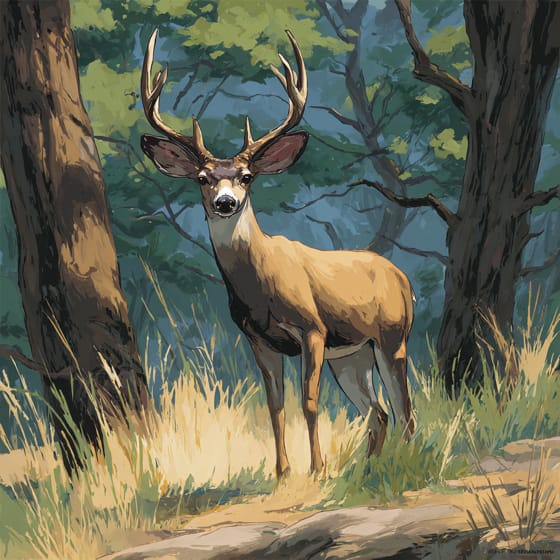
Odocoileus hemionus
Browses young leaves and stems.
Pseudotsuga menziesii
Provides essential shade, creating ideal growing conditions.
Deciduous plants periodically shed all their leaves, typically during autumn or dry seasons.
Flowering plants are any plants that produce flowers as part of their reproductive cycle.
Shade tolerant plants are adapted to grow and thrive in areas with low light levels, requiring less direct sunlight.
Medicinal plants possess chemical compounds that can be used for therapeutic purposes to treat illnesses or maintain health.

Describes plants that are particularly attractive and beneficial to a wide range of pollinating organisms.

Forest habitats are terrestrial environments dominated by dense tree cover, supporting a high diversity of plant and animal life.

Describes organisms that transfer pollen, enabling the fertilization and reproduction of plants.
No aliases listed yet.
Danger
2/5 · Low
Be careful not to touch the sharp leaves, and always explore plants with an adult.
The easiest way to identify Sharp-toothed Sanicle is to use the Snappit nature identifier app.
10-60 cm
15-30 cm
0.2-0.4 cm
Spring to early summer
No
Mild
Perennial
Zoom in to split clusters and explore where this object has been snapped.
Recent snaps will appear here as new observations are added.
Take the discovery with you
Snap it with Snappit to identify it, learn what makes it special, and add the discovery to your collection.






.jpg&width=800)



_001.jpg&width=800)



