





Showy Aster
Eurybia conspicua
The Showy Aster is a beautiful flower that blooms in late summer and early fall. Its bright purple petals attract butterflies and bees, making gardens lively and colorful!
Habitat: Fields and roadsides
The Showy Aster has striking large flower heads, typically 3-6 cm wide, with numerous bright purple to lavender ray petals radiating around a dense yellow center of disc florets. Its robust stems hold clusters of these star-like blooms, making it stand out from smaller asters.
Category
PlantsRarity
Common
Danger
1/5 · Very low
Snaps
Be the first to snap!
A single Showy Aster plant can produce dozens of dazzling, star-shaped flowers!
Butterflies and bees flock to Showy Asters for their sweet nectar, especially in autumn!
Its name "Aster" means "star" in ancient Greek, perfectly describing its many-petaled flowers!
Some Native American tribes traditionally used aster plants for various herbal remedies!
Showy Aster can bloom late into fall, providing vital nectar for migrating insects and other pollinators when other flowers fade.
Showy Aster has spreading rhizomes, tough underground stems that help it create new plants and spread across meadows.
Showy Aster produces tiny seeds topped with fluffy bristles, allowing them to catch the wind and float far away to new spots.
Bombus bifarius
collects nectar and pollen
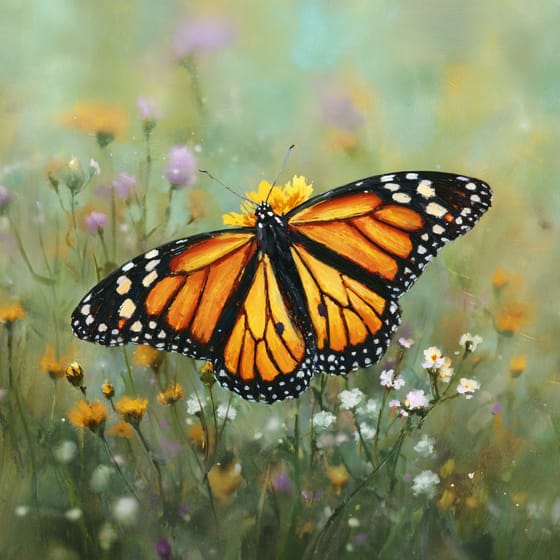
Danaus plexippus
sips nectar during migration

Odocoileus hemionus
browses on leaves and stems
Ceramica picta
caterpillars feed on foliage
Flowering plants are any plants that produce flowers as part of their reproductive cycle.
Summer blooming plants produce their flowers during the summer season, often providing vibrant color when many other plants have finished.
Fragrant flowers emit a pleasant aroma, often to attract pollinators or for defense.
Colorful describes organisms or objects displaying a wide range of bright and distinct colors.

Edible plants are those parts of a plant that are considered safe for human consumption.

Grassland habitats are terrestrial biomes dominated by grasses and herbaceous plants, supporting a variety of grazing animals.

Describes plants that are particularly attractive and beneficial to a wide range of pollinating organisms.

Rapid growing plants exhibit accelerated growth rates, quickly increasing in size and biomass within a short period.
No aliases listed yet.
Danger
1/5 · Very low
Always look but don't pick flowers unless you have permission!
The easiest way to identify Showy Aster is to use the Snappit nature identifier app.
30-100 cm
30-60 cm
3-6 cm
Late summer to fall (July-October)
No
None
Perennial
Zoom in to split clusters and explore where this object has been snapped.
Recent snaps will appear here as new observations are added.
Take the discovery with you
Snap it with Snappit to identify it, learn what makes it special, and add the discovery to your collection.









.jpg&width=800)


_001.jpg&width=800)



