%2C_%CE%95%CF%80%CF%84%CE%B1%CF%80%CF%8D%CF%81%CE%B3%CE%B9%CE%BF%2C_%CE%98%CE%B5%CF%83%CF%83%CE%B1%CE%BB%CE%BF%CE%BD%CE%AF%CE%BA%CE%B7%2C_05-06-2021.jpg&width=800)





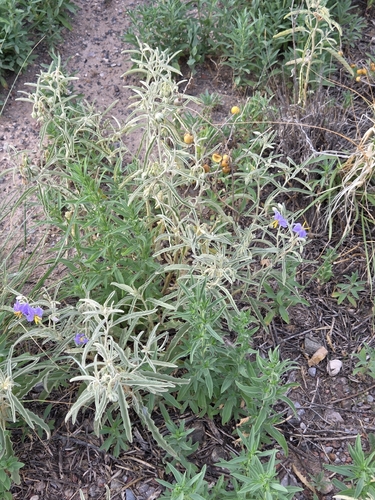
silverleaf nightshade
Solanum elaeagnifolium
Silverleaf nightshade is a plant with beautiful silver leaves and purple flowers. It grows in sunny places and can be found in fields and gardens.
Habitat: Grasslands
The silverleaf nightshade has striking star-shaped flowers, usually purple or blue, sometimes white, with bright yellow centers. Its leaves are covered in dense, silvery-white hairs, giving them a distinct metallic sheen. This plant also features sharp, yellow-orange prickles along its stems and leaf veins.
Category
PlantsRarity
Common
Danger
3/5 · Moderate
Snaps
31
Even tiny pieces of its roots can grow into a whole new plant, making it a super persistent survivor!
Its silvery leaves act like tiny mirrors, reflecting sunlight to help it stay cool and conserve water.
Silverleaf nightshade can produce up to 2,000 seeds from just one plant in a single season!
Wow! The berries of silverleaf nightshade change from green to yellow, looking like tiny, poisonous tomatoes!
Silverleaf nightshade has sharp prickles that deter hungry animals from munching on its leaves and stems.
This plant has a very deep taproot that helps it find water and nutrients even in dry, harsh environments.
Its berry-like fruits are filled with many seeds, helping it spread quickly and grow in new places.
Apis mellifera
Visits flowers to collect nectar and pollen.
Leptinotarsa texana
Larvae and adults feed on the leaves of this plant.
Bemisia tabaci
Sucks sap from leaves, potentially transmitting plant viruses.
Flowering plants are any plants that produce flowers as part of their reproductive cycle.
Ornamental plants are cultivated primarily for their aesthetic appeal, enhancing landscapes and gardens with their attractive foliage, flowers, or form.
A shrub is a woody plant smaller than a tree, typically with multiple stems branching from or near the ground.
Drought-tolerant plants can survive and flourish in conditions with limited water availability.

Grassland habitats are terrestrial biomes dominated by grasses and herbaceous plants, supporting a variety of grazing animals.

Describes plants that are particularly attractive and beneficial to a wide range of pollinating organisms.

Poisonous organisms produce toxins that can cause harm when ingested, inhaled, or absorbed through contact.
No aliases listed yet.
Danger
3/5 · Moderate
Don't touch or eat plants you find outside unless a grown-up says it's safe.
The easiest way to identify silverleaf nightshade is to use the Snappit nature identifier app.
30-90 cm
45-120 cm
2-3 cm
Summer to early fall
No
High
Perennial
Zoom in to split clusters and explore where this object has been snapped.
Jun 12, 2026
Mesilla PlazaPhoto attribution
(c) Suanne Pyle, some rights reserved (CC BY)
License: CC BY 4.0 ↗
Image may be shown cropped inside the card frame.

Arizona, US
You might spot Christmas Cholla and California Barrel Cactus.
View guide →

Oklahoma, US
You might spot Hoary Vervain, Buffalo Gourd, and Pond Slider.
View guide →

US
You might spot Pond Slider, Black-Bellied Whistling-Duck, and Brown Anole.
View guide →

New Mexico, US
You might spot White-Winged Dove and Silverleaf Nightshade.
View guide →

New Mexico, US
You might spot Duck, Greater Roadrunner, and American Robin.
View guide →

Oklahoma, US
You might spot Lace Hedgehog Cactus and Star Cloak Fern.
View guide →
Take the discovery with you
Snap it with Snappit to identify it, learn what makes it special, and add the discovery to your collection.








.jpg&width=800)



_001.jpg&width=800)




