





Slow Loris
Nycticebus
The Slow Loris is a small, nocturnal mammal known for its slow movements and big eyes. It lives in the forests of Southeast Asia and moves carefully to catch insects and fruits.
Habitat: Forests
The Slow Loris has large, round eyes often encircled by dark patches, and small, almost hidden ears. Its soft, dense fur can be greyish-brown to reddish, with a lighter underside. A distinct dark stripe often runs down its back, contrasting with its rounded, compact body.
Category
MammalsRarity
Rare
Danger
3/5 · Moderate
Snaps
Be the first to snap!
Slow lorises have a 'tooth comb' formed by their lower teeth, perfect for grooming and scraping tree sap.
They can hang upside down for hours using a special network of blood vessels in their limbs!
To hide from danger, they can freeze completely still for a very long time, blending into the trees.
Unlike many mammals, their body temperature can fluctuate to save energy, like a mini-hibernation!
Slow Loris can deliver a toxic bite because they mix venom from a gland on their arm with their saliva, which helps them deter predators.
Slow Loris has powerful hands and feet with opposable thumbs that help them cling tightly to branches for long periods.
Slow Loris can see in the dark due to huge eyes and a special reflective layer behind their retina, which helps them hunt nocturnal prey.
Slow Loris can move almost silently and incredibly slowly through the trees, which helps them sneak up on insects without being noticed.
Slow lorises are omnivores, eating insects, fruits, tree sap, and flower nectar.
Gryllus assimilis
An important protein source for Slow Lorises.
Apis mellifera
Consumes nectar and pollen gathered by bees from flowers.
Hevea brasiliensis
Feeds on the sap and gum produced by these trees.
Bubo sumatranus
A nocturnal predator that hunts small arboreal mammals.
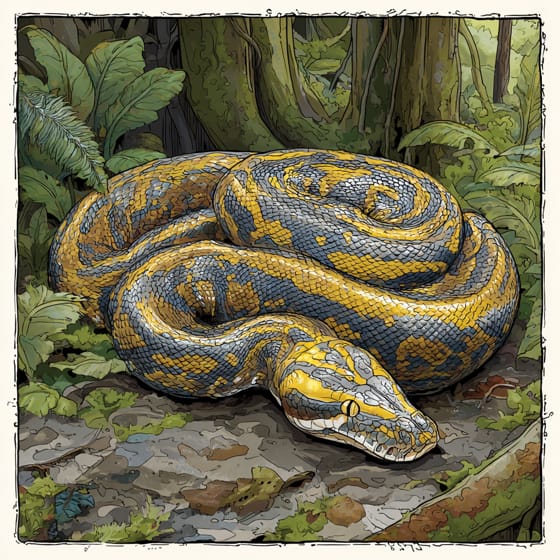
Malayopython reticulatus
Large constrictor snakes are known to prey on Slow Lorises.
Furry describes animals possessing a dense covering of soft hair or fur.
Arboreal animals live primarily in trees, utilizing them for shelter, food, and protection from predators.
This trait identifies organisms whose diet primarily consists of insects and other small invertebrates.
This trait signifies organisms belonging to a very old evolutionary group with ancestors dating back millions of years.

Forest habitats are terrestrial environments dominated by dense tree cover, supporting a high diversity of plant and animal life.
Vampiric organisms are those that obtain nutrients by feeding on the blood or bodily fluids of other animals.

Nocturnal animals are primarily active during the nighttime hours, typically resting or sleeping during the day.

Venomous organisms produce toxins that are injected into another animal, typically through a bite or sting.
Danger
3/5 · Moderate
Admire Slow Lorises from a distance as they can be dangerous if provoked.
The easiest way to identify Slow Loris is to use the Snappit nature identifier app.
18-38 cm
0.2-2 kg
12-20 years
0.5 km/h
Slow lorises are omnivores, eating insects, fruits, tree sap, and flower nectar.
Forests
Foraging
Zoom in to split clusters and explore where this object has been snapped.
Recent snaps will appear here as new observations are added.
Take the discovery with you
Snap it with Snappit to identify it, learn what makes it special, and add the discovery to your collection.




.jpg)
.jpg&width=800)



.JPG&width=800)



.jpg&width=800)
