





Southern Tamandua
tamandua tetradactyla
The Southern Tamandua is a fascinating animal known for its long snout and strong claws. These clever creatures love to climb trees and are great at finding tasty ants and termites.
Habitat: They live in tropical forests, grasslands, and savannas across Central and South America.
The Southern Tamandua has a distinctive appearance with a pale yellow or tan body marked by a broad black "vest" pattern across its shoulders and flanks. It features a long, pointed snout, small eyes, and powerful front claws. This creates a striking contrast that makes it easily recognizable.
Category
MammalsRarity
Common
Danger
1/5 · Very low
Snaps
Be the first to snap!
Despite poor eyesight, they navigate and find food almost entirely by smell!
Tamanduas communicate with hisses, snorts, and can even let out a surprising roar!
These unique mammals have very few teeth, or sometimes none at all, for their insect diet!
They can stand on their hind legs to appear larger and intimidate potential predators!
Southern Tamandua can climb trees using its strong claws and prehensile tail, which helps them escape predators and find food.
Southern Tamandua has incredibly strong claws that allow them to tear open tough termite mounds and ant nests.
Southern Tamandua can collect insects with their long, sticky tongue because it helps them access hidden prey.
Southern Tamandua has an excellent sense of smell that helps them locate hidden ant and termite nests.
Southern Tamanduas mainly eat ants and termites, using their long, sticky tongues to slurp them up.
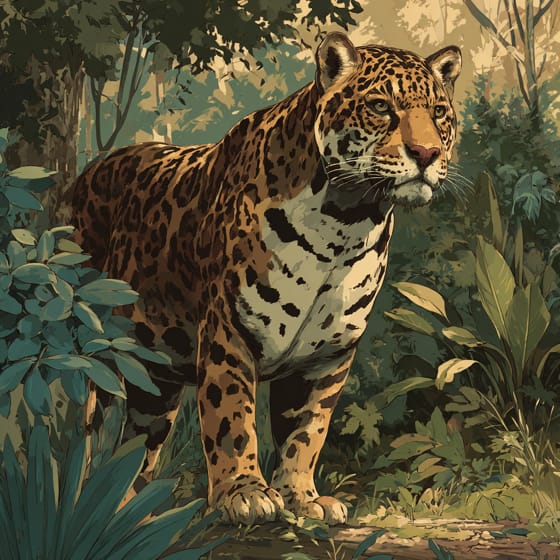
Panthera onca
A powerful predator of tamanduas in the rainforest.
Puma concolor
These big cats prey on tamanduas in various habitats.
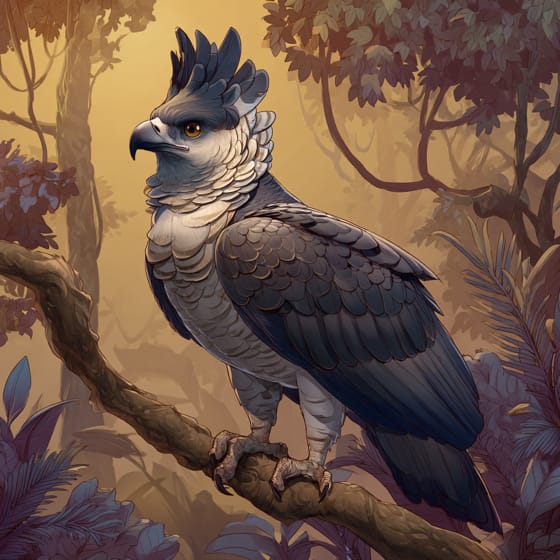
Harpia harpyja
Large raptors sometimes catch tamanduas from the trees.
Atta cephalotes
Tamanduas frequently raid nests of various ant species.
Nasutitermes corniger
Tamanduas break into their nests for a nutritious meal.
Furry describes animals possessing a dense covering of soft hair or fur.
Solitary animals live alone for most of their lives, only interacting with others for mating or parental care.
Arboreal animals live primarily in trees, utilizing them for shelter, food, and protection from predators.
This trait identifies organisms whose diet consists entirely or primarily of animal tissue.

Nocturnal animals are primarily active during the nighttime hours, typically resting or sleeping during the day.
Danger
1/5 · Very low
No special safety notes yet.
The easiest way to identify Southern Tamandua is to use the Snappit nature identifier app.
71-147 cm
2-7 kg
9-16 years
15 km/h
Southern Tamanduas mainly eat ants and termites, using their long, sticky tongues to slurp them up.
They live in tropical forests, grasslands, and savannas across Central and South America.
Foraging
Zoom in to split clusters and explore where this object has been snapped.
Recent snaps will appear here as new observations are added.
Take the discovery with you
Snap it with Snappit to identify it, learn what makes it special, and add the discovery to your collection.




.jpg&width=800)



.JPG&width=800)



.jpg&width=800)
