




Spider Lupine
Lupinus benthamii
Spider Lupine is a beautiful plant with bright blue flowers that look like little spiders! It grows in sunny places and is loved by bees and butterflies.
Habitat: Grasslands
The Spider Lupine has tall, slender stems topped with dense spikes of vibrant violet-blue, pea-like flowers. Its distinctive leaves are palmately divided into 7-11 narrow, hairy leaflets, radiating like spokes from a central point.
Category
PlantsRarity
Common
Danger
1/5 · Very low
Snaps
Be the first to snap!
Its common name "Lupine" means "wolf-like," but this plant actually helps enrich the soil!
Its leaves can fold up at night, performing a "sleeping" trick until the sun rises again!
Some ancient peoples learned to prepare its seeds, turning them into a food source!
The beautiful flowers are like special landing strips, guiding buzzing bees right to their nectar.
Spider Lupine has tiny helpers in its roots that can "fix" nitrogen from the air, enriching the soil for other plants.
Spider Lupine can produce special bitter chemicals called alkaloids, which make it taste bad to hungry animals, protecting itself.
When its seed pods dry, they can explosively twist open, flinging seeds several feet away to find new homes.
Bombus vosnesenskii
Sips nectar, carrying pollen to other flowers.
Rhizobium leguminosarum
Lives in roots, helping create soil nutrients.
Plebejus lupini
Its caterpillars munch on the leaves to grow big.
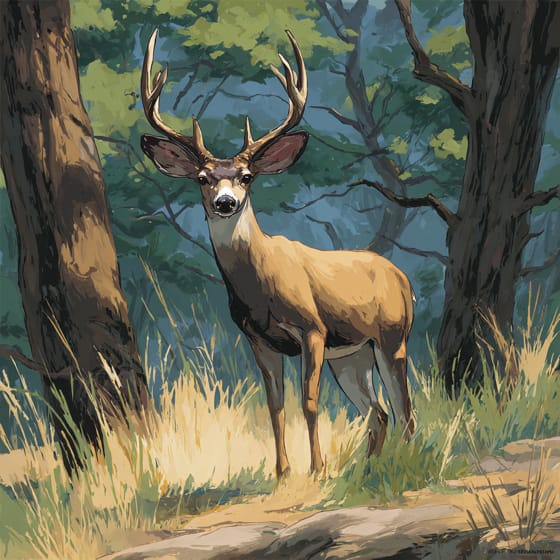
Odocoileus hemionus
May browse leaves despite their bitter taste.
Herbaceous plants are non-woody plants with soft stems that typically die back to the ground at the end of the growing season.
Flowering plants are any plants that produce flowers as part of their reproductive cycle.
Describes organisms capable of converting atmospheric nitrogen into compounds usable by plants.
Spring blooming plants produce their flowers during the spring season, often signifying the end of winter and the start of new growth.

Colorful describes organisms or objects displaying a wide range of bright and distinct colors.

Grassland habitats are terrestrial biomes dominated by grasses and herbaceous plants, supporting a variety of grazing animals.

Describes plants that are particularly attractive and beneficial to a wide range of pollinating organisms.
No aliases listed yet.
Danger
1/5 · Very low
Always look but don't touch plants without asking an adult first.
The easiest way to identify Spider Lupine is to use the Snappit nature identifier app.
20-60 cm
15-30 cm
1-1.5 cm
Spring-early summer
No
Moderate
Annual
Zoom in to split clusters and explore where this object has been snapped.
Recent snaps will appear here as new observations are added.
Take the discovery with you
Snap it with Snappit to identify it, learn what makes it special, and add the discovery to your collection.








.jpg&width=800)



_001.jpg&width=800)




