





spinulose wood fern
Dryopteris carthusiana
The spinulose wood fern is a lovely green plant that grows in shady places. Its fronds are shaped like feathers and can be very tall, making it look like a little forest on its own!
Habitat: Forests
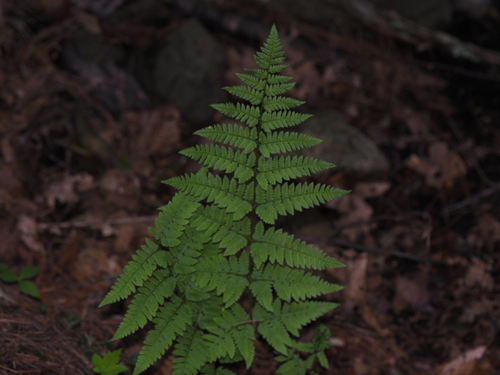
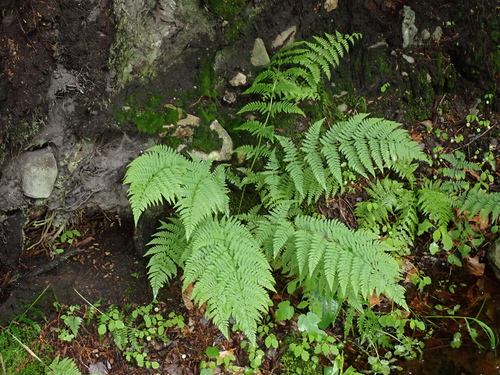
The spinulose wood fern has delicate, lacy fronds that are vibrant green and triangular in shape. Its fronds are deeply cut, giving them a finely textured, somewhat spiny appearance, making it distinct from broader-leaved ferns. These fronds emerge from the base in a graceful cluster.
Category
PlantsRarity
Common
Danger
1/5 · Very low
Snaps
6
Instead of seeds, it makes microscopic dust-like spores carried by the wind!
Its name 'spinulose' means 'minutely spiny,' even though its fronds feel soft to touch!
Look for tiny brown dots on the frond undersides; those are its spore factories!
This fern has been around since the time of dinosaurs, millions of years ago!
Spinulose wood fern has sori on its fronds that release tiny spores to spread and create new ferns without needing seeds or flowers.
This fern can keep its fronds green through winter in some climates, allowing it to capture sunlight when other plants are dormant.
Spinulose wood fern thrives in low light, thanks to its efficient fronds that capture scarce sunlight in dense forest understories.
Arion vulgaris
Slugs may occasionally browse on its fronds.
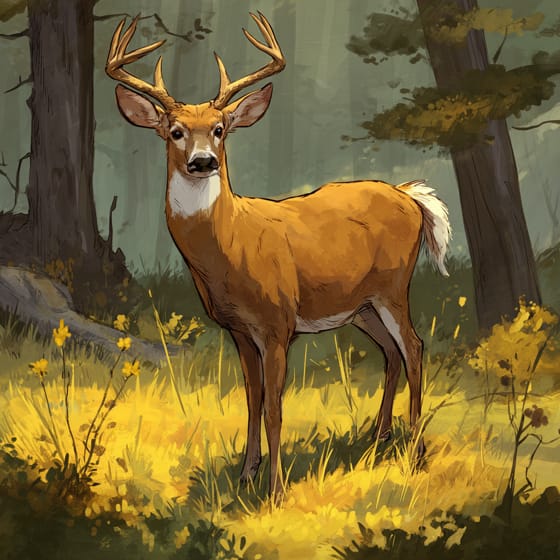
Odocoileus virginianus
Deer occasionally browse on young fern fronds.
Porcellionides pruinosus
Pillbugs and other invertebrates find refuge under its fronds.
Feathered describes animals, primarily birds, possessing a covering of feathers.
Deciduous plants periodically shed all their leaves, typically during autumn or dry seasons.
This trait characterizes plants lacking specialized vascular tissues (xylem and phloem) for transporting water and nutrients.
Shade tolerant plants are adapted to grow and thrive in areas with low light levels, requiring less direct sunlight.

Spore-producing organisms reproduce by releasing small, often single-celled, reproductive units called spores.

Forest habitats are terrestrial environments dominated by dense tree cover, supporting a high diversity of plant and animal life.

This trait characterizes organisms with an exceptionally long lifespan compared to others of their kind.
No aliases listed yet.
Danger
1/5 · Very low
Always look but don't touch wild plants unless a grown-up says it's okay.
The easiest way to identify spinulose wood fern is to use the Snappit nature identifier app.
30-75 cm
45-90 cm
No
None
Perennial
Forests
Zoom in to split clusters and explore where this object has been snapped.
May 28, 2026
Days Ferry Historic DistrictPhoto attribution
(c) Clay Gibbons, some rights reserved (CC BY)
License: CC BY 4.0 ↗
Image may be shown cropped inside the card frame.
May 23, 2025
Medfield RhododendronsPhoto attribution
(c) John Baur, some rights reserved (CC BY)
License: CC BY 4.0 ↗
Image may be shown cropped inside the card frame.

US
You might spot Pink Lady's Slipper and Canada Mayflower.
View guide →

Ohio, US
You might spot Duck, Canada Goose, and Muscovy Duck.
View guide →

Connecticut, US
You might spot Garlic Mustard, Striped Wintergreen, and Mountain Laurel.
View guide →

Illinois, US
You might spot Large White Trillium and Virginia Bluebells.
View guide →

Connecticut, US
You might spot Canada Mayflower, American Toad, and Promethea Silkmoth.
View guide →
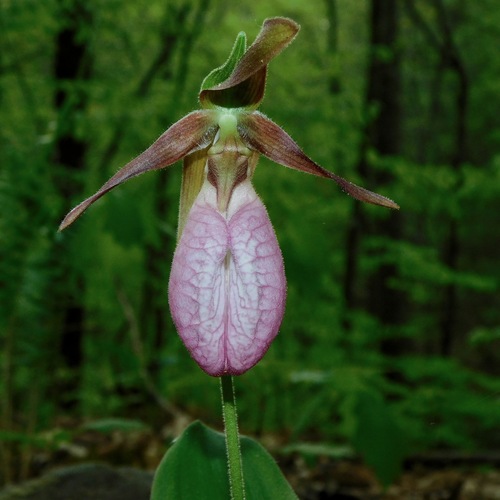
Massachusetts, US
You might spot Pink Lady's Slipper and Great Rhododendron.
View guide →
Take the discovery with you
Snap it with Snappit to identify it, learn what makes it special, and add the discovery to your collection.







.jpg&width=800)



_001.jpg&width=800)


