





umbrella magnolia
Magnolia tripetala
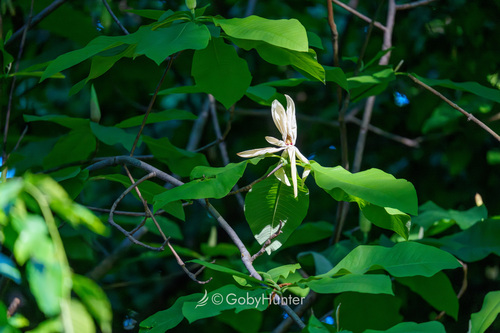
The umbrella magnolia is a beautiful tree with big, umbrella-like leaves. It blooms with lovely white flowers that smell sweet and attract butterflies and bees.
Habitat: Forests
The umbrella magnolia has strikingly large, bright green leaves, up to two feet long, clustered at branch tips, creating an umbrella-like canopy. Its creamy-white flowers are cup-shaped and can grow up to ten inches wide, often displaying purple stamens. Distinctive cone-like fruits turn bright pinkish-red in autumn.
Category
PlantsRarity
Common
Danger
1/5 · Very low
Snaps
5
After flowering, it produces an amazing pinkish-red fruit that looks like a knobby cone.
Its huge leaves, up to two feet long, make the whole tree look like a giant umbrella!
Magnolias are an ancient plant family; they bloomed for dinosaurs before bees even existed!
The large, creamy-white flowers have a unique, sometimes musky scent, attracting beetles.
Umbrella magnolia has enormous leaves that gather sunlight efficiently and provide deep shade, protecting it from intense sun.
Its large, fragrant, creamy flowers attract beetles for pollination, a method used by magnolias since dinosaur times.
This tree grows bright red, fleshy seeds inside a cone-like fruit, tempting birds to eat them and spread them far and wide.
Aromatic plants produce and emit fragrant volatile organic compounds, often for defense or to attract pollinators.
Deciduous plants periodically shed all their leaves, typically during autumn or dry seasons.
Flowering plants are any plants that produce flowers as part of their reproductive cycle.
Shade tolerant plants are adapted to grow and thrive in areas with low light levels, requiring less direct sunlight.

Broadleaf trees are angiosperms characterized by flat, wide leaves that are typically shed annually in temperate climates.

Fragrant flowers emit a pleasant aroma, often to attract pollinators or for defense.

Fruit-bearing plants produce fruits, which are the mature ovaries of flowering plants containing seeds.

Describes plants that are particularly attractive and beneficial to a wide range of pollinating organisms.

Forest habitats are terrestrial environments dominated by dense tree cover, supporting a high diversity of plant and animal life.
Danger
1/5 · Very low
Stay on paths when exploring and don't touch any plants without asking an adult.
The easiest way to identify umbrella magnolia is to use the Snappit nature identifier app.
600-1500 cm
400-900 cm
15-25 cm
Late spring to early summer
No
None
Perennial
Zoom in to split clusters and explore where this object has been snapped.
May 12, 2026
Awbury ArboretumPhoto attribution
(c) GobyHunter, some rights reserved (CC BY)
License: CC BY 4.0 ↗
Image may be shown cropped inside the card frame.

Pennsylvania, US
You might spot American Robin, Red-Winged Blackbird, and Lesser Celandine.
View guide →

New York, US
You might spot Common Eastern Bumble Bee and American Robin.
View guide →

New Jersey, US
You might spot Duck, Canada Goose, and Red-Winged Blackbird.
View guide →

North Carolina, US
You might spot Lesser Celandine, Bloodroot, and Little Sweet Betsy.
View guide →

Pennsylvania, US
You might spot Lesser Celandine and American Robin.
View guide →

North Carolina, US
You might spot Pipevine Swallowtail, Little Sweet Betsy, and Black Bear.
View guide →
Take the discovery with you
Snap it with Snappit to identify it, learn what makes it special, and add the discovery to your collection.






.jpg&width=800)

_001.jpg&width=800)



