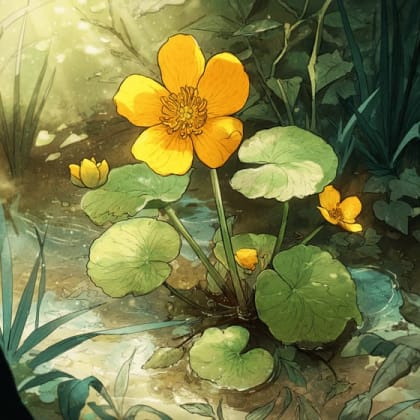





Marsh Marigold

Explore a magnificent 385-acre oasis at the Chicago Botanic Garden, a premier destination for horticulture, conservation, and natural beauty.
Explore a magnificent 385-acre oasis at the Chicago Botanic Garden, a premier destination for horticulture, conservation, and natural beauty. Situated on nine islands with six miles of shoreline, this expansive garden features 27 distinct gardens and four natural areas, offering an unparalleled sensory experience. It's a place where over 2.5 million plants, representing nearly 10,000 varieties, thrive, showcasing incredible botanical diversity.
Wander through meticulously curated landscapes like the tranquil Elizabeth Hubert Malott Japanese Garden, the vibrant Helen and Richard Thomas English Walled Garden, or the aromatic Krasberg Rose Garden. Seasonal highlights include the enchanting Butterflies & Blooms exhibit, where hundreds of tropical butterflies flutter amidst native species, and the charming Model Railroad Garden, featuring miniature trains winding through tiny landmarks. Discover the beauty of native flora in the Dixon Prairie and the extensive collections of hardy herbaceous perennials, for which the garden is nationally recognized.
Visiting the Chicago Botanic Garden offers a memorable escape into nature, inspiring connection with the plant world through breathtaking displays and educational opportunities. It's a year-round destination, perfect for peaceful strolls, engaging photography, and discovering the vital role of plants in sustaining life. From its cutting-edge plant conservation research to its family-friendly programs, the Garden provides an enriching experience for all ages and interests. Be ready to snap and learn! Get the Snappit app to identify any nature species you find here.
The Chicago Botanic Garden traces its origins to the Chicago Horticultural Society, founded in 1890, which aimed to bring the "city in a garden" ethos to life. After a period of inactivity, the Society was re-established in 1943, leading to a pivotal agreement in 1962 to create a new public garden. Groundbreaking for the Chicago Botanic Garden occurred in 1965, and it officially opened its doors to the public in 1972. The Garden operates as a successful public-private partnership, owned by the Forest Preserve District of Cook County and managed by the Chicago Horticultural Society. Its master plan was designed by landscape architects John O. Simonds and Geoffrey Rausch, with later contributions from notable designers like Dr. Koichi Kawana for the Japanese Garden and John Brookes for the English Walled Garden. The Garden has since grown into a leading institution, opening the Daniel F. and Ada L. Rice Plant Conservation Science Center in 2009, furthering its commitment to plant research and conservation.
Explore the extensive network of walking paths, take a narrated tram tour for an overview, or engage in birdwatching. The Garden offers various educational programs and classes for all ages. The Lenhardt Library houses an impressive collection of botanical books. Be sure to check the calendar for special events, flower shows, and seasonal programming.
Spring: Emergence of bulbs, early flowering trees and shrubs, Orchid Show (winter/early spring).
Summer: Peak blooms in many gardens, Butterflies & Blooms, Model Railroad Garden, extended evening hours, outdoor concerts.
Fall: Autumnal foliage colors, harvest displays in the Fruit & Vegetable Garden.
Winter: Lightscape holiday display, bare tree architecture, and indoor warmth of the greenhouses (Orchid Show).
The Chicago Botanic Garden is committed to accessibility, with nearly all areas, including the tram tours, being wheelchair accessible. Accessible parking is available in lots 1 and 2. Wheelchairs are provided free of charge at the Information Desk, and Electronic Convenience Vehicles (ECVs) are available for rent. Accessible restrooms are located throughout the Garden. Service animals are welcome.
Don't miss the exquisite Bonsai Collection, featuring nearly 200 miniature trees. Stroll through the serene Elizabeth Hubert Malott Japanese Garden and the meticulously designed Helen and Richard Thomas English Walled Garden. The Regenstein Fruit & Vegetable Garden provides inspiration for edible landscapes, while the Krasberg Rose Garden dazzles with its diverse rose varieties. Seasonal attractions like the Model Railroad Garden (May to October) and Butterflies & Blooms (late May through Labor Day) are particularly popular.
Each card links to a full Explore page with photos, traits, and fun facts.
Start with the big picture, then zoom in to explore individual wildlife observations around this place.
Purchase parking online in advance** to save time and potentially money upon arrival.
**Wear comfortable walking shoes** as the Garden is expansive, with miles of paths to explore.
**Allow plenty of time** for your visit, ideally a full day, to fully experience the diverse gardens and exhibits.
**Download the Garden's mobile app or pick up a map** at the Visitor Center to help navigate the grounds.
**Check the website before your visit** for current hours, bloom updates, and any special events or seasonal closures.
**Plan your picnic wisely;** outside food is only allowed in designated picnic areas, such as the Picnic Glen.
Jun 3, 2026
Jun 2, 2026
May 27, 2026
May 27, 2026
May 27, 2026

Maryland, US
You might spot White-Tailed Deer and Eastern Gray Squirrel.
View guide →
.jpg)
District of Columbia, US
You might spot Eastern Gray Squirrel, Duck, and House Sparrow.
View guide →

Illinois, US
You might spot American Robin, Canada Goose, and House Sparrow.
View guide →

Virginia, US
You might spot Spotted Lanternfly and Northern Cardinal.
View guide →
Take the discovery with you
Identify the wildlife you spot, learn as you go, and keep a collection of the adventure.