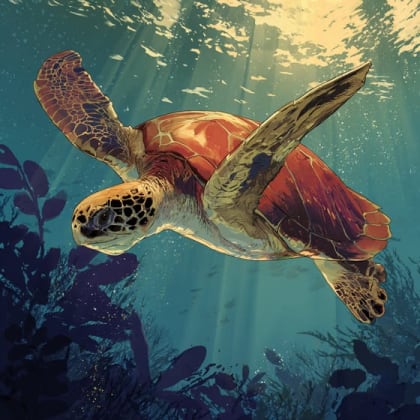





Sea Turtle

Maui Ocean Center offers an incredible journey into Hawaii's vibrant underwater world.
Maui Ocean Center offers an incredible journey into Hawaii's vibrant underwater world. This premier aquarium and oceanography center, nestled in Ma'alaea, Maui, is celebrated as the largest living tropical reef aquarium in the Western Hemisphere and was named one of the Top 10 aquariums in the nation in 2024. It exclusively showcases marine life found in Hawaiian waters, fostering a deep connection to the islands' unique ecosystems and rich cultural heritage.
Visitors can marvel at a diverse array of exhibits, including the awe-inspiring Living Reef, home to over 40 species of Pacific corals, creating a kaleidoscope of colors and life. The Open Ocean Exhibit plunges guests into a 750,000-gallon tank teeming with sharks, rays, and tropical fish, featuring a spectacular 54-foot underwater tunnel for an immersive 360-degree view. The Turtle Lagoon provides an intimate look at Hawaiian green sea turtles, while the innovative Humpbacks of Hawaiʻi Exhibit & Sphere offers an unforgettable 3D experience with these majestic giants. Cultural exhibits like "Hawaiians and the Sea" deepen the understanding of the deep relationship between the people of Hawaii and their ocean.
More than just an attraction, Maui Ocean Center is a beacon of conservation and education, inspiring wonder and respect for Hawaii's delicate marine environment. It's a captivating destination for all ages, providing engaging experiences that educate about marine science, cultural connections, and the importance of protecting our oceans for future generations. Unlock an interactive field guide for this spot: get the Snappit app to identify nature on the go.
The Maui Ocean Center first opened its doors on March 13, 1998, established by Coral World International. From its inception, the center's core mission has been to inspire wonder, understanding, and respect for Hawaii's distinctive marine life and to highlight the profound connection between Hawaiians and the sea. Spanning three acres, it quickly distinguished itself as the largest living tropical reef aquarium in the Western Hemisphere, dedicated solely to showcasing marine species endemic to Hawaiian waters. Its commitment to marine conservation and education has earned it national recognition, including being named one of the Top 10 aquariums in the nation by USA Today's 10Best Readers' Choice Awards in 2024.
Explore the diverse marine exhibits, enjoy daily educational talks and feedings by marine naturalists, and experience the interactive touch pools. For an in-depth experience, consider a "Behind the Scenes Tour" to learn about animal care or, for certified divers, a "Shark Dive Maui" in the Open Ocean tank.
The center is open year-round. Humpback whales are typically found in Hawaiian waters during winter months, but the Humpbacks of Hawaiʻi Exhibit & Sphere allows visitors to experience them virtually all year. Seasonal events like "Fins & Frights" for Halloween and "Festival of Lights" during the holidays add extra festive touches.
Maui Ocean Center is ADA compliant and wheelchair accessible throughout. Complimentary wheelchairs are available on a first-come, first-served basis. Pathways are stroller-friendly, and service animals are welcome.
Don't miss the spectacular **Living Reef** exhibit with its vibrant Pacific corals, the thrilling **Open Ocean Exhibit** and its 54-foot underwater tunnel where sharks and rays glide overhead, and the serene **Turtle Lagoon** to observe Hawaiian green sea turtles. The immersive **Humpbacks of Hawaiʻi Exhibit & Sphere** offers a unique 3D experience with whales. Engaging cultural exhibits like "Hawaiians and the Sea" provide insight into the islands' history and connection to the ocean.
Each card links to a full Explore page with photos, traits, and fun facts.
Start with the big picture, then zoom in to explore individual wildlife observations around this place.
Arrive in the afternoon or during shoulder seasons: For a less crowded experience, plan your visit for after 1 PM or during the months of January, May, September, October, or early December.
Wear comfortable shoes
A portion of the center is outdoors, and you'll be doing a fair amount of walking through the exhibits.
Purchase tickets online in advance
It's often recommended to buy your admission tickets online ahead of time to save time upon arrival and secure your entry.
Allow ample time
While 2-2.5 hours covers the main exhibits, dedicate more time if you plan to dine, shop, or participate in special tours or presentations.
Check daily presentation schedules
Upon arrival, inquire about the schedule for daily talks, feedings, and cultural demonstrations to enhance your visit.
Be prepared for paid parking
Parking is available but costs $3 per hour or $7 per day.

Michigan, US
You might spot African Lion, Komodo Dragon, and Brown Bear.
View guide →
.jpg)
Municipal District of Cobh, IE
You might spot Ring-Tailed Lemur, Giraffes, and Cheetahs.
View guide →

Nouvelle-Aquitaine, FR
You might spot Greater Flamingo, Giraffes, and Red Panda.
View guide →

Texas, US
You might spot Giraffes, African Lion, and Eastern Black Rhinoceros.
View guide →
Take the discovery with you
Identify the wildlife you spot, learn as you go, and keep a collection of the adventure.




















.jpg&width=800)