





Spotted House Gecko
Hemidactylus parvimaculatus
The Spotted House Gecko is a small lizard that loves to live in homes and gardens. With its cute spots and quick movements, it helps keep bugs away, making it a helpful friend in your house!
Habitat: Urban areas
The Spotted House Gecko is a small lizard, typically light brown or grey, covered in tiny dark spots and sometimes faint bands. It has large eyes with vertical pupils and often a translucent belly, making it appear somewhat see-through.
Category
ReptilesRarity
Common
Danger
1/5 · Very low
Snaps
2
Geckos don't have eyelids; they lick their own eyes to keep them clean and moist!
Their skin has tiny, soft scales, giving them a surprisingly velvety feel!
They can survive for weeks without food, thanks to their incredibly slow metabolism!
They eat their own shed skin, full of nutrients, so nothing goes to waste!
Spotted House Gecko can walk on almost any surface, including glass, because of millions of microscopic hairs on its toe pads.
Spotted House Gecko can drop its tail if caught, allowing it to escape from predators while the wiggling tail distracts them.
Spotted House Gecko has large, sensitive eyes with vertical pupils that help it see tiny insects in very low light conditions.
Spotted House Gecko can lighten or darken its skin tone slightly to better blend in with its surroundings, making it harder to spot.
Tiny hunters, these geckos eat small bugs and spiders to keep your house tidy!
Ptyas mucosa
a common snake predator found in their habitat.
Blattella germanica
a frequent insect meal, especially in human dwellings.
Aedes aegypti
helps control populations of these flying insects.

Felis catus
an introduced predator in many of its urban habitats.
Marked with spots or patches of a different color.
Social animals live in organized groups, cooperating for survival benefits such as foraging, defense, and raising offspring.
Camouflaged describes organisms that possess coloring or patterns that allow them to blend into their environment.
This trait identifies organisms whose diet primarily consists of insects and other small invertebrates.

This trait identifies organisms that exhibit exceptional swiftness in movement for hunting, escape, or travel.

This habitat trait indicates species that can coexist with humans in urban and suburban environments, utilizing man-made structures and green spaces.

Nocturnal animals are primarily active during the nighttime hours, typically resting or sleeping during the day.
No aliases listed yet.
Danger
1/5 · Very low
It's best to watch geckos from a distance and not try to catch them.
The easiest way to identify Spotted House Gecko is to use the Snappit nature identifier app.
8-12 cm
0.003-0.008 kg
3-5 years
5 km/h
Tiny hunters, these geckos eat small bugs and spiders to keep your house tidy!
Urban areas
Ambush
Zoom in to split clusters and explore where this object has been snapped.

US
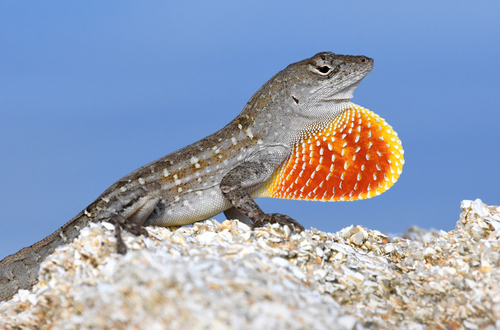
You might spot Pond Slider, Black-Bellied Whistling-Duck, and Brown Anole.
View guide →
Louisiana, US
You might spot Brown Anole, White Ibis, and Black-Bellied Whistling-Duck.
View guide →

Louisiana, US
You might spot Brown Anole and Black-Bellied Whistling-Duck.
View guide →
Take the discovery with you
Snap it with Snappit to identify it, learn what makes it special, and add the discovery to your collection.















