





swamp loosestrife
Decodon verticillatus
Swamp loosestrife is a tall plant that loves wet places like swamps and marshes. It has pretty purple flowers that bloom in summer and attract butterflies and bees.
Habitat: Wetlands
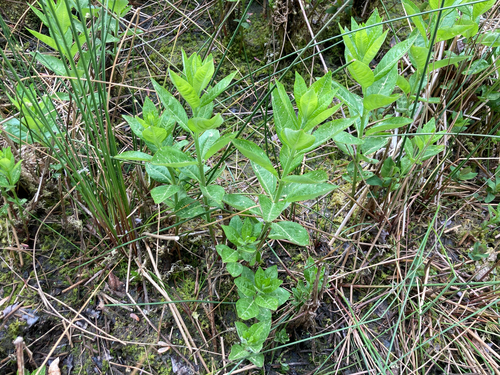
The swamp loosestrife is a sprawling shrub with long, arching stems that often root where they touch water. Its narrow, lance-shaped leaves are arranged in distinctive whorls. Small, star-shaped flowers, typically rosy-pink to purple, are clustered in the leaf axils, creating a vibrant display.
Category
PlantsRarity
Common
Danger
1/5 · Very low
Snaps
2
In autumn, its vibrant green leaves can turn a beautiful reddish-bronze color!
Its leaves often grow in amazing circles around the stem, almost like a green starburst!
Swamp loosestrife helps filter wetland water, making it healthier for all animals!
This plant can create dense, tangled mats, making wetlands feel like a secret garden!
Swamp loosestrife can float its hollow stems on water, helping it spread and survive floods.
Swamp loosestrife can root new plants from stems touching water or mud, forming dense new colonies.
Its tiny seeds can float, allowing them to travel far on water currents to find new places to grow.
Apis mellifera
collects nectar from its flowers
Bombus impatiens
feeds on pollen and nectar
Anas platyrhynchos
finds cover in its dense growth
Flowering plants are any plants that produce flowers as part of their reproductive cycle.
A shrub is a woody plant smaller than a tree, typically with multiple stems branching from or near the ground.
Summer blooming plants produce their flowers during the summer season, often providing vibrant color when many other plants have finished.
Colorful describes organisms or objects displaying a wide range of bright and distinct colors.

Describes plants that are particularly attractive and beneficial to a wide range of pollinating organisms.

Rapid growing plants exhibit accelerated growth rates, quickly increasing in size and biomass within a short period.

This habitat trait identifies species found in wetlands, which are areas of land saturated with water, either permanently or seasonally, including marshes, swamps, and bogs.
No aliases listed yet.
Danger
1/5 · Very low
Always stay on paths when exploring wetlands to protect plants and animals.
The easiest way to identify swamp loosestrife is to use the Snappit nature identifier app.
100-250 cm
30-60 cm
1-2 cm
Summer to fall
No
None
Perennial
Zoom in to split clusters and explore where this object has been snapped.
May 29, 2026
Lowell Holly ReservationPhoto attribution
(c) Jake McCumber, some rights reserved (CC BY)
License: CC BY 4.0 ↗
Image may be shown cropped inside the card frame.

New York, US
You might spot White-Tailed Deer, Eastern Skunk Cabbage, and Duck.
View guide →

New York, US
You might spot White-Tailed Deer, Eastern Skunk Cabbage, and Duck.
View guide →

Massachusetts, US
You might spot Pharaoh Cicada and Common Eastern Bumble Bee.
View guide →
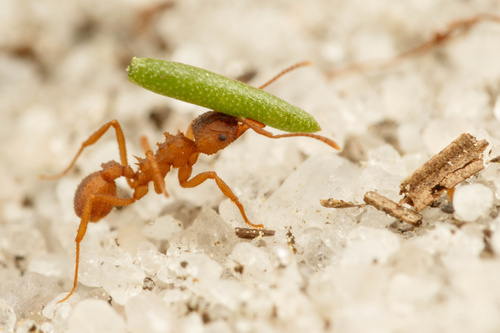
New York, US
You might spot Northern Fungus-Farming Ant and Bronzed Tiger Beetle.
View guide →
Take the discovery with you
Snap it with Snappit to identify it, learn what makes it special, and add the discovery to your collection.








.jpg&width=800)



_001.jpg&width=800)




