





Sweet-brier
Rosa rubiginosa
Sweet-brier is a lovely shrub with fragrant pink flowers and soft, green leaves. It grows wild in many places and is great for attracting butterflies and bees!
Habitat: Grasslands
The Sweet-brier is a deciduous shrub with arching stems covered in sharp, hooked thorns. It has finely serrated, deep green leaves with reddish glands that release a distinctive apple scent. Its delicate, five-petaled flowers are pale pink to white.
Category
PlantsRarity
Common
Danger
2/5 · Low
Snaps
Be the first to snap!
In some places, Sweet-brier is also known by the beautiful, old-fashioned name 'Eglantine rose'!
Its leaves smell exactly like green apples, especially after a fresh rain shower!
Sweet-brier's rose hips contain way more vitamin C than an orange, making them super healthy!
This tough plant can grow almost anywhere, even in poor soil where other plants struggle.
Sweet-brier has tiny glands on its leaves that release a fresh apple scent, possibly deterring some hungry plant-eaters.
Sweet-brier has strong, hooked thorns along its stems that help it climb over other plants and protect against browsers.
Sweet-brier produces bright red, vitamin-rich rose hips that provide essential food for birds in winter.
Apis mellifera
Visits flowers for nectar and pollen
Turdus merula
Consumes rose hips, dispersing seeds
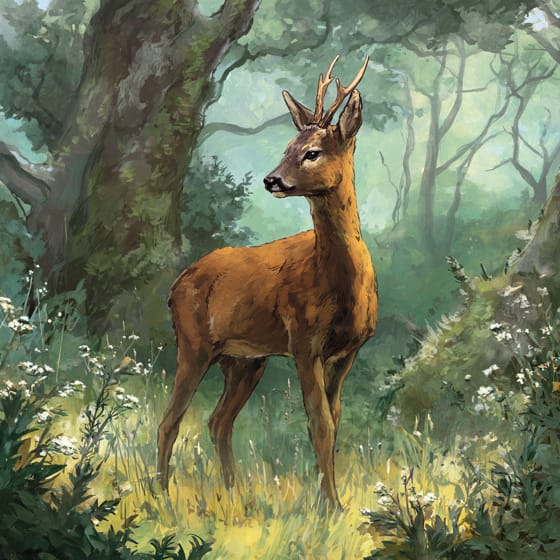
Capreolus capreolus
Browses on young shoots and leaves
Diplolepis rosae
Lays eggs in buds, causing galls
Deciduous plants periodically shed all their leaves, typically during autumn or dry seasons.
Ornamental plants are cultivated primarily for their aesthetic appeal, enhancing landscapes and gardens with their attractive foliage, flowers, or form.
A shrub is a woody plant smaller than a tree, typically with multiple stems branching from or near the ground.
Fragrant flowers emit a pleasant aroma, often to attract pollinators or for defense.

Medicinal plants possess chemical compounds that can be used for therapeutic purposes to treat illnesses or maintain health.

Pertaining to plants that have stems covered with sharp, pointed projections for defense.

Edible plants are those parts of a plant that are considered safe for human consumption.

Fall color refers to the seasonal change in foliage pigmentation, primarily in deciduous plants, displaying vibrant hues.

Grassland habitats are terrestrial biomes dominated by grasses and herbaceous plants, supporting a variety of grazing animals.

Describes plants that are particularly attractive and beneficial to a wide range of pollinating organisms.
Danger
2/5 · Low
Be careful of the thorns when you get close to the plant.
The easiest way to identify Sweet-brier is to use the Snappit nature identifier app.
100-300 cm
100-200 cm
2-3 cm
Late spring to mid-summer
Yes
None
Perennial
Zoom in to split clusters and explore where this object has been snapped.
Recent snaps will appear here as new observations are added.
Take the discovery with you
Snap it with Snappit to identify it, learn what makes it special, and add the discovery to your collection.








.jpg&width=800)


_001.jpg&width=800)



