

Tachina Canariensis
tachina canariensis
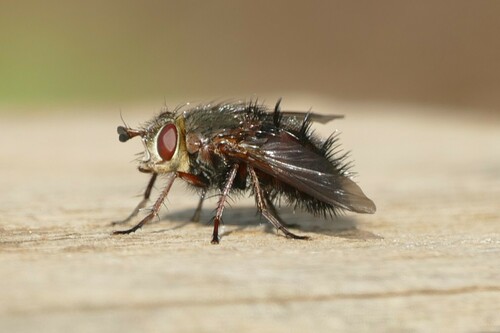
Tachina canariensis is a fascinating species of tachinid fly endemic to the Canary Islands. Known for its robust, bristly body and active flight, this insect plays a crucial double role in its ecosystem as both an important pollinator of local flora and a key natural regulator of caterpillar populations. As adults, they are frequently seen darting between wildflowers under the warm island sun, seeking nectar to fuel their high-energy lives.
Habitat: Found in open Canary Island pine forests, shrubby volcanic hillsides, and coastal scrub zones abundant with flowering plants.
This medium-to-large fly is characterized by a sturdy, dark brown to blackish body heavily covered in stout, protective black bristles, particularly on its rounded abdomen. The sides of the abdomen often exhibit warm, subtle orange-red highlights, and the head features large, reddish compound eyes. Its clear wings, spanning up to 3 centimeters, are held out at an angle when resting, revealing a classic stout tachinid silhouette.
Category
InsectsRarity
Common
Danger
1/5 · Very low
Snaps
Be the first to snap!
Because they are endemic to the Canary Islands, they have adapted perfectly to the unique microclimates and volcanic terrains of the archipelago.
Tachina canariensis larvae do not immediately kill their host; instead, they consume non-essential tissues first to keep the caterpillar alive as long as possible.
Their dense coat of sensory bristles acts as a highly advanced wind-detection system, helping them detect oncoming predators in milliseconds.
Females utilize keen chemical and visual cues to locate hosts, typically lepidopteran caterpillars, on which to deposit eggs.
The thick array of stiff bristles on its body provides mechanical defense against predators and aggressive hosts.
Equipped with powerful flight muscles, this fly can hover, dart, and execute rapid aerial turns to evade capture and pursue hosts.
Larvae are internal parasitoids that feed on the living tissues of caterpillars, while adults feed primarily on nectar and pollen from endemic wildflowers.
Age differences: Larvae are strictly endoparasitoids feeding on caterpillar hosts, whereas adults transition entirely to a diet of sugary nectar and pollen.
Caradrina rebeli
The larvae of Tachina canariensis parasitize the caterpillars of this endemic Canary Island moth, helping control its population.
Euphorbia canariensis
Adult flies visit and feed on the sweet nectar of the Canary Island spurge, assisting in its pollination.
No trait badges are assigned for this object yet.
No aliases listed yet.
Collections for this object will appear here as more themes are added.
Danger
1/5 · Very low
No special safety notes yet.
Look for six legs, antennae, three body sections and the shape of the wings. Beetles have hardened front wings; flies have just one working pair. Tiny insects may need a close view before their group is clear. Insect Identifier: upload a photo and compare the visible details.
1+ cm
1+ cm
0.0001+ kg
0+ years
15 km/h
Larvae are internal parasitoids that feed on the living tissues of caterpillars, while adults feed primarily on nectar and pollen from endemic wildflowers.
Found in open Canary Island pine forests, shrubby volcanic hillsides, and coastal scrub zones abundant with flowering plants.
Zoom in to split clusters and explore where this object has been snapped.
Recent snaps will appear here as new observations are added.
Take the discovery with you
Snap it with Snappit to identify it, learn what makes it special, and add the discovery to your collection.