





Immigrant Pavement Ant
Tetramorium immigrans
The Immigrant Pavement Ant is a small, hardworking ant that loves to build its home in sidewalks and cracks. They are busy little creatures that work together to find food and take care of their nest.
Habitat: Urban areas
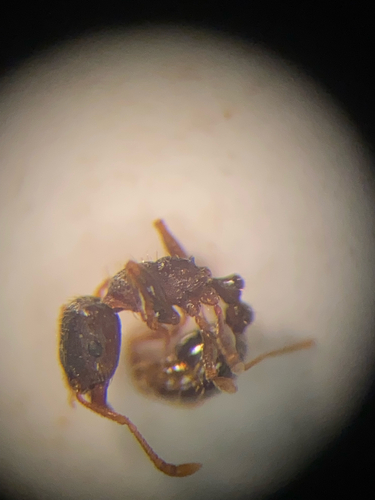
The Immigrant Pavement Ant is a small ant, typically dark brown to black, measuring 2.5-4 mm. It has distinct grooves on its head and thorax, with two noticeable nodes on its narrow waist. Its legs and antennae are often a slightly lighter shade than its body.
Category
InsectsRarity
Common
Danger
1/5 · Very low
Snaps
13
Queens can live for several years, laying thousands of eggs to build a giant colony.
Sometimes, they gather around a dying ant, carrying it back to the nest for reasons scientists still study!
These ants often fight 'ant wars' with neighboring colonies right on your sidewalk!
They use tiny chemical messages to tell other ants where the best snacks are hidden.
Immigrant Pavement Ants can dig complex nests under sidewalks and rocks, helping them create secure homes.
Immigrant Pavement Ants can follow invisible scent trails to quickly locate and share food sources with their colony.
Immigrant Pavement Ants have strong jaws and legs, allowing them to carry food much larger than themselves.
Immigrant Pavement Ants defend their colony's feeding grounds fiercely against rival ant groups.
These omnivorous ants eat almost anything, from tiny insects to sugary crumbs!

Turdus migratorius
Birds like robins will forage for ants on the ground.
Aphis gossypii
Ants tend aphids to collect their sugary honeydew secretions.
Musca domestica
Pavement ants will scavenge dead flies or prey on larvae.
Panicum capillare
Ants collect and consume seeds from various plants.
Social animals live in organized groups, cooperating for survival benefits such as foraging, defense, and raising offspring.
This trait identifies organisms whose diet includes both plant and animal matter.
Scavengers consume dead organic matter, helping to decompose carcasses and other waste in the ecosystem.
Describes organisms that break down dead organic material, recycling nutrients back into the ecosystem.

Diurnal animals are primarily active during daylight hours, typically resting or sleeping at night.

Pertaining to species that are significantly smaller than typical or average for their kind.

This habitat trait indicates species that can coexist with humans in urban and suburban environments, utilizing man-made structures and green spaces.

Invasive species are non-native organisms that cause harm to the environment, economy, or human health.
No aliases listed yet.
Danger
1/5 · Very low
It's best to watch ants from a distance and not disturb their homes.
The easiest way to identify Immigrant Pavement Ant is to use the Snappit nature identifier app.
2.5-4 mm
60-365 days
These omnivorous ants eat almost anything, from tiny insects to sugary crumbs!
Urban areas
Foraging
6
15000
Zoom in to split clusters and explore where this object has been snapped.
Jun 12, 2026
Chadwick ArboretumPhoto attribution
(c) Blake Bringhurst, some rights reserved (CC BY)
License: CC BY 4.0 ↗
Image may be shown cropped inside the card frame.
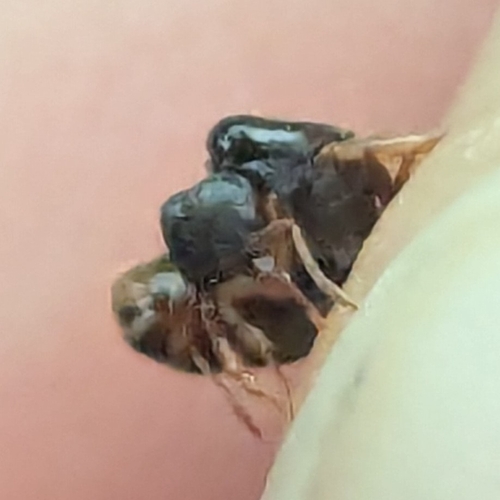
Jun 9, 2026
Wildwood Preserve MetroparkPhoto attribution
(c) Emmett Collins-Sussman, some rights reserved (CC BY)
License: CC BY 4.0 ↗
Image may be shown cropped inside the card frame.

New York, US
You might spot Common Eastern Bumble Bee and Ground-Ivy.
View guide →

Ohio, US
You might spot Widow Skimmer, Eastern Pondhawk, and Bee.
View guide →

Ohio, US
You might spot Blue-Fronted Dancer, American Rubyspot, and Fowler's Toad.
View guide →

Wisconsin, US
You might spot Common Eastern Bumble Bee, Monarch, and Bee.
View guide →

US
You might spot Common Mugwort, Common Milkweed, and White Snakeroot.
View guide →

Ohio, US
You might spot Common Eastern Bumble Bee, Rudbeckia, and Bee.
View guide →
Take the discovery with you
Snap it with Snappit to identify it, learn what makes it special, and add the discovery to your collection.








.jpg&width=800)




