





Tamanduas
Tamandua
Tamanduas are fascinating animals that look like a mix between an anteater and a sloth! They have long tongues to eat ants and termites and love to climb trees in the rainforest.
Habitat: Forests
The Tamanduas have a distinctive coat that varies from golden-brown to tan, often with a bold black "vest" pattern over their shoulders and back. They possess a long, tapered snout and small eyes, with strong, curved claws on their front feet. Their prehensile tail is hairless on the underside.
Category
MammalsRarity
Common
Danger
2/5 · Low
Snaps
Be the first to snap!
A tamandua's body temperature is one of the lowest among mammals!
Baby tamanduas often ride on their mother's back until they are too big!
Their powerful forelegs can even tear into tough termite mounds with ease!
They walk on the sides of their front feet to protect their long, sharp claws!
Tamanduas can climb trees and hang from branches using their strong claws and prehensile tail, which helps them forage safely.
Tamanduas has a super long (up to 40cm!), sticky tongue that helps them reach deep inside nests to eat insects.
Tamanduas can sniff out insect nests from far away using their excellent sense of smell, helping them find their next meal.
Tamanduas can release a strong, unpleasant smell when threatened, which helps them deter predators.
These furry foragers love to slurp up ants and termites with their long, sticky tongues!
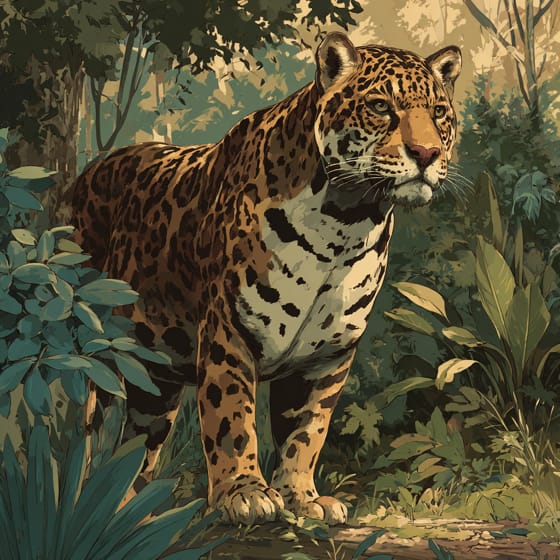
Panthera onca
Large cats are a major predator of tamanduas.
Puma concolor
Tamanduas are prey for pumas when on the ground.
Boa constrictor
Snakes like boas can prey on smaller tamanduas.
Atta cephalotes
Tamanduas regularly consume leaf-cutter ants.
Nasutitermes corniger
These termites are a frequent meal for tamanduas.
Furry describes animals possessing a dense covering of soft hair or fur.
Solitary animals live alone for most of their lives, only interacting with others for mating or parental care.
Arboreal animals live primarily in trees, utilizing them for shelter, food, and protection from predators.
Camouflaged describes organisms that possess coloring or patterns that allow them to blend into their environment.

This trait identifies organisms whose diet primarily consists of insects and other small invertebrates.

Forest habitats are terrestrial environments dominated by dense tree cover, supporting a high diversity of plant and animal life.

This habitat trait refers to species found in tropical rainforests, characterized by high annual rainfall, high biodiversity, and dense tree cover.

Nocturnal animals are primarily active during the nighttime hours, typically resting or sleeping during the day.

Endangered status indicates a species is at a very high risk of extinction in the wild in the near future.
Danger
2/5 · Low
Tamanduas are wild animals, so it's best to watch them from a distance and not try to touch them.
The easiest way to identify Tamanduas is to use the Snappit nature identifier app.
70-160 cm
1.5-8.5 kg
9-16 years
15 km/h
These furry foragers love to slurp up ants and termites with their long, sticky tongues!
Forests
Foraging
Zoom in to split clusters and explore where this object has been snapped.
Recent snaps will appear here as new observations are added.
Take the discovery with you
Snap it with Snappit to identify it, learn what makes it special, and add the discovery to your collection.




.jpg&width=800)

.JPG&width=800)



.jpg&width=800)
