_DDumais.jpg&width=800)





tamarack
Larix laricina
The tamarack is a special tree that loves wet places like swamps! In the fall, its needles turn bright yellow before falling off, making it look like it's wearing a golden dress.
Habitat: Wetlands
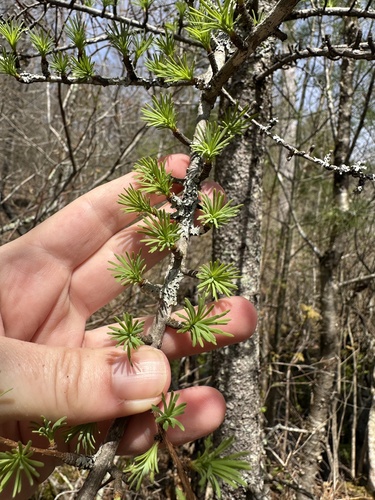
The tamarack is a slender, conical conifer with short, soft, bluish-green needles that grow in small bundles. Uniquely, its needles turn a dazzling golden-yellow in autumn before dropping, making it stand out from other evergreen conifers.
Category
PlantsRarity
Common
Danger
1/5 · Very low
Snaps
12
It's the only conifer in North America whose soft needles turn dazzling gold and fall off each autumn!
Its name "tamarack" comes from an Indigenous word meaning "wood used for snowshoes" due to its flexible branches.
Look closely, its short, soft needles grow in neat little bundles, not one by one like pine needles.
Tamaracks are super tough, thriving in cold, soggy bogs where most other trees cannot grow.
Tamarack has deciduous needles that fall off in winter, helping it conserve water and survive extreme cold temperatures.
Tamarack can grow in acidic, waterlogged bogs where most other trees can't survive, making it a wetland specialist.
Tamarack has relatively thick bark and can quickly re-establish after forest fires, helping it thrive in boreal forests.
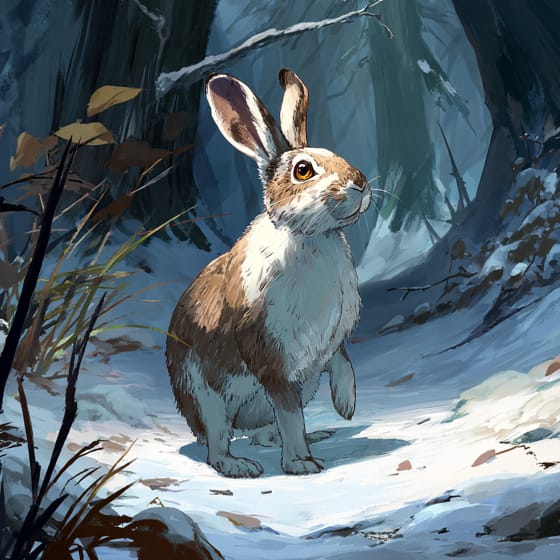
Lepus americanus
They browse on young tamarack twigs in winter for food.

Poecile hudsonica
Nests and forages among its branches in northern forests.
Erethizon dorsatum
Eats the inner bark of tamarack trees for nutrients.
Deciduous plants periodically shed all their leaves, typically during autumn or dry seasons.
Cold hardy plants are able to withstand low temperatures and freezing conditions without significant damage.
Coniferous plants are typically evergreen, bearing needles or scales and reproductive cones.
Fall color refers to the seasonal change in foliage pigmentation, primarily in deciduous plants, displaying vibrant hues.

Rapid growing plants exhibit accelerated growth rates, quickly increasing in size and biomass within a short period.

Timber refers to wood that has been prepared for use in building and carpentry.

This habitat trait identifies species found in wetlands, which are areas of land saturated with water, either permanently or seasonally, including marshes, swamps, and bogs.
No aliases listed yet.
Danger
1/5 · Very low
Stay on paths when exploring around trees to keep safe and protect nature.
The easiest way to identify tamarack is to use the Snappit nature identifier app.
2000-4000 cm
500-1000 cm
Spring
No
None
Perennial
Wind
Zoom in to split clusters and explore where this object has been snapped.
May 5, 2026
Silver Lake DistrictPhoto attribution
(c) Jaime McGuigan, some rights reserved (CC BY)
License: CC BY 4.0 ↗
Image may be shown cropped inside the card frame.

Wisconsin, US
You might spot Purple Pitcher Plant, Papillose Peatmoss, and Tamarack.
View guide →

Wisconsin, US
You might spot American Cancer-Root and Eastern White Pine.
View guide →

Michigan, US
You might spot Eastern Box Turtle, Autumn Olive, and Common Watersnake.
View guide →
.JPG)
Massachusetts, US
You might spot Eastern Gray Squirrel and Eastern Skunk Cabbage.
View guide →

New Hampshire, US
You might spot Common Shiner, Tree Lungwort, and Creek Chub.
View guide →

Wisconsin, US
You might spot Western Bog Laurel and Purple Pitcher Plant.
View guide →
Take the discovery with you
Snap it with Snappit to identify it, learn what makes it special, and add the discovery to your collection.








.jpg&width=800)



_001.jpg&width=800)




