





Texas Cooter
Pseudemys texana
The Texas Cooter is a friendly turtle that loves to swim in rivers and ponds. It has a beautiful shell with bright patterns and enjoys basking in the sun on warm rocks.
Habitat: Wetlands
The Texas Cooter has an olive to dark brown shell, often marked with yellow or cream reticulations. Its yellow to orange plastron may have a faint dark pattern. The skin is olive-green with distinctive bright yellow stripes on its head, neck, and limbs, making it easily identifiable.
Category
ReptilesRarity
Common
Danger
1/5 · Very low
Snaps
Be the first to snap!
Did you know a Texas Cooter's gender is decided by the temperature of its nest while incubating?
Texas Cooters love to sunbathe! They absorb warmth on logs to get energy and stay healthy.
Their shell isn't just a house; it's fused to their backbone, meaning they can never leave it!
These turtles are named "cooters" from an African word meaning "turtle"!
Texas Cooter has a dark shell that helps them warm up quickly by absorbing sunlight, boosting their energy.
Texas Cooter can glide efficiently through water because of their streamlined shell and powerful webbed feet.
Texas Cooter has a strong, domed shell that provides excellent defense, allowing them to hide inside from predators.
Texas Cooter can digest tough aquatic plants because of their specialized jaw structure, making them expert herbivores.
They munch on underwater plants and algae, but young cooters also enjoy a tasty insect snack!
Age differences: Juveniles eat more insects and small aquatic animals, while adults become mostly herbivorous.
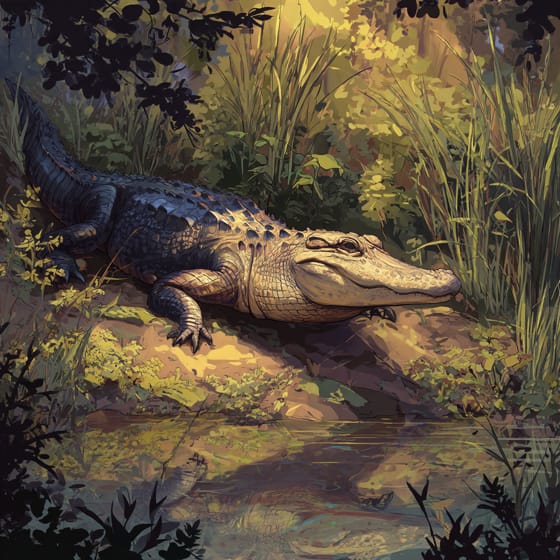
Alligator mississippiensis
Large alligators sometimes prey on adult turtles.

Procyon lotor
Raccoons raid nests for eggs and prey on hatchlings.
Potamogeton natans
Adult cooters primarily graze on submerged aquatic plants.
Physella acuta
Young cooters will consume small aquatic snails.
Marked with spots or patches of a different color.
Social animals live in organized groups, cooperating for survival benefits such as foraging, defense, and raising offspring.
Colorful describes organisms or objects displaying a wide range of bright and distinct colors.
Filter feeders obtain nutrients by straining suspended food particles and small organisms from water.

This trait characterizes organisms whose diet consists entirely or primarily of plant material.

This trait characterizes organisms with an exceptionally long lifespan compared to others of their kind.

This habitat trait identifies species found in wetlands, which are areas of land saturated with water, either permanently or seasonally, including marshes, swamps, and bogs.

Diurnal animals are primarily active during daylight hours, typically resting or sleeping at night.

Freshwater habitats include non-saline aquatic environments such as rivers, lakes, ponds, and wetlands, vital for numerous species.

Describes a species whose presence and role have a disproportionately large effect on its environment.

Aquatic habitats encompass environments where organisms live predominantly in water, including oceans, rivers, lakes, and wetlands.

Threatened status denotes a species likely to become endangered in the foreseeable future without effective conservation interventions.
No aliases listed yet.
Danger
1/5 · Very low
Always watch turtles from a distance and never try to pick them up without asking an adult.
The easiest way to identify Texas Cooter is to use the Snappit nature identifier app.
20-30 cm
1-2.5 kg
20-40 years
1 km/h
They munch on underwater plants and algae, but young cooters also enjoy a tasty insect snack!
4 km/h
Wetlands
Zoom in to split clusters and explore where this object has been snapped.
Recent snaps will appear here as new observations are added.
Take the discovery with you
Snap it with Snappit to identify it, learn what makes it special, and add the discovery to your collection.













