





Three-lined Potato Beetle
Lema daturaphila
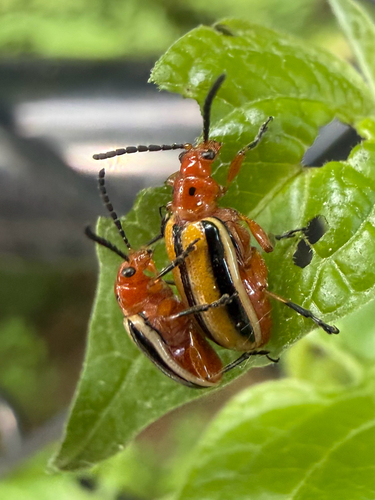
The Three-lined Potato Beetle is a small, colorful bug that loves to munch on potato plants. With its bright yellow body and three black stripes, it's easy to spot in gardens!
Habitat: Urban areas, Gardens, Farms
The Three-lined Potato Beetle is a slender, elongated beetle, typically yellowish-orange to reddish-brown in color. It has three distinctive thin black stripes running lengthwise down its wing covers (elytra). Its head is dark or black, and its antennae are short and also black, differentiating it from similar-looking beetles.
Category
InsectsRarity
Common
Danger
1/5 · Very low
Snaps
4
These beetles got their scientific name for loving Jimsonweed (Datura), a plant even more than potatoes!
Unlike the more famous Colorado potato beetle, these beetles have thin stripes, not chunky spots.
When startled, adult beetles often "play dead" by dropping off plants to escape danger. What a trick!
Young beetles, called larvae, wear a shield made of their own poop to deter predators! Gross, but effective!
Three-lined Potato Beetle larvae can cover themselves in their own waste (frass) because this foul-smelling shield deters predators.
Three-lined Potato Beetles can eat toxic leaves from plants like jimsonweed because they have special enzymes to safely digest harmful compounds.
This beetle can lay many eggs quickly because it helps them rapidly increase their numbers in new host plant areas.
They munch on leaves, especially from potato and tomato plants!
Age differences: Larvae and adults both feed on the same host plants.

Solanum tuberosum
Adults and larvae feed on potato plant leaves.

Solanum lycopersicum
Adults and larvae feed on tomato plant leaves.
Coccinella septempunctata
Ladybug larvae and adults can prey on its eggs.

Datura stramonium
It feeds on leaves of this toxic plant species.
Marked with parallel bands or lines of color.
Solitary animals live alone for most of their lives, only interacting with others for mating or parental care.
Colorful describes organisms or objects displaying a wide range of bright and distinct colors.
This trait characterizes organisms whose diet consists entirely or primarily of plant material.

Diurnal animals are primarily active during daylight hours, typically resting or sleeping at night.

This habitat trait indicates species that can coexist with humans in urban and suburban environments, utilizing man-made structures and green spaces.

Describes organisms that transfer pollen, enabling the fertilization and reproduction of plants.
No aliases listed yet.
Danger
1/5 · Very low
It's best to look at beetles without touching them, as some can be a little shy.
The easiest way to identify Three-lined Potato Beetle is to use the Snappit nature identifier app.
6-9 mm
60-120 days
They munch on leaves, especially from potato and tomato plants!
Urban areas, Gardens, Farms
Foraging
6
Zoom in to split clusters and explore where this object has been snapped.
Jun 1, 2026
Brattleboro Downtown Historic DistrictPhoto attribution
(c) Jack Forrester, some rights reserved (CC BY)
License: CC BY 4.0 ↗
Image may be shown cropped inside the card frame.

Vermont, US
You might spot Asian Bittersweet, Alder Buckthorn, and Eastern Newt.
View guide →

California, US
You might spot Western Fence Lizard, Duck, and Canada Goose.
View guide →

Massachusetts, US
You might spot Eastern White Pine and Pink Lady's Slipper.
View guide →

New York, US
You might spot Eastern Gray Squirrel and Eastern Red-Backed Salamander.
View guide →

New York, US
You might spot Eastern Red-Backed Salamander and Eastern Gray Squirrel.
View guide →
Take the discovery with you
Snap it with Snappit to identify it, learn what makes it special, and add the discovery to your collection.







.jpg&width=800)



