





Potato
Potato phytoplasma
Potatoes are tasty vegetables that grow underground. They come in different colors like brown, red, or purple. People like to eat them in many ways, like mashed, fried, or baked.
Habitat: Farms
The Potato plant has bushy green foliage above ground, with oval to pointed leaves. Its small flowers can be white, pink, or purple. Below ground, it forms edible tubers, which are typically brown, red, or purple-skinned, with starchy flesh.
Category
PlantsRarity
Common
Danger
1/5 · Very low
Snaps
Be the first to snap!
A single potato has enough energy to power a clock for weeks or even months!
Potatoes are actually swollen underground stems, not roots!
The Incas used potatoes to treat injuries and even predict the weather!
The potato was the first vegetable ever grown in space by NASA astronauts!
Potato has special underground stems called tubers that store energy, helping it survive harsh conditions and regrow.
Potato can grow new plants from its 'eyes' on tubers, allowing it to quickly multiply without needing seeds.
Potato produces natural toxins in its leaves and green parts to protect itself from hungry pests and animals.
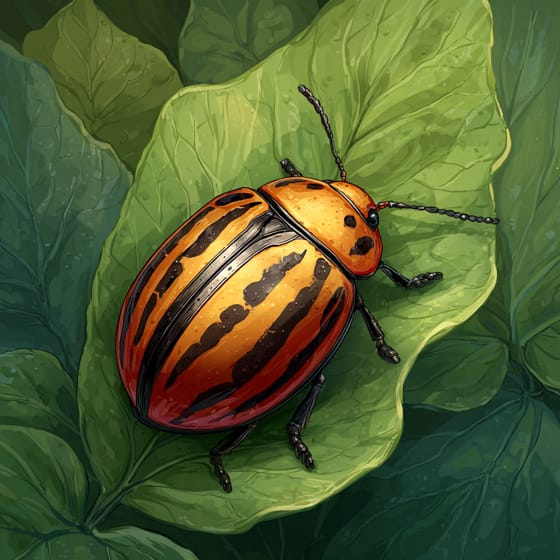
Leptinotarsa decemlineata
Larvae and adults devour potato leaves.
Apis mellifera
Visits flowers for nectar and pollen.
Phytophthora infestans
A water mold causing devastating potato disease.

Homo sapiens
The most widely consumed vegetable globally.
Broadleaf trees are angiosperms characterized by flat, wide leaves that are typically shed annually in temperate climates.
Fruit-bearing plants produce fruits, which are the mature ovaries of flowering plants containing seeds.
This human use trait describes species cultivated or domesticated by humans for agricultural purposes, including crops and livestock.
Edible plants are those parts of a plant that are considered safe for human consumption.
Danger
1/5 · Very low
Always wash and cook potatoes before eating to make sure they are safe.
The easiest way to identify Potato is to use the Snappit nature identifier app.
60-100 cm
45-75 cm
2-3 cm
Summer
Yes
Mild
Annual
Zoom in to split clusters and explore where this object has been snapped.
Recent snaps will appear here as new observations are added.
Take the discovery with you
Snap it with Snappit to identify it, learn what makes it special, and add the discovery to your collection.









.jpg&width=800)


_001.jpg&width=800)



