Three-ridge Mussel
Amblema plicata
The Three-ridge Mussel is a special shellfish that lives in rivers and lakes. It has a unique shell with three ridges, making it easy to recognize. These mussels help keep water clean by filtering it!
Habitat: Freshwater rivers and lakes
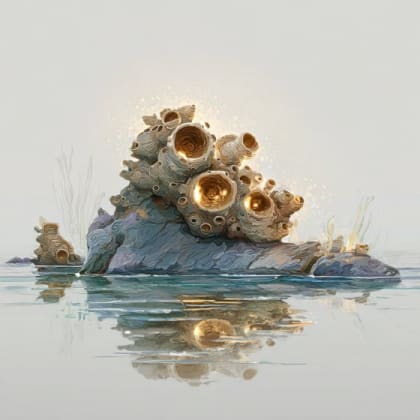
The Three-ridge Mussel has a thick, oval shell that is typically dark brown to black, with three distinct ridges running across its surface. Its inner shell, or nacre, is usually white or iridescent, and its shape is unique compared to smoother mussels.
Category
InvertebrateRarity
Common
Danger
1/5 · Very low
Snaps
4
A single mussel can filter over 40 liters of water every day – that's a lot!
Baby mussels, glochidia, are tiny hitchhikers that attach to fish gills to grow!
Mussel shells grow rings, just like trees, which show how old they are!
They breathe using special feathery gills inside their shells, extracting oxygen from water.
Three-ridge Mussel can filter large volumes of water, cleaning freshwater habitats by removing tiny particles and algae.
Three-ridge Mussel has a strong foot that helps them burrow into mud or sand, providing protection from predators.
Three-ridge Mussel can create a fleshy lure that mimics a small fish, attracting larger fish to help spread larvae.
Three-ridge Mussel has an exceptionally long lifespan, allowing them to filter water and contribute to the ecosystem for decades.
These mussels filter tiny food particles like algae and plankton from the water.
Solitary animals live alone for most of their lives, only interacting with others for mating or parental care.
Burrowing animals dig tunnels and chambers in the ground, using these subterranean structures for shelter, hunting, or breeding.
Filter feeders obtain nutrients by straining suspended food particles and small organisms from water.
This trait characterizes organisms whose diet consists entirely or primarily of plant material.

This trait characterizes organisms with an exceptionally long lifespan compared to others of their kind.

Armored describes animals protected by a hard, external covering or shell for defense.

Freshwater habitats include non-saline aquatic environments such as rivers, lakes, ponds, and wetlands, vital for numerous species.

Describes a species whose presence and role have a disproportionately large effect on its environment.

Endangered status indicates a species is at a very high risk of extinction in the wild in the near future.
No aliases listed yet.
Danger
1/5 · Very low
Be careful near water! Always stay close to an adult.
The easiest way to identify Three-ridge Mussel is to use the Snappit nature identifier app.
80-150 mm
7300-18250 days
These mussels filter tiny food particles like algae and plankton from the water.
Freshwater rivers and lakes
Filter Feeding
0
Zoom in to split clusters and explore where this object has been snapped.
Take the discovery with you
Snap it with Snappit to identify it, learn what makes it special, and add the discovery to your collection.